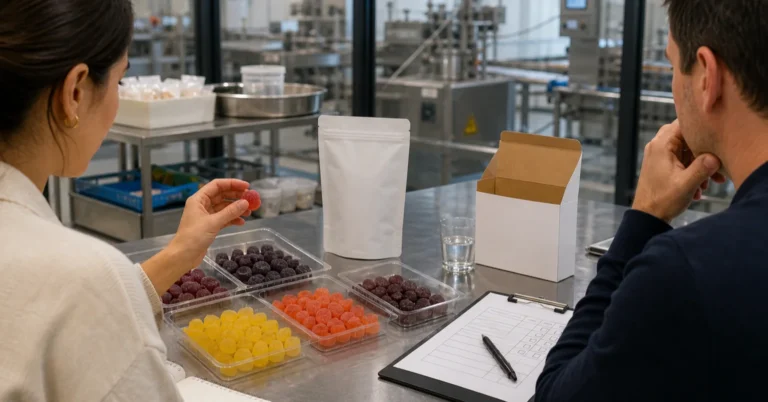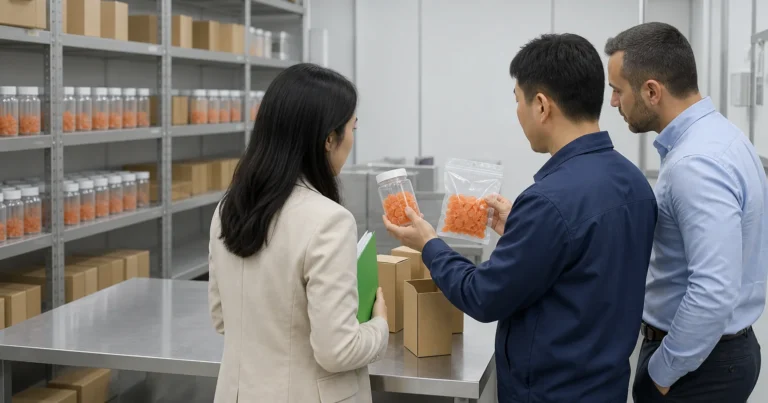

Gummies look simple on a shelf, so many people read the label as if it were only a candy recipe.
Gummies are usually made of a gelling agent, sweeteners, water, acid, flavor, color, and coating ingredients. Supplement gummies also include active ingredients, such as vitamins, minerals, fiber, botanicals, probiotics, collagen, or other functional compounds, so the formula must balance taste, texture, dosage, stability, and label claims.
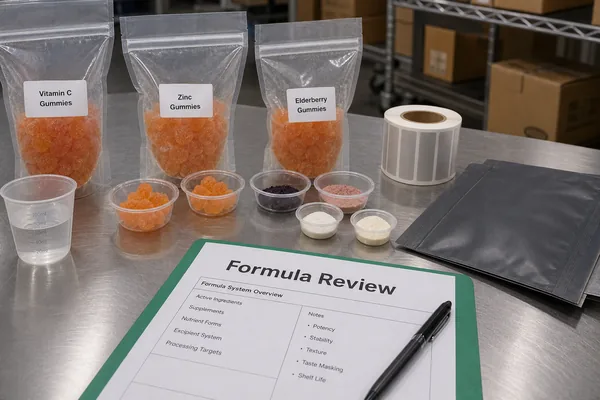
For a consumer, the answer starts with gelatin, pectin, sugar, and flavor. For a supplement brand, I would push the question further: can that base carry the active ingredient and stay stable through production, packaging, shipping, and shelf life?
Key takeaways:
- Most traditional gummies use gelatin, sugar or syrup, acid, flavor, color, water, and a coating.[^1]
- Vegan gummies often use pectin, starch, agar, carrageenan, or mixed gelling systems instead of gelatin.
- Supplement gummies are harder than candy gummies because active ingredients can change texture, taste, pH, moisture behavior, and serving size.
- Gelatin source matters for pork, beef, halal, kosher, vegetarian, and vegan positioning.
- Brands should confirm active load, gelling system, claim route, packaging, and documentation before sampling.
The ingredient list answers only part of the question. The stronger product decision is how those ingredients behave together when a gummy moves from idea to sample, and from sample to commercial production.
What Are Gummies Made Of?
A gummy can look like one simple bite, but that bite is a small food system.
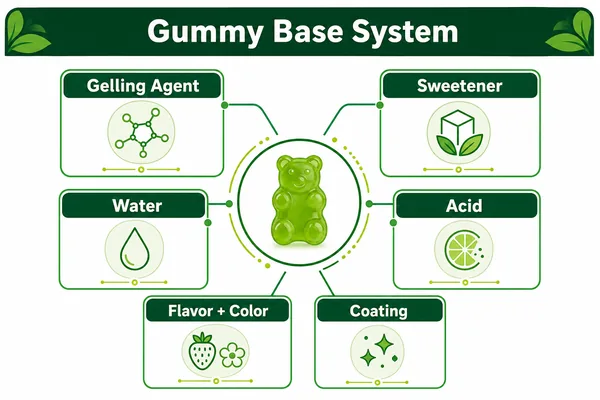
Gummies are made from a base of gelling agent, sweetener, water, acid, flavor, color, and surface coating. Candy gummies focus on taste and chew. Supplement gummies add active ingredients, which makes dosage, stability, texture, and label support part of the formula.
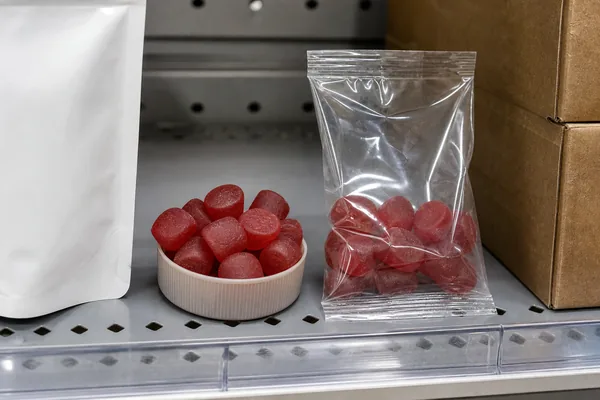
The short answer: gelling agent, sweetener, acid, flavor, color, and water
The shortest answer is that gummies need structure, taste, and moisture control. The structure usually comes from gelatin, pectin, starch, agar, carrageenan, or another hydrocolloid. Sweetness usually comes from sugar, glucose syrup, corn syrup, polyols, or high-intensity sweeteners. Acid, flavor, color, water, and coating ingredients shape the final eating experience.
I do not view these ingredients as a loose shopping list. In production, each one affects the others. More acid can brighten flavor, but it can also affect gel strength. More syrup can improve chew, but it can change water behavior. A plant-based gelling system can support a vegan claim, but it may need a different pH window and drying process. For a vitamin-specific example, gelatin-free gummy vitamin supplements need the base, active sources, flavors, colors, coatings, and documentation to work together.
| Ingredient group | Common examples | Main role in gummies |
|---|---|---|
| Gelling agent | Gelatin, pectin, starch, agar, carrageenan | Builds chew, bite, shape, and setting behavior |
| Sweetener system | Sugar, glucose syrup, corn syrup, polyols | Adds sweetness, body, stability, and texture |
| Acid | Citric acid, malic acid | Balances flavor and affects pH |
| Flavor and color | Natural flavors, artificial flavors, food colors | Creates the expected sensory profile |
| Water and coating | Water, oil, wax, sugar or sour coating | Supports processing, surface feel, and handling |
| Active ingredients | Vitamins, minerals, fiber, botanicals, probiotics | Creates supplement value and label promise |
How supplement gummies differ from ordinary candy gummies
The biggest difference is purpose. A candy gummy can be judged by chew, sweetness, color, and shelf appeal. A supplement gummy has to support a stated active ingredient and a serving-size expectation.
That changes the development work. Some active ingredients taste bitter. Some are sensitive to heat, moisture, pH, or oxygen. Some create gritty texture. Some raise the total solids load so high that the gummy no longer sets well. A formula can taste good in the first sample and still fail later because the active does not remain stable or the texture changes in the bottle.
This is why I prefer to review the gummy base and active system together. A fiber gummy, a sugar-free probiotic gummy, a vegan mineral gummy, and a collagen gummy each create a different formulation problem before the project even reaches packaging. The base and the active are not two separate decisions. They are one product system.
What Are Gummies Made Of: Base Ingredients
The base is where most gummy projects either become realistic or start to create hidden problems.
The base ingredients in gummies usually include a gelling system, a sweetener system, water, acid, flavors, colors, and coating materials. These ingredients decide whether the gummy sets, chews, tastes pleasant, releases from molds, resists sticking, and stays stable in packaging.
Gelatin, pectin, starch, agar, and other gelling systems
The gelling system gives a gummy its body. Gelatin is common because it creates the elastic chew many people associate with classic gummy bears. Pectin can create a cleaner bite and supports plant-based positioning. Starch, agar, carrageenan, and blended systems can also be used, depending on texture target, claim needs, and processing route.
Each system has tradeoffs. Gelatin can deliver a familiar chew, but it is animal-derived. Pectin can support vegan or gelatin-free positioning, but it often needs tighter pH, soluble-solids, and setting control. Starch, agar, and carrageenan can support certain specialty textures, but they do not simply copy the classic gelatin bite.
| Gelling system | Typical source | Texture direction | Brand implication |
|---|---|---|---|
| Gelatin | Animal collagen | Elastic, springy, classic gummy chew | Strong for traditional texture, not vegan |
| Pectin | Citrus or apple fiber | Shorter bite, cleaner break | Strong for vegan or gelatin-free positioning |
| Starch | Corn, tapioca, potato | Softer, less elastic | Useful for some plant-based or regional styles |
| Agar / carrageenan | Seaweed | Firm, brittle, or soft depending on system | Useful in specific formula strategies |
For brands, the gelling agent is both an ingredient choice and a positioning choice. A gelatin gummy, a pectin vs gelatin gummy, and a starch-based gummy may need different cooking, depositing, setting, drying, and packaging conditions. If the brand changes the gelling system late, the project may need another round of sampling.
Sugar, corn syrup, polyols, and sugar-free sweetener systems
Sweeteners do more than make gummies taste sweet. Sugar and syrups add body, control crystallization, influence chew, and affect how water behaves in the product. Corn syrup or glucose syrup can help create a softer, less grainy texture. Sucrose can support sweetness and solids. Polyols and high-intensity sweeteners may support sugar-free claims, but they change mouthfeel and process behavior.[^2]
This is why sugar-free gummy development is rarely a simple replacement exercise. Removing sugar can remove body, change water activity, alter stickiness, and expose bitter notes from active ingredients. Some polyols also bring digestive-tolerance considerations, which can affect serving size and label planning.
For a brand, the right question is not only "Can we make it sugar-free?" The better question is "Can the sugar-free system still carry the active ingredient, taste acceptable, set correctly, and support the intended label claim?" If the answer is uncertain, I would rather test that early than fix a sticky product later.
Citric acid, flavors, colors, and coating ingredients
Citric acid and other acids help gummies taste bright. They can also cover some active-ingredient bitterness. Flavors build the product identity, such as berry, citrus, peach, mango, or mixed fruit. Colors create shelf appeal and help the consumer connect flavor with appearance. Coatings can reduce sticking, improve handling, or add a sour or sugar-sanded surface.
These ingredients look small on a label, but they can have a large effect in production. Acid can affect pH and gel behavior. Flavor oils can interact with the base. Natural colors may react to heat, pH, light, or storage time. Coating choices can affect mouthfeel, appearance, and packaging cleanliness.
When I review a supplement gummy concept, I look at these "minor" ingredients as part of the whole system. A strong flavor can hide some bitterness, but it cannot solve a poorly matched active load. A coating can reduce sticking, but it cannot replace moisture control. A natural color can support positioning, but it still has to remain acceptable through the product's storage conditions.
What Is Gelatin in Gummies Made From?
Gelatin questions often drive this search, because many people want to know whether gummies contain animal ingredients.
Gelatin in gummies is made from collagen, usually sourced from animal skin, bones, or connective tissue. In gummy production, gelatin is valued because it creates elastic chew and clear structure. Brands that need vegan, halal, kosher, or gelatin-free positioning should review the exact source and documentation.
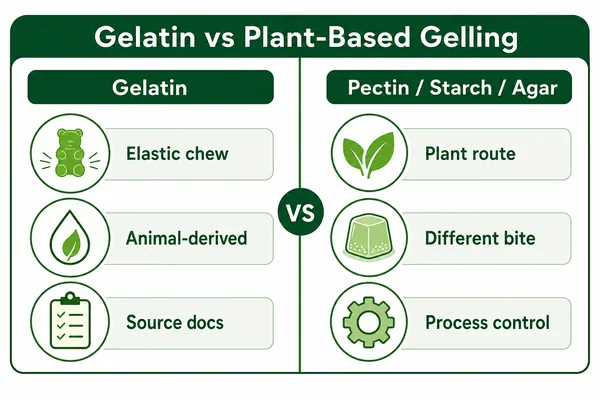
Animal collagen sources and why gelatin creates chew
Gelatin comes from collagen. Collagen is a structural protein found in animal connective tissues. During gelatin production, collagen is processed so it can dissolve in hot water and form a gel as it cools. That gel-forming behavior is why gelatin works so well in classic gummy candy.[^3]
In a gummy, gelatin helps create elasticity. It gives the product a springy chew and allows the shape to hold. The strength of the gelatin can also affect how firm, elastic, or soft the gummy feels. For brands, gelatin can be useful when the target is a familiar gummy-bear chew.
The limitation is that gelatin is not vegan. The animal source also matters for certain dietary, cultural, or religious positioning. I would not let a brand make a claim based only on the word "gelatin" in a formula. The exact source and supplier documentation matter.
Pork, beef, halal, kosher, and vegan-positioning considerations
Some gummies use pork-derived gelatin. Some use bovine gelatin. Some use fish gelatin. Some use gelatin with halal or kosher documentation. Some avoid gelatin entirely and use plant-based gelling systems. The consumer question is often "Do gummies have pork gelatin?" The practical brand answer is that the label and documentation must confirm the source.
I would handle this as a claim-control issue, not a casual wording issue. If a brand wants halal, kosher, vegan, vegetarian, or gelatin-free positioning, the gelling system, flavors, colors, processing aids, coatings, and documentation may all need review.
| Positioning goal | Ingredient route to check | Documentation question |
|---|---|---|
| Gelatin-free | Pectin, starch, agar, carrageenan, or another non-gelatin system | Does every formula component avoid gelatin? |
| Vegan | Plant-based gelling system plus animal-free flavors, colors, and processing aids | Is the full formula and claim route verified? |
| Halal or kosher | Certified gelatin or suitable plant-based system | Does documentation cover ingredient source and process route? |
| Allergen-aware | Formula and production control review | Are cross-contact and label statements supported? |
For consumers, the safest answer is to check the label and certification marks. For brands, the safer path is to define the claim before sampling. If the claim changes after formula work starts, the base system may need to change, and that can affect texture, taste, cost, and production behavior.
When brands should choose pectin or other plant-based alternatives
Pectin is often the first alternative brands consider when they want vegan or gelatin-free gummies. It is plant-derived and widely used in fruit-style confectionery. It can make a clean, pleasant gummy, but it does not behave exactly like gelatin.
Pectin systems often need careful pH and soluble-solids control. They may set differently during depositing and conditioning. The final texture may be less elastic and more tender or jam-like, depending on the formula. This can be a benefit if the brand wants a fruit chew, but it can disappoint a buyer who expects a classic gummy bear bite.
Other alternatives, such as starch, agar, carrageenan, or mixed hydrocolloids, may fit certain projects. The decision should follow the brand promise. If the brand's main promise is vegan positioning, pectin may be a strong route. If the brand's main promise is classic chew, gelatin may be easier. If both are required, the project needs realistic texture targets before development starts.
What Active Ingredients Can Go Into Supplement Gummies?
This is where a candy-style answer becomes too shallow for supplement brands.
Supplement gummies can include vitamins, minerals, fiber, botanicals, probiotics, collagen, caffeine, amino acids, and other functional ingredients. The active ingredient affects flavor, texture, dosage, stability, serving size, and production conditions, so it must be reviewed with the gummy base, not added at the end.
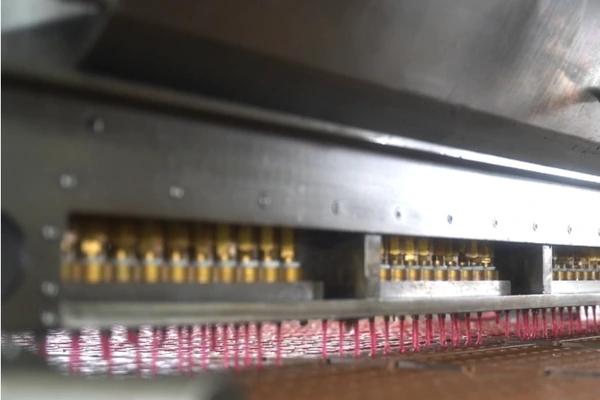
Vitamins, minerals, botanicals, fiber, probiotics, and functional actives
Many supplement actives can be developed into gummies, but not every active fits every gummy format. Vitamins are common in gummy supplements. Minerals can bring taste and texture challenges. Botanicals may add bitterness, color, odor, or stability concerns. Fiber can change viscosity and serving size. Probiotics may require careful heat, moisture, and storage review.[^4]
This is why I separate "can be listed in a concept" from "can be produced well." A formula sheet may make an active ingredient look easy. A real gummy has to carry the active through mixing, depositing, drying, coating, packaging, and storage. The active also has to fit the serving size that a consumer will actually use.
Fiber gummies are a good example. A brand may want a meaningful fiber amount, but the type and dose can change texture and chew. I would review that against serving size and consumer expectation before claiming the formula is ready. For more context, see Talvenda's guide on whether fiber gummies are as effective as powder.
Why active load changes texture, taste, serving size, and stability
Active load means how much functional material the gummy has to carry. A low active load may be easier to formulate. A high active load can crowd the base, change solids, increase bitterness, affect gel strength, or force a larger serving size.
Taste is often the first problem the brand notices. Texture is often the second. Stability may be the problem that appears later. A gummy can taste acceptable in the first sample but become sticky, hard, dull, or unstable after time in packaging. Some ingredients also have moisture sensitivity, oxidation risk, or pH sensitivity.
This is why I like to discuss active load before flavor direction becomes too fixed. If the active load is unrealistic, a beautiful flavor name will not save the product. The brand may need a lower dose, a multi-gummy serving, a different active form, a different base, or a different product format.
| Active type | Common formulation pressure | Early question |
|---|---|---|
| Minerals | Metallic taste, grittiness, higher solids | Can the dose fit the texture target? |
| Fiber | Viscosity, water behavior, serving size | Does the gummy size still make sense? |
| Botanicals | Bitterness, color, odor, sediment risk | Can flavor and color support the extract? |
| Probiotics | Heat and moisture exposure | Can process and packaging protect expectations? |
| Collagen | Dose size and texture balance | Is the gummy format realistic for the intended claim? |
Ingredient examples that need extra formulation review
Some active ingredients deserve extra review because they can create production or claim risk. Fiber, minerals, probiotics, collagen, botanical extracts, caffeine, and strong-tasting actives should not be treated as simple add-ins. They can affect everything from taste masking to drying time.
For collagen gummies, for example, the brand may need to confirm whether the desired collagen amount fits the gummy format and whether the claim should be positioned differently. Talvenda has a separate discussion of collagen gummies formulation because collagen is not only a marketing ingredient. It also creates dose and texture questions.
For probiotics, I would be careful with broad promises. A brand should review the strain, process route, moisture exposure, packaging, and documentation before making claims. For minerals, I would check taste masking and texture early. For botanicals, I would check extract strength, sensory impact, and color change risk. The goal is not to reject these ingredients. The goal is to know what the formula must solve before the project reaches scale.
What Gummy Ingredients Are Made Into in Commercial Production?
A sample can be charming, but commercial production needs repeatable control.
Gummy ingredients become a commercial product through formula development, mixing, depositing, setting, drying or conditioning, coating, and packaging. Supplement gummies also need active-ingredient control, moisture control, documentation, and packaging choices that support the intended label and shelf-life plan.
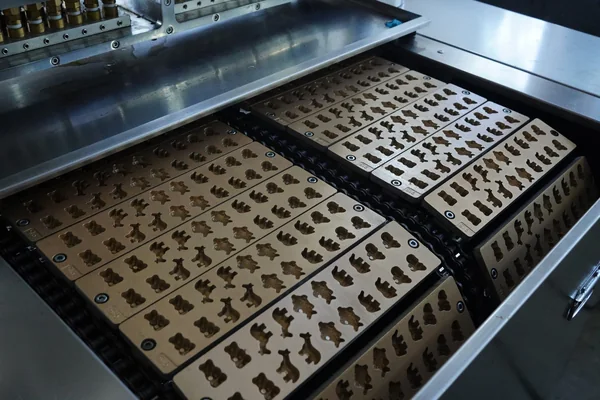
Formula development, mixing, depositing, setting, and drying
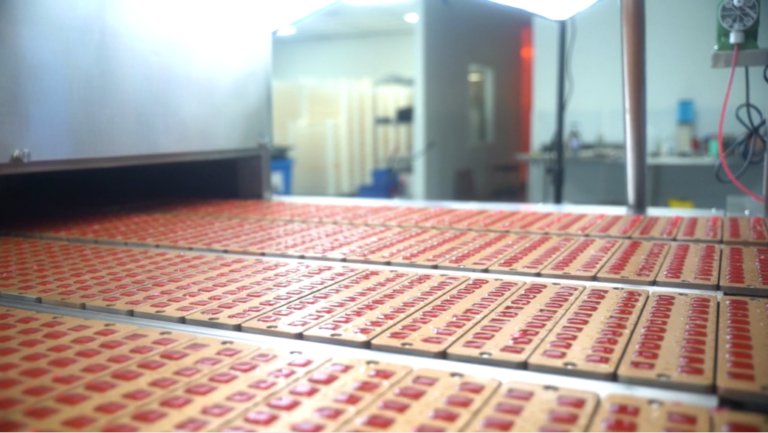
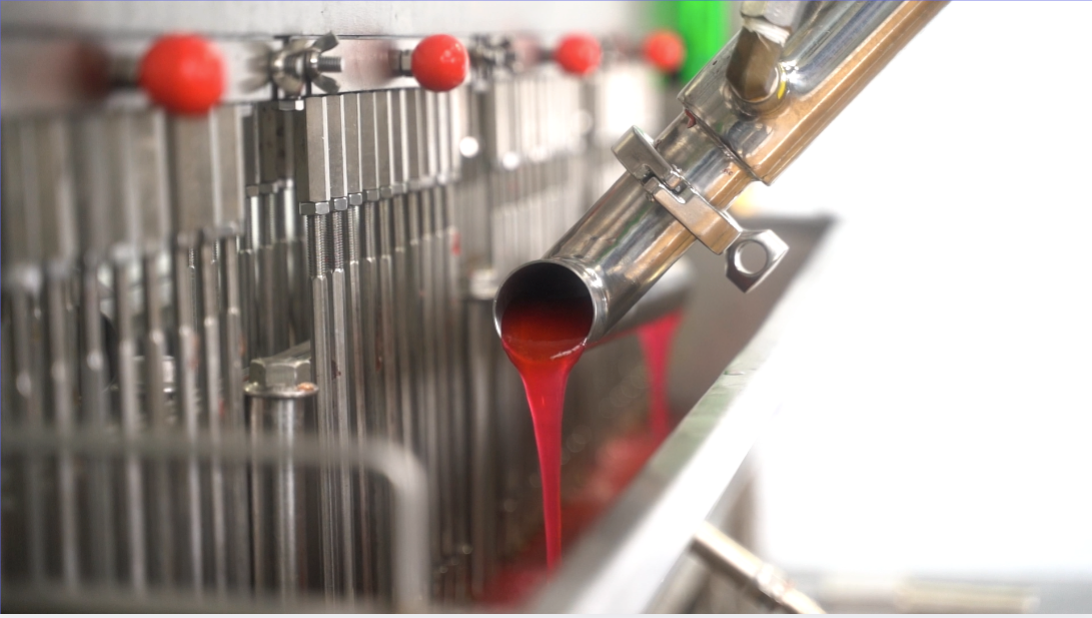
The development path usually starts with the formula: gelling system, sweetener system, acid, flavor, color, active ingredients, and target texture. After that, the process has to turn the formula into repeatable gummies. Ingredients are weighed, mixed, heated or hydrated as needed, deposited into molds, set, dried or conditioned, coated, and packed.
Each step can expose a different problem. A mixture may become too thick for depositing. A gummy may set too fast or too slowly. The shape may release poorly. The surface may stay sticky. The flavor may fade after drying. The active may not fit the process temperature or moisture exposure.
I view this as one connected process, not a list of factory steps. A formula that works in a beaker may not flow well on production equipment. A gummy that looks good after one day may not behave the same after conditioning. This is why development should connect formula feasibility with production-line thinking from the start.
Why moisture, pH, Brix, and texture control matter
Moisture, pH, Brix, and texture are practical control points. They are not only lab terms. Moisture affects stickiness, chew, drying, and storage behavior. pH affects flavor, gelling behavior, and some active ingredients. Brix reflects soluble solids and can influence texture and process control. Texture gives the consumer the final eating experience.
If these controls are weak, a brand may see inconsistent batches. Some gummies may be too soft. Some may become too hard. Some may stick together. Some may fail to match the approved sample. This is especially risky when the product also carries active ingredients.
For brands, the lesson is simple. Do not approve a gummy only because the first sample tastes good. Ask how the production team will control moisture, pH, solids, texture, fill weight, and packaging. In my experience, these details separate a nice idea from a scalable gummy supplement.
Coating, packaging, and shelf-life protection
Coating and packaging protect the final product experience. Oil or wax coating may reduce sticking and improve shine. Sugar or sour coating may support a flavor concept. Packaging can protect against moisture, oxygen, light, and heat exposure, depending on the formula and market route.
Supplement gummies need packaging review because many active ingredients and gummy bases are sensitive to storage conditions. A formula that is stable in one pouch may not behave the same in a clear jar, a high-humidity market, or a warm shipping lane. The package should match the formula's moisture behavior and the brand's retail plan.
This is also where documentation matters. A brand should understand what batch records, quality document expectations, and release documentation are connected to the product. Talvenda supports brands with production planning, packaging coordination, and documentation thinking, but the exact proof chain should match the real formula and project scope.[^5]
Label, Dietary, and Consumer Trust Considerations
Ingredient choices become consumer promises once they appear on the label.
Label and dietary claims for gummies should reflect the actual formula, documentation, and claim route. Brands should verify sugar content, sugar-free claims, vegan or gelatin-free status, halal or kosher positioning, allergens, active ingredients, and serving size before launch.

Sugar content, sugar-free claims, and serving-size expectations
Sugar content is one of the first label details consumers notice. Traditional gummies often rely on sugar and syrup for sweetness, body, and texture. Sugar-free gummies may use polyols, fibers, or high-intensity sweeteners, but those choices can change mouthfeel, digestive tolerance, and production behavior.
Serving size also matters. If one gummy cannot carry the intended active dose, the serving may need two or more gummies. That can affect cost, bottle count, label design, and consumer compliance. A brand may prefer a small serving, but the formula may need more space.
I would not handle sugar reduction as a late-stage marketing edit. It changes the base system. If sugar-free or low-sugar positioning is important, that should be part of the first formulation brief. The sweetener system, active load, flavor, texture, and packaging should be developed together.
Vegan, gelatin-free, halal, allergen, and transparency claims
Vegan and gelatin-free claims usually start with the gelling system, but they do not end there. Flavors, colors, processing aids, coatings, and documentation may also need review. Halal and kosher positioning may require ingredient source control and certification review. Allergen statements depend on the real formula and production context.
For consumers, transparency means the label is clear. For brands, transparency means the formula, supplier documents, and manufacturing route support the claim. If a brand says vegan, gelatin-free, or halal-friendly, the supporting evidence should be ready before the product is sold.[^6]
I avoid casual claim language because it creates risk later. "Plant-based" may sound simple, but the brand still needs to confirm every relevant ingredient route. "Sugar-free" may sound clear, but the formula has to meet the claim rule in the target market. Claims should be checked with the right regulatory and certification support where needed.
Why supplement brands need finished-product proof, not just a concept formula
A concept formula is a starting point. A finished supplement gummy needs support showing that the real product matches the intended claim, active load, sensory target, and quality expectation. That support may include formula records, batch documents, quality document expectations, packaging review, and stability planning appropriate to the project.[^5]
The reason is practical. Ingredients can change during production. Moisture can move. Texture can shift. Active ingredients may be sensitive to heat, acid, oxygen, or time. Packaging can influence the finished product. If the brand relies only on a concept formula, it may miss the gap between a promising idea and a reliable commercial item.
For Talvenda projects, I prefer to connect formula feasibility, sample review, production planning, packaging, and quality documentation as one path. This does not mean every product needs the same test plan. It means the brand should know what evidence supports the final label and what still needs review before scale-up.
How Brands Should Brief a Gummy Manufacturer Before Requesting Samples
A gummy brief should turn a product idea into a short set of decisions a manufacturing team can assess before sample work begins.
Before requesting gummy samples, a brand should state what must stay true about the product, what can change during feasibility review, and what the first sample needs to demonstrate. That keeps the sample discussion focused on the finished product rather than a collection of disconnected preferences.
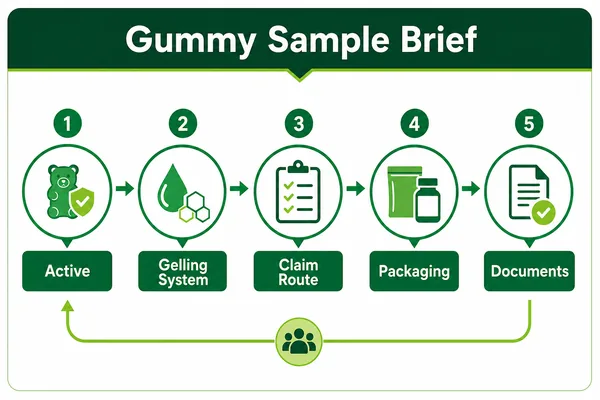
The Decisions to Lock Before Feasibility Review
Start with the decisions that define the product promise. These are the points a manufacturing team should not have to infer from a mood board, a competing label, or a broad product idea.
Confirm the target market, product position, intended serving format, active-ingredient direction, dietary requirements, and label-claim boundaries. Also state any packaging requirement that is genuinely fixed. A brand may know that it needs a vegan product, a particular count format, or a specific market label direction before sampling; those are requirements, not optional preferences.
It also helps to separate a requirement from a target. “A fruit flavor” leaves room for formulation review. “A non-negotiable citrus profile that must support a botanical active” gives the production discussion a clearer starting point.
The Choices to Leave Open for Manufacturability Review
Not every part of a gummy concept needs to be finalized before the first sample. Keeping selected choices open gives the manufacturing team room to assess the product as a finished system.
Texture, sweetness direction, flavor approach, gelling-base preference, shape, surface finish, and some packaging details can be marked as either fixed or open to recommendation. The useful question is not “Can every preference be included?” It is “Which preferences create the product value, and which can be adjusted if the sample reveals a tradeoff?”
For example, a brand may require plant-based positioning but leave the exact texture direction open. Another may require a small serving format but allow the team to recommend a more realistic flavor or base-system route. That distinction makes a feasibility review more productive without weakening the brand brief.
What the First Sample Must Answer
A first sample is a decision point, not final proof that every commercial-production question has been resolved.
The first sample should help a brand judge whether the product direction is credible in taste, texture, serving experience, appearance, and packaging fit—and identify which open questions need another controlled round of review.
Set the approval criteria before the sample arrives. Reviewers can then comment on the same product attributes rather than sending unrelated feedback after each tasting. Keep the feedback tied to the sample version, the original requirement, and the specific change being requested.
Talvenda's gummy supplement manufacturer checklist can help teams structure that review before moving toward production.
Do not change the active direction, flavor, texture, serving format, packaging route, and product position all at once. When several variables move together, it becomes harder to tell which tradeoff improved the concept and which one created a new issue.
A One-Page Gummy Formulation Brief Checklist
| Brief area | Record before requesting samples | Leave open only when appropriate |
|---|---|---|
| Product purpose | Target market, product position, intended user, and serving format | Secondary positioning details that do not change the product promise |
| Formula direction | Active direction, dietary requirements, label-claim boundaries, and non-negotiable restrictions | Base-system, sweetener, texture, or flavor alternatives for feasibility review |
| Sensory and format | Required flavor family, shape or count constraints, and any critical appearance requirement | Exact flavor profile, texture nuance, surface finish, and mold choice |
| Packaging and commercial context | Fixed packaging format, sales channel needs, first-order expectation, and timing context | Packaging presentation details that can follow sample feasibility |
| First-sample review | Named reviewers, acceptance questions, version number, and requested next decision | The final commercial-production decision until the feedback is documented |
The aim is not to dictate a recipe. It is to give the manufacturing team enough context to identify what can be evaluated now, what needs a tradeoff discussion, and what should wait until the next sample decision.
If the brief shows that the available base would force too many compromises, the next question may be whether a stock route or a custom route fits the project better. See Stock Formula vs Custom Formulation for that route decision. For a project-specific feasibility conversation, Talvenda's Custom Services page explains the formulation, packaging, and documentation support available during development.
FAQs About What Gummies Are Made Of
What is the main ingredient in gummies?
The main structure ingredient is usually a gelling agent, such as gelatin or pectin. Gummies also need sweeteners, water, acid, flavor, color, and often a coating. Supplement gummies add active ingredients such as vitamins, minerals, fiber, botanicals, or probiotics.
What part of the animal is in gummies?
When gummies use gelatin, the gelatin is made from collagen that commonly comes from animal skin, bones, or connective tissue. Not every gummy uses gelatin. Some gummies use pectin, starch, agar, carrageenan, or other gelatin-free systems.[^3]
Do gummies have pork gelatin?
Some gummies use pork-derived gelatin, some use bovine gelatin, some use fish gelatin, and some use plant-based alternatives. The only reliable answer comes from the product label and supplier or certification documentation. Brands should confirm gelatin source before making dietary or religious-positioning claims.
Are there vegan gummies?
Yes. Vegan gummies usually avoid gelatin and use pectin, starch, agar, carrageenan, or other plant-based gelling systems. A vegan claim should still be checked across the full formula, including flavors, colors, coatings, and documentation.
Are supplement gummies different from candy gummies?
Yes. Candy gummies mainly need to taste good and hold texture. Supplement gummies also need to carry active ingredients, support serving-size expectations, manage stability, and match label claims. That makes formulation, packaging, and documentation more important.
Conclusion
Gummies are built from a base system, actives, texture, moisture control, and production choices; scaling works only when those pieces support the same product promise.
Once the base system, active ingredients, texture target, and moisture behavior are understood, the next step is choosing a practical production route. As an OEM/ODM gummy manufacturer, Talvenda can help supplement brands move from a general gummy idea into low-MOQ market-tested in-stock gummies, stock formula modification, or custom gummy development. The review can cover sample development, packaging and label support, documentation and testing expectations, and quality-controlled production, giving your team a clearer path before quotation. Start with Talvenda through the project inquiry form.
[^1]: S. K. Kim et al., "Physicochemical and Sensory Stability Evaluation of Gummy Candy Prepared Using Pickering Emulsion," Foods, 2024. https://pmc.ncbi.nlm.nih.gov/articles/PMC10818720/ [^2]: FDA, "Interactive Nutrition Facts Label: Sugar Alcohols," 2021. https://www.accessdata.fda.gov/scripts/interactivenutritionfactslabel/assets/InteractiveNFL_SugarAlcohols_October2021.pdf [^3]: Michigan State University Center for Research on Ingredient Safety, "Gelatin." https://cris.msu.edu/news/trending/gelatin/ [^4]: Fenster et al., "The Production and Delivery of Probiotics: A Review of a Practical Approach," Microorganisms, 2019. https://pmc.ncbi.nlm.nih.gov/articles/PMC6463069/ [^5]: FDA, "Current Good Manufacturing Practices (CGMPs) for Food and Dietary Supplements." https://www.fda.gov/food/guidance-regulation-food-and-dietary-supplements/current-good-manufacturing-practices-cgmps-food-and-dietary-supplements [^6]: FDA, "Structure/Function Claims." https://www.fda.gov/food/nutrition-food-labeling-and-critical-foods/structurefunction-claims