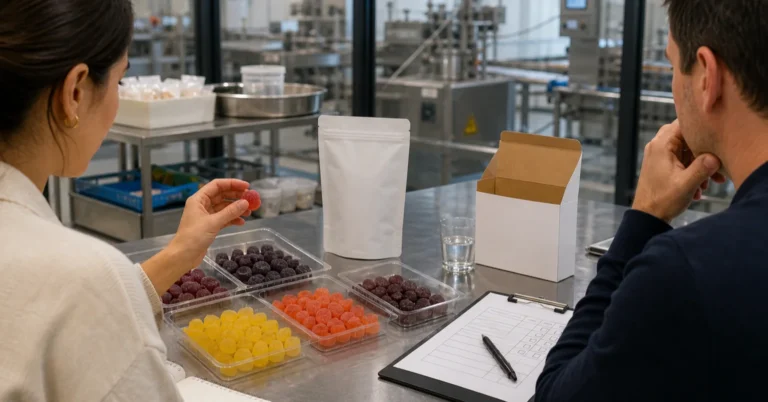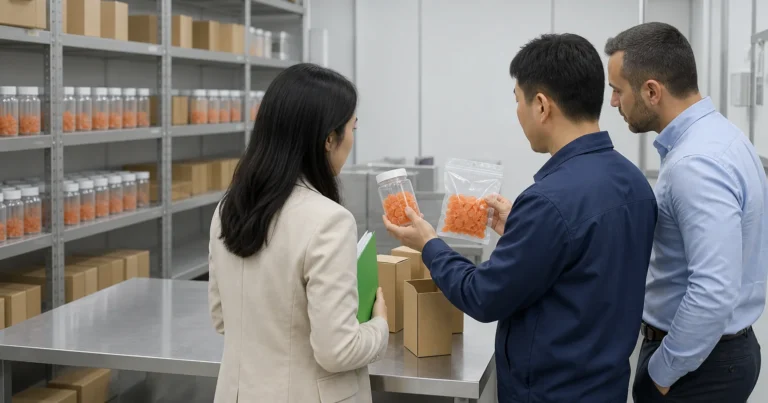
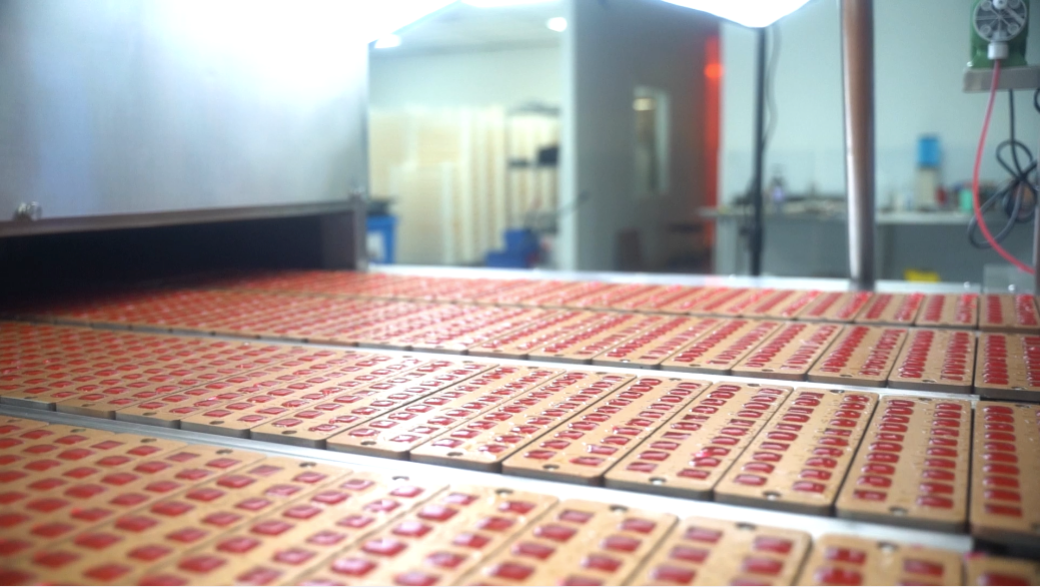

Gummy manufacturing lead time varies by project route. Stock-formula projects generally have a 20–30 day lead time after order confirmation, while custom projects generally have a 40–90 day lead-time range, depending on formula complexity, packaging, testing, documentation, and shipment requirements. Talvenda publishes these figures as planning references rather than fixed lead-time promises.
A credible gummy manufacturing timeline therefore needs two answers: the applicable planning range and the dependencies that could move it. The useful question is not simply, “How soon is the production slot?” It is, “Which open dependency could prevent that slot from becoming a released, shipment-ready product?”
Decision Snapshot
- Match the project to the stock-formula or custom route before applying a planning range.
- Confirm the starting event and whether the project range ends at production, release, shipment, or delivery.
- Track sourcing and formula direction, sample approval, production, packaging, release, and shipment as connected stages.
- Give every open item an owner, a decision point, and a clear condition for closing it.
- Treat a requested launch date as conditional while a required stage or approval remains open.
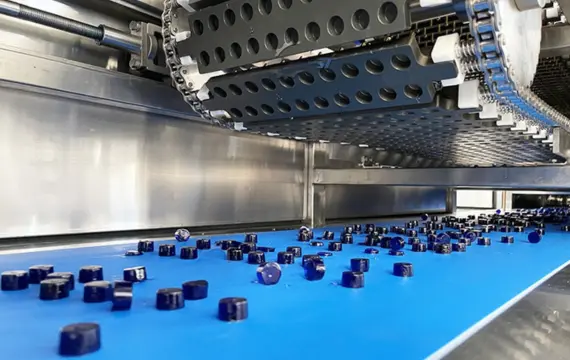
I would not treat a production slot as a launch date when the product brief, material direction, sample decision, packaging proof, release conditions, or shipment boundary are still open. The factory run is one handoff inside a longer chain, so the plan needs to make that chain visible.
Typical Gummy Manufacturing Lead-Time Ranges
Stock-formula and custom gummy projects use different planning ranges because the work and dependencies are not the same.
Talvenda currently plans a stock-formula gummy project at 20–30 days after order confirmation and a custom gummy project at 40–90 days. Custom timing depends on formula complexity, packaging, testing, documentation, and shipment requirements.
| Project route | Talvenda planning range | How to use the range |
|---|---|---|
| Stock-formula gummy project | 20–30 days after order confirmation | Use as a planning reference after the order is confirmed, then check the project-specific production, packaging, release, and shipment conditions. |
| Custom gummy project | 40–90 days | Confirm the formula, packaging, testing, documentation, and shipment requirements that define the applicable project plan. |
The ranges are not interchangeable and should not be detached from their conditions. They do not guarantee that every stock project will finish on day 20 or that every custom project will follow the same path. The project team still needs to confirm the scope, start point, included stages, material and component status, production availability, approval path, and destination requirements.
How to Read the 20–30 Day Stock-Formula Range
A stock formula can reduce the development work required to establish a new formula direction. That is why the route can support a shorter planning range. It does not remove the need to confirm the order, production inputs, packaging route, project-defined checks, release condition, and shipment arrangement.
“After order confirmation” is the stated starting point for the 20–30 day range. Before a brand uses that range for a campaign, channel, or inventory commitment, it should also confirm what order confirmation means for the specific project and which end point the plan is measuring. Production completion, release, shipment departure, and delivery are different milestones.
The practical advantage of a stock route is a shorter defined path, not immunity from project dependencies. If a brand changes the formula, pack configuration, artwork, testing request, documentation scope, or shipment requirement, the project may no longer follow the original planning basis.
Why Custom Gummy Projects Use a 40–90 Day Range
A custom project has a wider planning range because its path is defined by the work the approved concept requires. Formula complexity can affect feasibility and sample work. Packaging can introduce component and artwork dependencies. Testing and documentation can affect the release path. Shipment requirements can change what the team must prepare before the product moves onward.
The 40–90 day range should therefore start a scope discussion rather than end one. The brand and manufacturing team should identify which formula, sample, production, packaging, testing, documentation, release, and shipment conditions apply, then confirm the project-specific starting event and planning end point.
This avoids a common planning error: treating “custom gummy” as one standard job. Two projects can fall within the same published range while carrying different work because their formula, packaging, review, or destination requirements are different.
Why Production Time Is Only One Part of Lead Time
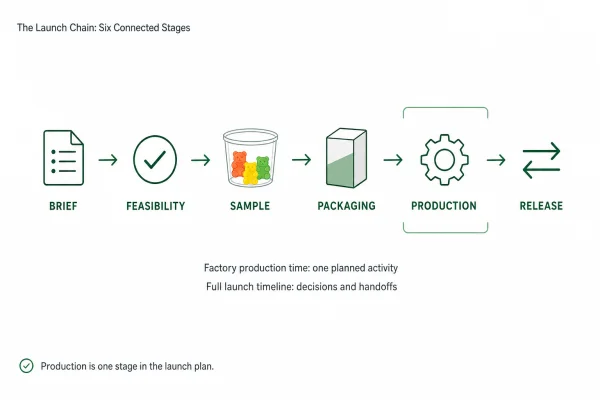
A production date usually refers to one scheduled manufacturing activity. A full lead-time plan begins with the inputs that make that run possible and continues through packaging, project-defined release, and the agreed shipment milestone.
Those activities are connected, but they do not always move in a straight line. Material coordination can proceed while sample work is active. Packaging and artwork work can advance in parallel with production planning. The team should still know which activities can safely continue and which decisions remain conditional on an earlier result.
I use a simple test. A production slot tells the team when a planned factory activity may occur. A full gummy manufacturing timeline explains what needs to be true for the project to enter that activity and what needs to happen before the finished work can move onward[^1]. A slot without those conditions is a date without a working basis.
The distinction matters beyond manufacturing. Marketing activity, channel preparation, inventory planning, and internal launch commitments may rely on packaging, records, release review, shipment, or delivery. If those commitments are attached to the factory date alone, an unresolved downstream handoff can become a wider commercial problem.
Stages That Build a Gummy Manufacturing Timeline
The published range becomes useful when the brand can see the work inside it, from sourcing and formula direction through shipment.
A workable gummy manufacturing timeline connects six stages: sourcing and formula direction, sample approval, production, packaging, release, and shipment. Each stage needs a defined input, owner, closure condition, and receiving handoff[^2].
Packaging and artwork work may advance in parallel, but the stage is listed after production here to distinguish manufacturing the gummy from packing the finished product.
1. Sourcing and Formula Direction
The product brief and formula route are the first schedule-control points because they define what needs to be sourced, developed, and reviewed. The brief should be specific enough to support feasibility and sourcing discussions, while making it clear which decisions are fixed and which are still open.
Depending on the project, the brief may include the intended market, product format, active direction, serving goal, flavor direction, positioning requirements, packaging idea, launch channel, and commercial constraints. These inputs can affect ingredient and material requirements, sample expectations, production planning, packaging decisions, documentation, and shipment conditions.
The team should identify which ingredients, materials, or responsibilities require project-specific confirmation. A stock formula can begin from an established product route, while a custom formula may require additional feasibility, sourcing, and sample decisions. Neither route should assume that every input is available or accepted until the responsible owner confirms it for the project.
The practical discipline is to separate requirements from preferences. A requirement is a boundary the product needs to meet. A preference may be traded if it conflicts with feasibility, sensory direction, supply practicality, packaging, or commercial constraints. The brief should show which items belong in each group and who can approve a tradeoff.
Sourcing status also needs precise language. “Materials in progress” does not tell the team whether an input has been identified, ordered, received, reviewed, or accepted for the planned activity. The timeline should identify the current state, owner, decision condition, and effect on sampling or production.
Once sample or production work relies on an approved formula or material direction, revising that direction is no longer a simple brief edit. The team should assess which sourcing, sample, production, packaging, or release work may need a new decision before accepting the change.
2. Sample Development and Approval
Formula feasibility and sample approval are related, but they answer different questions. Feasibility asks whether the intended direction can reasonably move into development within the agreed boundaries. Sample approval asks whether a specific sample can support the next defined handoff.
A sample decision should not be reduced to whether several people “like it.” The review needs a clear scope. The team should know which characteristics are being evaluated, which conditions remain open, whether packaging assumptions affect the decision, and whether later confirmation is expected before commercial production.
The review process matters as much as the review criteria. Scattered comments from several stakeholders can create repeated revisions without a clear conclusion. A brand can reduce that risk by naming the final approver, deciding who provides advisory input, and consolidating feedback before it reaches the development or production team.
I also want the approval record to show what the sample decision does not prove. It may establish an agreed reference for the next stage, but it does not automatically close packaging, documentation, production, or release conditions. Keeping that boundary visible prevents one approval from being interpreted as approval of the entire launch chain.
A fast factory slot cannot recover time lost to an unfinished brief or an unresolved sample decision. If a brand wants to protect its planning target, sample review should be a prepared decision event. Reviewers, criteria, consolidated feedback, and the approval owner should be ready before the decision becomes a schedule dependency.
3. Production Planning and Manufacturing
Production planning becomes dependable when the team understands which approved inputs are expected for the run. A date attached to an incomplete handoff may remain provisional even when it appears in a shared calendar. The plan should state the conditions for confirming the slot and the owner of each open production input.
Before the run, the team should confirm the current product basis, sample decision, required materials, production packet, accepted changes, and any project-specific conditions that must close. The applicable list varies by project, but each item should connect to a current owner or record rather than a verbal assumption.
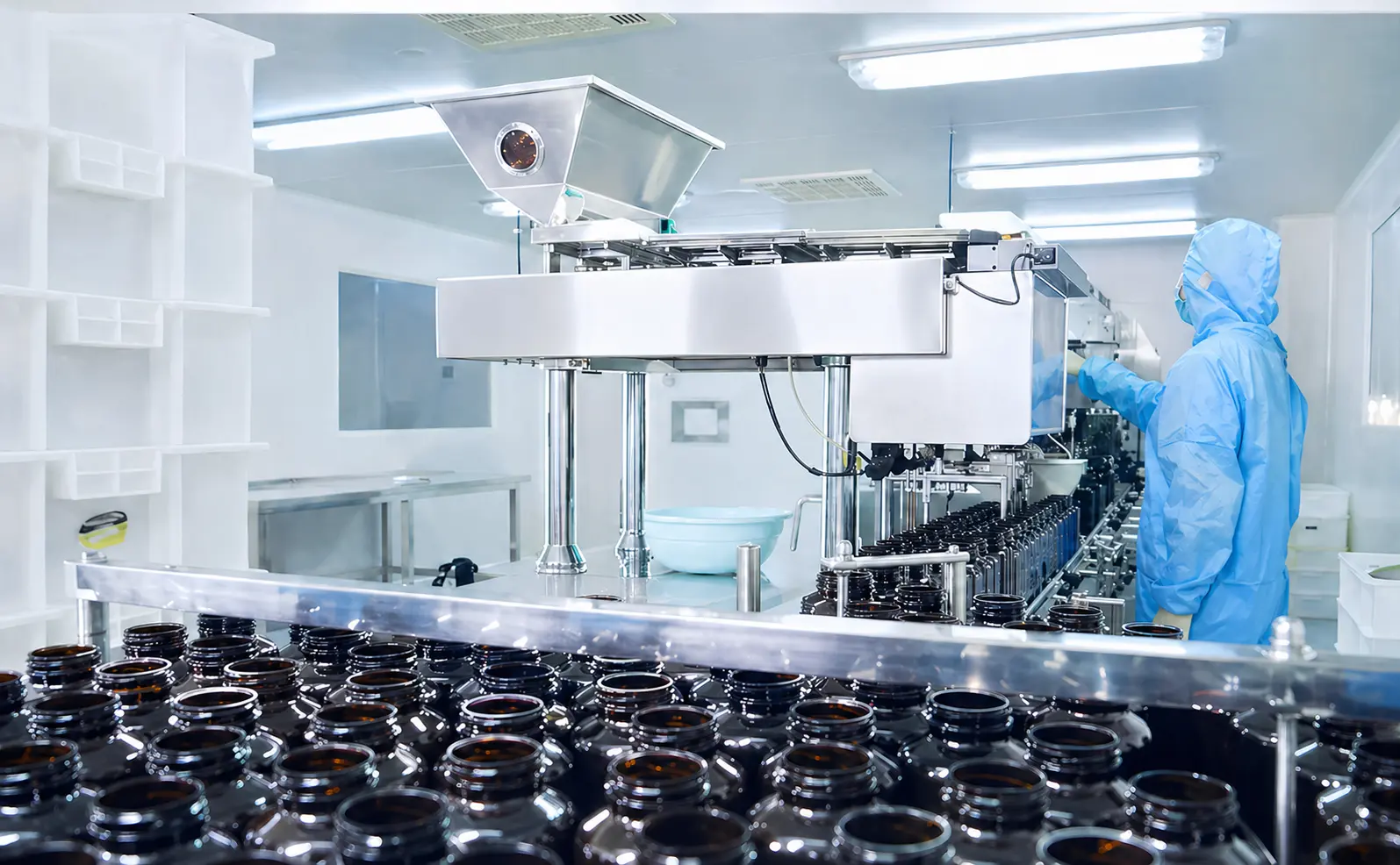
The production stage is the controlled manufacturing activity, not the end of the commercial timeline. Completion of the run does not automatically mean the product is packaged, released, shipped, or delivered. Those downstream milestones should remain separate in the plan.
Production availability can affect timing, but a faster slot cannot restore time lost to an unresolved formula, sourcing issue, sample decision, or change review. This is why the planning range should be supported by a confirmed production handoff rather than a calendar date alone.
4. Packaging, Artwork, and Component Readiness
Packaging follows production in the physical product path, although component sourcing, pack-format decisions, and artwork review often need to progress earlier or in parallel. The team should mark which inputs are provisional, which are controlled, and which must close before packing can proceed.
Early work may include comparing pack formats, preparing a design direction, gathering component information, and defining artwork responsibilities. Final approval may still depend on product details, pack configuration, proof review, or other project-specific conditions. The timeline should allow useful parallel progress without pretending those conditions have already closed.
Component readiness means more than choosing a bottle, pouch, closure, label, carton, or another format. The selected direction needs to align with the product concept, pack configuration, packing expectations, and the information the brand intends to present. If one of those inputs changes, the team should identify which proofs, orders, or handoffs may need review.
Artwork readiness also needs named ownership. The brand team may supply copy and visual direction. Other project reviewers may assess production fit, required records, or market-specific considerations within their agreed scope[^3]. The timeline should show who supplies the input, who reviews it, who can approve it, and which version is current.
“Design in progress” is too broad to manage. The open point might be component selection, dimensions, panel copy, proof approval, color direction, or coordination of a delivery condition. Specific status language gives the owner a decision to close and lets other teams judge whether their work can proceed.
Brands that need a deeper view of the physical production sequence can use the related gummy vitamin manufacturing process resource. The focus here remains the decision chain that makes that process ready to begin.
5. Release, Shipment, and the Delivery Boundary
Release is where physical completion can be mistaken for commercial readiness. A completed manufacturing and packaging activity may still be followed by the project’s defined review, records, testing, or disposition before inventory moves into the next planned activity[^4].
Documentation can affect this handoff. A project may rely on controlled specifications, approved proofs, component records, production records, testing outputs, or other agreed checks[^5]. There is no single document list that fits every product, market, manufacturer, and commercial arrangement. The timeline should identify the project-defined record, owner, and decision it supports.
Shipment is also a boundary, not a synonym for delivery. A planning range may refer to a project milestone before dispatch, shipment departure, arrival, or receipt. Destination, transport arrangement, required shipment records, and the agreed transfer point can affect the path. The project plan should state which milestone ends the quoted range.
I find it useful to plan backward from the receiving team. What does that team need to accept the handoff? Which record or decision supports the transfer? Who confirms it? Which unresolved item could stop it? These questions often reveal gaps that a forward-only list of dates misses.
What Changes a Gummy Manufacturing Timeline
Timeline movement often begins with a reasonable change that enters too late or without tracing the work already built on the approved input.
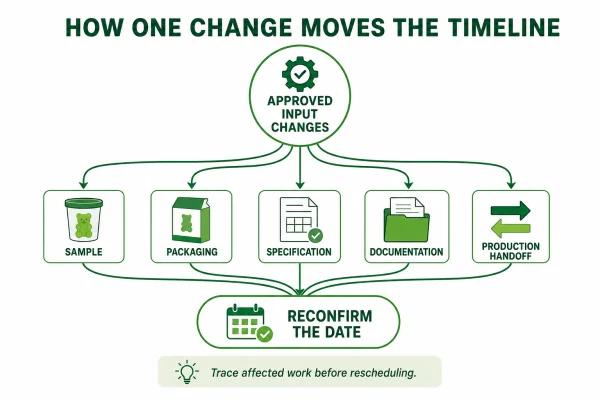
A gummy manufacturing timeline changes when an approved input is revised or a required dependency stays unresolved. The effect depends on which sample, specification, component, record, approval, or handoff needs renewed review.
Changes After Sample Approval
A post-approval change matters because another team may already be using the sample decision as its reference. The effect depends on what changed, what the approved sample represented, and which later activities rely on that representation.
A request involving taste, texture, active direction, serving concept, appearance, or another product attribute should enter an impact review. The team should not assume every change has the same consequence. It should identify the affected input, the review that may need to reopen, and the earliest downstream commitment that could be exposed.
I treat this as controlled reopening. The project owner records the requested change, the reason, the affected work, the reviewers, and the decision needed before the new direction is accepted. That gives the brand a real choice: preserve the approved route or accept the renewed decisions and schedule uncertainty linked to the revision.
The practical rule is not “never change after sample approval.” Some changes improve the product or correct an important conflict. The better rule is to price the change in reopened decisions and schedule exposure before the team commits to it.
Ingredient, Packaging, and Specification Changes
Ingredient, packaging, and specification changes affect different workstreams, but they share one mechanism: they replace an input another team may already have used. The schedule should trace that dependency before assigning a revised date.
An ingredient-direction change may reopen feasibility or sample questions. A packaging change may affect component coordination, artwork, or pack assumptions. A controlled specification change may affect the production, documentation, or release inputs that refer to the previous version. The required response will vary by project.
| Change type | Questions to answer before rescheduling |
|---|---|
| Product or ingredient direction | Does the current sample decision still represent the intended product? |
| Packaging component | Which pack, proof, coordination, or ordering assumptions depend on the old direction? |
| Artwork or label content | Which reviewers need to assess the revised version, and what does approval release? |
| Controlled specification | Which production, record, or release inputs refer to the previous version? |
| Commercial requirement | Does the target market, channel, pack configuration, or first-order assumption change connected work? |
The strongest control is an early impact review. Before approving the change, the team should identify affected work, current commitments, replacement inputs, and the owner of each renewed approval. The aim is to stop an informal request from appearing later as an unexpected schedule problem.
The team also needs a freeze point for the current handoff. A freeze point does not make the project unchangeable. It means a later request enters a visible review instead of silently replacing the agreed basis[^6].
How Late Changes Reopen Production, Packaging, or Release Work
A late change does not add one standard number of days. Its effect depends on which approved input it replaces and how far the project has already progressed. A formula change can reopen sourcing, feasibility, sampling, or production inputs. A component or artwork change can reopen packaging coordination. A new testing, documentation, or shipment requirement can reopen the release path.
The team should trace the change through the stage sequence before it reschedules the end date:
- Identify the controlled input being replaced.
- Identify the sample, production, packaging, release, or shipment work that used it.
- Name the renewed decision owner and evidence required for closure.
- Reconfirm the earliest affected handoff and every downstream commitment that depends on it.
This is why the published 20–30 day and 40–90 day ranges remain planning references. When the approved basis changes, the team needs an impact review before it can confirm whether the original project range still applies.
Planning a Gummy Supplement Launch Without a Fixed Lead-Time Promise
One promised end date can hide uncertainty and leave the team unable to see which open decision deserves attention first.
A gummy supplement launch plan should use decision gates, visible assumptions, dependency buffers, and a confirmed production handoff. Dates become more useful when the conditions behind them remain visible.
Use Decision Gates, Not One End Date
A gate-based plan connects every major date to a condition the team can verify. Instead of managing one countdown, the team manages a sequence of controlled decisions that build toward production and release.
A concise gate sequence may look like this:
- Sourcing and formula direction: the current requirements, material responsibilities, feasibility conditions, and open points are recorded.
- Sample decision: the named approver records approval, revision, or rejection within the agreed scope.
- Production handoff: current commercial inputs, required materials, owners, and change status are confirmed.
- Packaging readiness: the component, artwork, proof, and conditional inputs are aligned for pack-out.
- Release path: the project-defined testing, records, checks, or disposition are identified.
- Shipment handoff: the shipment requirement, transfer milestone, and receiving condition are defined.
Gates also support parallel work. Teams can advance tasks that are safe to continue while protecting work that would become expensive or difficult to reverse. This helps the project move without presenting every downstream date as fixed.
The practical goal is not to promise the shortest timeline. It is to expose uncertainty early enough that the brand can plan samples, artwork, supply, documentation, and launch activity around real decision gates.
Buffer High-Uncertainty Dependencies
A buffer is useful when it protects a named uncertainty. An unexplained cushion on the final date can create the appearance of safety while the open decision remains unmanaged.
High-uncertainty dependencies often have several possible outcomes, outside coordination, repeated review, or a strong connection to later commitments. The team should identify those dependencies during planning and decide how much downstream work is sensible before each one closes. The buffer should remain project-specific rather than becoming a standard duration.
Buffers can be commercial choices as well as calendar space. A team may keep a public date conditional until a gate closes. It may use an internal planning range. It may reserve a decision window for sample reviewers. It may delay dependent component commitments until the relevant input is controlled.
The team should distinguish a buffer from a decision delay. A buffer protects uncertainty that cannot yet be removed. A decision delay exists because the owner, due point, or approval rule is unclear. More calendar space does not solve that management problem.
Buffers should also be revisited when the project basis changes. Once an uncertainty closes, the plan can become more precise. If a new dependency appears, the team can protect the affected commitment before it becomes a launch disruption.
Confirm the Production Handoff
The production handoff is where development inputs become a controlled commercial packet. Confirmation should show that the expected inputs are current, approved by the relevant owners, and aligned with the planned activity.
| Readiness area | Confirmation question |
|---|---|
| Product basis | Is the current brief or controlled specification the commercial basis for this handoff? |
| Sample | Is the sample decision clear, with open conditions recorded? |
| Supply inputs | Are required materials, responsibilities, and open conditions understood? |
| Production | Are the current production inputs, slot conditions, and accepted changes confirmed? |
| Packaging | Are the component direction, configuration, artwork, and proof status aligned for pack-out? |
| Documentation | Are the expected project records, owners, and release conditions defined? |
| Shipment | Is the shipment milestone and receiving boundary defined? |
| Change control | Has each accepted post-approval change been assessed and incorporated? |
This table is a framework, not a universal production checklist. The project team should adapt it to the product, arrangement, and receiving team. Each answer should connect to a current owner or record instead of a verbal assumption.
Confirmation also needs the right review point. A review held while key inputs are still changing may produce false confidence. A review left until the planned activity begins may expose a problem after dependent commitments have already formed. The project plan should place the review where open items can still be closed or the planning target can be qualified.
Questions Before Treating a Gummy Manufacturing Date as a Commitment
A manufacturing date should survive a short pressure test before it drives marketing, inventory, channel, or customer commitments.
A gummy manufacturing date becomes more credible when the brand can show what is locked, what could move, and which approvals remain. Any unanswered condition should stay visible in the plan instead of being hidden inside one end date.

What Is Already Locked?
Start with the controlled basis of the project. The team should be able to identify the current brief, feasibility direction, sample decision, packaging direction, artwork or proof status, component assumptions, and production conditions supporting the date.
“Locked” should mean more than discussed, expected, or almost complete. It should identify the version, owner, and approval state used by downstream teams. If a team cannot tell which version controls the next action, the item is not reliably locked.
A useful review separates three states:
- Locked: approved for the current handoff and subject to visible change control.
- Open: a required input or decision is still pending.
- Conditional: a direction exists, but a named condition needs to close before the next handoff can rely on it.
The review should include commercial assumptions as well as product and packaging inputs. If the target market, launch channel, pack configuration, serving direction, or first-order expectation affects project decisions, that assumption should be visible. A hidden commercial change can reopen work just as easily as a product change.
What Could Still Move the Schedule?
The strongest risk question is specific: which unresolved item could change an approved input, delay a handoff, or prevent the receiving team from accepting the work?
| Risk category | Pressure-test question |
|---|---|
| Product decision | Could new feedback change the brief, sample basis, or specification? |
| Ingredient or supply input | Is any required input, responsibility, or acceptance condition still unresolved? |
| Packaging and artwork | Could a component, configuration, copy, or proof decision reopen coordination? |
| Team approval | Is the decision owner available, and are review criteria aligned? |
| Documentation or release | Is a project-defined record, check, or disposition still open? |
Each risk then needs a trigger, an effect, and an owner. “Packaging risk” is too broad. “Proof approval is open; a copy change could require renewed review before the component handoff” gives the team something it can monitor and close.
This pressure test also exposes false shortcuts. A faster slot cannot restore time lost to an unfinished brief, unresolved sample decision, or changing packaging input. Speed in one stage does not replace control in an earlier handoff.
Which Approvals and Handoffs Remain?
The final review maps each remaining decision to the activity it releases. An approval is useful only when its output is clear and the receiving team knows what it can rely on.
| Remaining item | Possible owner | Required evidence or decision | Activity released |
|---|---|---|---|
| Sample disposition | Named brand approver | Project-defined approval, revision, or rejection record | Next agreed development or commercial step |
| Packaging or artwork proof | Named packaging and brand owners | Current proof status and decision | Component or production-packet coordination |
| Production handoff | Project-defined brand and production owners | Current controlled inputs and open-condition record | Planned commercial manufacturing activity |
| Release handoff | Project-defined release owner | Agreed records, checks, or disposition | Next commercial or logistics activity |
For every remaining handoff, ask three questions:
- Who has authority to approve, reject, or request revision?
- What evidence shows that the handoff is complete?
- What happens to the next commitment if approval is delayed or changed?
Before I treat a gummy manufacturing timeline as a commitment, I want the team to explain the chain in plain language. What is locked? What is conditional? Which evidence permits the next step? Who owns the remaining decision? If those answers are visible, the date has a working basis. If they are not, the date is still a qualified planning target.
Conclusion
A dependable launch plan connects each date to controlled inputs, named owners, assessed changes, and project-defined release evidence. The real value of a gummy manufacturing timeline is early visibility into what can still move the launch.
As an OEM/ODM gummy manufacturing partner, Talvenda can map three possible project routes for the brand team to compare: low-MOQ market-tested in-stock gummies, stock formula modification, or custom gummy development. Route fit and timing depend on the brief, sample direction, packaging, documentation expectations, and production handoff. Share your target market, active direction, and launch timing when you contact Talvenda, and the team can outline a clearer sample and project route without presenting a provisional date as a guarantee.
[^1]: U.S. Government Accountability Office, “GAO Schedule Assessment Guide: Best Practices for Project Schedules,” https://www.gao.gov/products/gao-16-89g. Scope note: General schedule-planning guidance; it supports dependency logic, not a gummy-specific duration. [^2]: NASA, “NPR 7123.1D, Appendix G: Life-Cycle and Technical Review Entrance and Success Criteria,” https://nodis3.gsfc.nasa.gov/displayDir.cfm?Internal_ID=N_PR_7123_001D_&page_name=AppendixG. Scope note: Project-review guidance illustrating tailored entrance and success criteria; not a gummy-manufacturing requirement. [^3]: U.S. Food and Drug Administration, “Dietary Supplement Labeling Guide,” https://www.fda.gov/food/dietary-supplements-guidance-documents-regulatory-information/dietary-supplement-labeling-guide. Scope note: U.S. dietary-supplement labeling guidance; other markets may use different requirements. [^4]: Electronic Code of Federal Regulations, “21 CFR Part 111: Current Good Manufacturing Practice in Manufacturing, Packaging, Labeling, or Holding Operations for Dietary Supplements,” https://www.ecfr.gov/current/title-21/chapter-I/subchapter-B/part-111. Scope note: U.S. regulatory requirements for covered dietary-supplement operations; this does not create a universal release sequence for every market. [^5]: U.S. Food and Drug Administration, “Small Entity Compliance Guide: Current Good Manufacturing Practice in Manufacturing, Packaging, Labeling, or Holding Operations for Dietary Supplements,” https://www.fda.gov/regulatory-information/search-fda-guidance-documents/small-entity-compliance-guide-current-good-manufacturing-practice-manufacturing-packaging-labeling. Scope note: U.S. dietary-supplement CGMP guidance; the applicable record set depends on the operation and project. [^6]: NASA, “6.5 Configuration Management,” https://www.nasa.gov/reference/6-5-configuration-management/. Scope note: General configuration-management guidance; it supports controlled baselines and change review, not a mandatory gummy workflow.