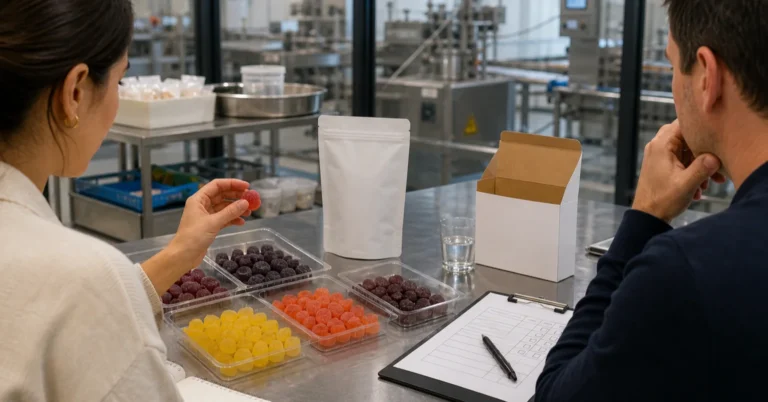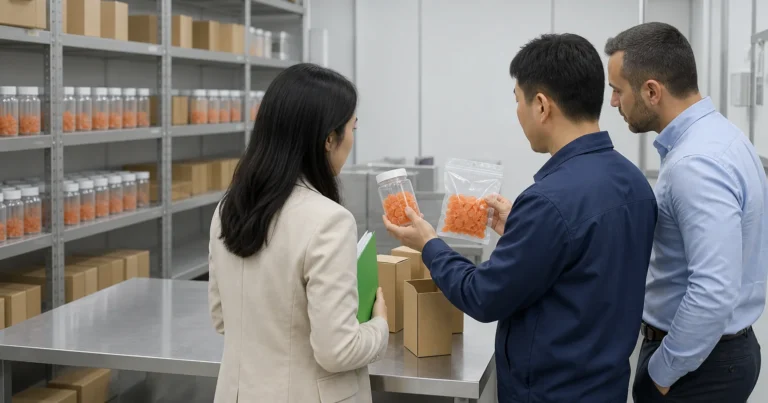
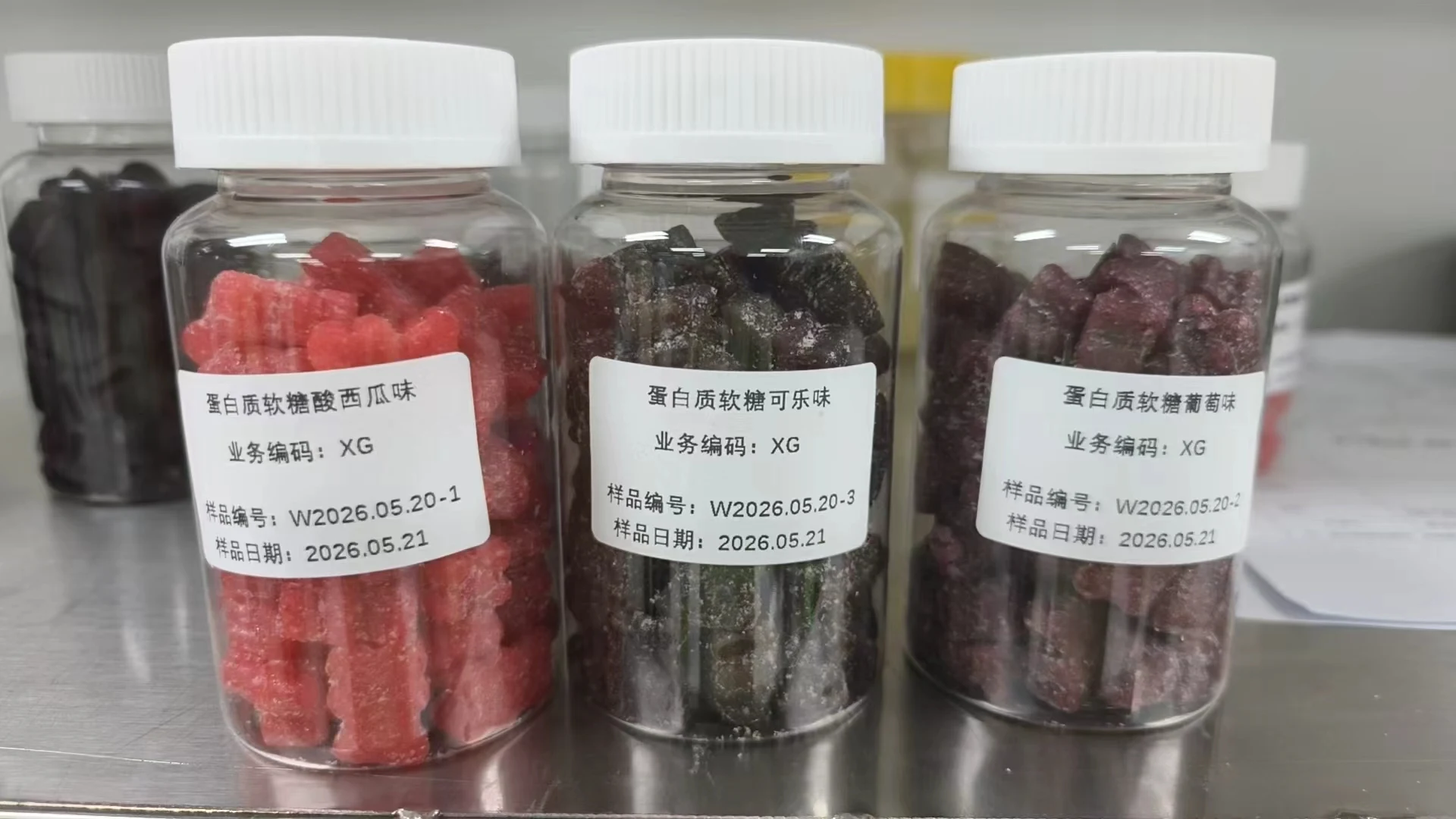

Apple cider vinegar gummies benefits often include digestion, appetite support, weight-management positioning, energy, and general wellness, but the gummy format changes claim support.
An apple cider vinegar gummy benefit story is credible only when serving logic, formula design, label wording, finished-product documentation, and packaging stability support the claims the brand plans to make.
For supplement brands, the category has strong consumer appeal, but liquid ACV claims should not be viewed as automatically valid for gummies.
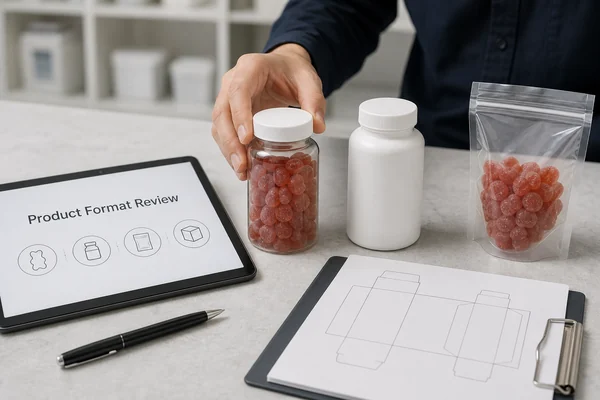
Key takeaways:
- ACV gummies should answer consumer benefit expectations first, but not with miracle language.
- Liquid apple cider vinegar research does not automatically prove the same outcome in gummy format.
- Digestive comfort and appetite support are usually easier to frame than detox, blood sugar, weight-loss, immunity, or skin-result claims.
- A credible ACV gummy needs serving logic, taste masking, stable texture, careful label language, and finished-batch documentation.
- Before launch, I would check whether the consumer promise, formula reality, and proof chain all tell the same story.
What Are Apple Cider Vinegar Gummies?
Apple cider vinegar is familiar, but the gummy format changes how the product works, tastes, and can be described.
Apple cider vinegar gummies are chewable dietary supplements made with ACV powder, concentrate, or related ACV material, plus sweeteners, acids, flavors, gelling agents, and sometimes vitamins or botanicals.
Why ACV Gummies Became a Popular Supplement Format
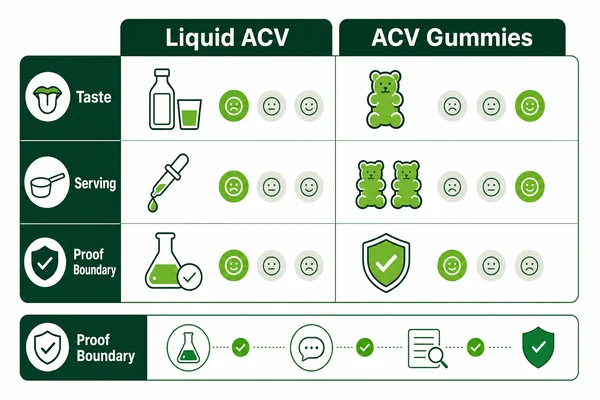
Liquid apple cider vinegar has a strong wellness image, but it is hard for many consumers to use every day. The taste is sharp, the acidity is unpleasant, and the routine can feel inconvenient. A gummy removes much of that friction.
That is why the format became commercially attractive. It turns a harsh-tasting ingredient into a pre-dosed, portable, sweet, easy-to-repeat supplement. For many consumers, the gummy is not only about ACV. It is about making the ACV habit easier.
For brands, that matters because repeat use depends on product experience. A consumer may try liquid ACV once and stop. A pleasant gummy has a better chance of fitting into a daily routine, especially when the flavor, chew, and serving count feel simple.
I usually separate the ingredient story from the format story. ACV creates recognition. The gummy creates usability. A strong product needs both.
Liquid Apple Cider Vinegar vs. ACV Gummies
Liquid ACV and ACV gummies should not be treated as identical products. Liquid vinegar delivers acetic acid directly. Gummies usually rely on ACV powder, concentrate, or a blend, and the finished serving may deliver a different ACV or acetic-acid profile.
The gummy base also changes the product. Pectin or gelatin, sugar or sugar-free sweeteners, acids, flavors, coatings, and added nutrients all affect taste, texture, serving size, shelf life, and label positioning.
| Question | Liquid ACV | ACV gummies |
|---|---|---|
| User experience | Sharp, acidic, often diluted | Sweet, chewable, pre-dosed |
| Serving clarity | Usually measured as liquid volume | Depends on ACV material and serving count |
| Claim risk | Often tied to liquid-use research | Must be checked against gummy serving reality |
| Formula complexity | Low | Higher, because base, flavor, moisture, and active amount interact |
This is the first claim boundary. A gummy may offer a convenient ACV-inspired supplement format, but it should not borrow every liquid vinegar claim unless the serving, ingredient form, and evidence support that comparison.
Why Brands Like This Category
Brands like ACV gummies because the category has broad awareness and flexible positioning. The product can sit near digestive wellness, appetite support, weight-management routines, keto-friendly concepts, energy-positioned blends, or daily wellness.
That flexibility is useful, but it can become a problem. If one gummy tries to promise digestion, weight loss, blood sugar control, energy, detox, immunity, skin clarity, and keto support at the same time, the marketing story can become stronger than the formula[^1].
I use ACV gummies as a benefit-story pressure test. Before the brand locks the label, I want to know which promise the serving can support, which claim language is realistic, and what proof will exist after production. A good sample is only the beginning.
Apple Cider Vinegar Gummies Benefits: What Consumers Expect
Consumers often expect ACV gummies to do many jobs. The brand must separate demand from defensible product language.
The most common apple cider vinegar gummies benefits are digestive comfort, appetite or weight-management support, energy, immunity, detox, and skin-related wellness. These are consumer expectations, not guaranteed outcomes.
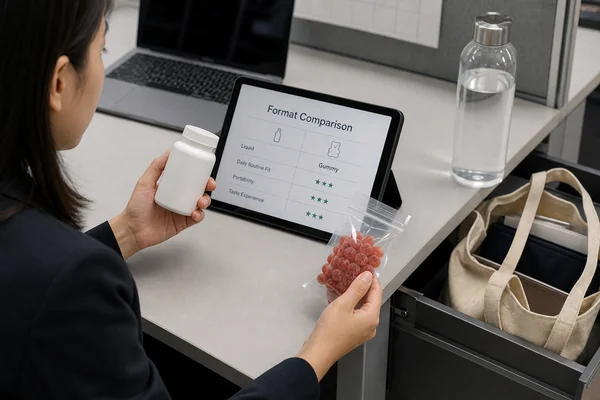
Digestive Comfort and Appetite Support
Digestive comfort is one of the more natural ACV gummy benefit areas. Consumers associate apple cider vinegar with acidity, meals, and gut comfort. They may also connect ACV with appetite control or feeling fuller between meals.
For a brand, the safer wording is usually support language. "Supports digestive wellness" is different from "relieves indigestion." "May fit into an appetite-management routine" is different from "controls appetite."
The formula still has to support the experience. A high-sugar gummy, an aggressive sugar alcohol system, or a large serving count can weaken the consumer promise. The gummy format should help the routine, not create a new tolerance problem.
When I review this section of a concept, I check the serving first. How many gummies are needed? How much ACV material is present? Does the sweetener system create its own digestive concern? Those answers shape the claim before the copy is written.
Weight Management and Blood Sugar Support
Weight management and blood sugar support are attractive claims, but they need more caution. Consumers often connect ACV with post-meal routines, low-carb habits, or weight-control goals. That does not mean an ACV gummy can promise weight loss or blood sugar control.
A safer approach is to position the product as part of a broader routine. The brand can discuss how consumers use ACV gummies alongside diet, movement, hydration, or low-sugar lifestyle choices. It should avoid language that makes the gummy sound like a treatment or shortcut.
From a product-development view, the key question is whether the claimed benefit depends on acetic acid. If it does, the brand should understand the ACV material, the acetic-acid relevance, and the amount delivered per serving. If the serving cannot support a strong message, the message needs to become softer.
This is also where sugar-free positioning often enters the brief. A low-sugar or keto-oriented ACV gummy can make commercial sense, but the sweetener system, texture, tolerance, and label rules must be reviewed before the benefit story is built around it.
Energy, Immunity, Detox, and Skin Claims
Energy, immunity, detox, and skin claims appear often in ACV gummy marketing. In many formulas, these benefits come more from added vitamins, minerals, or botanicals than from ACV itself.
That can be a valid formula strategy. B vitamins may support energy-metabolism language. Vitamin C or zinc may support normal immune-function language. Fruit powders or botanicals can add a more complete wellness story.
The problem starts when every benefit is attributed to ACV. If vitamin B12 carries the energy angle, the label and content should not imply that ACV alone is the energy driver. If skin language depends on a beauty nutrient, the formula should include that nutrient at a meaningful and supportable level.
Detox and cleansing language need special care. Consumers may use those words casually, but they can create a strong body-function impression. I would either avoid broad detox promises or keep the language very cautious and routine-based.
Which Apple Cider Vinegar Gummies Benefits Need More Caution?
A strong ACV gummy page should filter claims, not repeat every popular benefit as fact.
The claims needing the most caution are weight loss, blood sugar control, detox, immunity, and skin results. These can quickly become medical, outcome-based, or unsupported advertising claims.
Liquid ACV Research Does Not Automatically Apply to Gummies
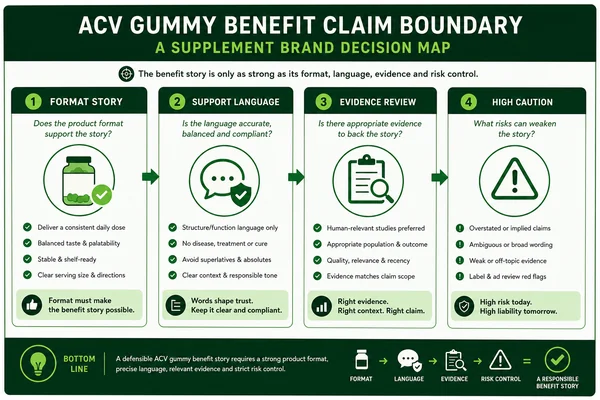
This is the central evidence boundary. Most ACV health discussions come from liquid vinegar use, not from finished ACV gummy products[^2]. The ingredient form, serving amount, acidity, and use pattern can all be different.
Gummies may contain ACV powder, ACV concentrate, or a blend. They also include a matrix of sweeteners, acids, flavors, gelling agents, coatings, and added nutrients. That matrix changes the product from a simple vinegar serving into a formulated supplement.
For brands, the claim language should reflect that difference. It is reasonable to say gummies provide a convenient ACV format. It is much riskier to say they deliver the same effects as liquid vinegar unless the product has evidence to support that statement.
I would avoid blanket phrases like "all the benefits of liquid ACV without the taste." They sound attractive, but they can overstate the relationship between the two formats. The better message is that gummies make ACV easier to take, while the specific benefit story still depends on serving, formula, and documentation.
Detox, Immunity, and Skin Claims Can Be Easy to Overstate
Detox, immunity, and skin language can become too aggressive because the words carry strong consumer appeal. They also create broad expectations. A small gummy should not be presented as a complete wellness system.
For detox, avoid cleanse-style promises such as flushing toxins or resetting the body. For immunity, look at the actual nutrients in the formula. If vitamin C, zinc, or another nutrient supports normal immune function, the claim should be tied to that ingredient and used carefully.
For skin, be even more cautious. "Glow" and "clarity" may sound soft, but they can imply visible results. If the product is not built as a beauty formula with supportable ingredients and reviewed claim language, skin claims can distract from the core ACV concept.
The safer rule is simple: describe the routine and support area, not a guaranteed outcome.
Added Vitamins May Carry the Benefit Story More Than ACV
Many ACV gummies are really combination products. ACV creates category recognition, while added vitamins or botanicals carry specific benefit claims. That does not make the product weak. It just means the formula story needs to be honest.
| Benefit angle | Common support route | Claim caution |
|---|---|---|
| Digestive comfort | ACV positioning, routine use, sometimes digestive co-ingredients | Avoid treatment language |
| Appetite or weight routine | ACV positioning, low-sugar system, lifestyle context | Avoid weight-loss promises |
| Energy | B vitamins or related nutrients | Do not credit ACV alone if vitamins carry the claim |
| Immunity | Vitamin C, zinc, or other nutrients | Keep to normal support language |
| Detox or skin | Often weak unless supported by specific co-ingredients | Avoid broad outcome claims |
This is where the supplement facts panel and marketing language need to match. A front label can create a strong impression, but the back panel tells the practical story. Ingredient amount, serving size, added sugar, and nutrient levels all shape what the product can defend.
What Supplement Brands Should Check Before Launching ACV Gummies
This is where a consumer benefit idea becomes a product launch decision.
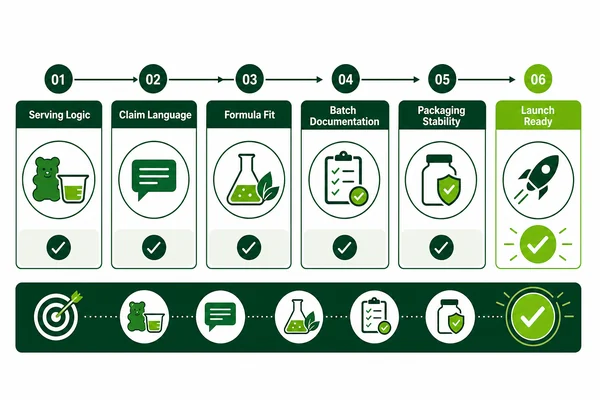
Before launching ACV gummies, brands should check the ACV material, acetic-acid logic, serving size, claim language, taste system, finished-batch proof, and packaging stability.
ACV Amount, Acetic Acid, and Serving Logic
The first launch question is what one serving actually delivers. A formula may list ACV powder, ACV extract, ACV concentrate, or a proprietary blend. Those descriptions may not tell the same functional story.
If the brand wants to connect the product to apple cider vinegar benefits, the serving logic should be visible. The team should know the ACV input type, the expected acetic-acid relevance, the number of gummies per serving, and the likely daily use pattern.
Serving size also affects cost, taste, and compliance. A two-gummy serving is easier to explain than a high-count serving. A larger active load may create taste and texture pressure. A very low ACV amount may weaken the benefit story.
The practical questions are straightforward:
| Serving checkpoint | Why it matters |
|---|---|
| ACV material type | Powder, concentrate, and blend formats can support different stories |
| Acetic-acid relevance | Helps decide whether ACV is a hero ingredient or mainly a positioning ingredient |
| Gummies per serving | Affects consumer convenience and supplement facts layout |
| Piece weight | Affects cost, bottle count, texture, and daily use |
| Co-ingredient role | Prevents every benefit from being assigned to ACV by default |
I would not approve the benefit message until this math is visible. A pleasant sample is not enough. The serving has to make sense on the supplement facts panel and in real consumer use.[^3]
Claim Language and Label Boundaries
Claim language should be written after the formula is understood. The brand should separate three layers: consumer expectations, supportable benefit language, and claims that should be avoided.
Consumer expectations explain why people care about digestion, weight, blood sugar, energy, or detox. They can guide education content. They should not automatically become label claims.[^4]
Supportable language is usually softer. Words such as "supports," "helps maintain," and "fits into a wellness routine" are often safer than direct outcome claims. Even then, the wording must match ingredient amounts and target-market requirements.
| Claim direction | Better wording | Avoid |
|---|---|---|
| Digestion | Supports digestive wellness | Treats indigestion |
| Appetite | Fits into an appetite-management routine | Suppresses hunger |
| Weight | Supports healthy weight-management habits | Burns fat or causes weight loss |
| Blood sugar | Routine-based wellness wording when appropriate | Controls blood sugar |
| Detox | Gentle wellness routine language if used at all | Detoxifies, cleanses, flushes toxins |
| Skin | Beauty-support language only if formula supports it | Clears acne or visibly transforms skin |
The goal is not to remove all commercial appeal. The goal is to write claims that the formula, label, and documentation can defend.
Finished-Batch Proof Before Marketing Claims
An approved formula is not the same as a finished gummy. A gummy goes through mixing, heating or depositing, setting, drying, coating, packing, and storage. Each step can affect the finished product.
For ACV gummies, the proof chain should connect raw material input to the finished serving. The brand should know what is tested, when it is tested, and whether the finished batch matches the label and intended claim language.
The documentation packet may include raw material COAs, production batch records, supplement facts review, finished-product testing expectations, packaging decisions, and stability notes[^5]. The exact packet depends on market, formula, and claim strength.
I use finished-batch proof as a launch-readiness check, not a late QA formality. The stronger the benefit story, the more important it is that the product shipped to consumers matches the serving, label, and stability promise.
Formula Decisions Behind a Credible ACV Gummy
ACV gummies are not just a flavor project. Formula choices decide whether the product is believable.
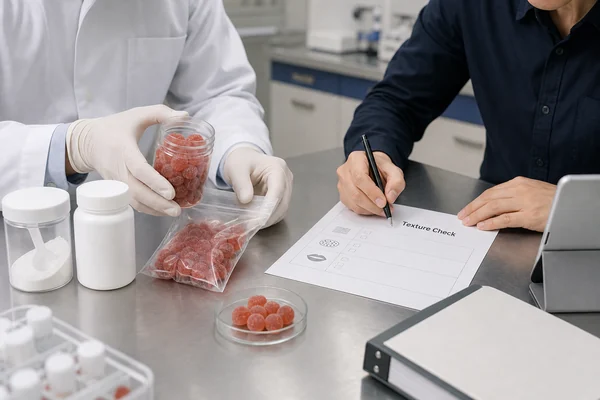
A credible ACV gummy formula should balance acid taste masking, sweetness, gummy base choice, active load, co-ingredient logic, and packaging behavior.
Acid Taste Masking and Flavor Balance
Apple cider vinegar has a sharp acid profile. That identity helps the product feel authentic, but it also creates the main sensory challenge. A gummy that tastes too harsh may fail repeat use. A gummy that hides the acid completely may feel disconnected from the ACV story.
Flavor masking should not mean covering every problem with sugar. The formula needs to balance acidity, sweetness, fruit notes, flavor strength, and aftertaste. Apple, berry, citrus, and other tart-fruit profiles often work better than flavors that fight the acid.
Sugar-free systems need extra care. Some sweeteners introduce cooling effects, bitterness, laxation concerns, or texture changes. ACV acidity can make those off-notes more noticeable.
My usual test is not only "does the first sample taste good?" I want to know whether the flavor remains acceptable after drying, packing, and storage. That is a different question.
Sugar, Sugar-Free, Pectin, and Gelatin Systems
The sugar route and gelling system shape both consumer positioning and production behavior. A traditional sugar gummy can be easier to texture and flavor. A sugar-free gummy can support keto or low-sugar positioning, but it may create challenges with chew, stickiness, digestive tolerance, and aftertaste.
Pectin can support plant-based or vegan positioning and often works well with acidic profiles when pH is controlled. Gelatin gives a familiar chew, but acid and heat can affect gel strength if the system is not balanced.
| System choice | Potential advantage | Watch point |
|---|---|---|
| Sugar-based gummy | Easier flavor masking and familiar chew | Added sugar and carb positioning |
| Sugar-free gummy | Low-sugar or keto-friendly angle | Texture, aftertaste, tolerance, stability |
| Pectin base | Vegan-friendly and acid-compatible with control | Process window and pH management |
| Gelatin base | Classic elastic chew | Dietary limitations and acid sensitivity |
These choices should be made before the benefit story is locked. If the product is marketed as keto-friendly, the sweetener and serving logic must support that message. If it is marketed as plant-based, the base system and supporting ingredients must match.
For broader base-system context, brands can review what gummies are made of and pectin vs gelatin gummies. For ACV gummies, the key point is how those choices affect claim credibility, texture, and shelf life.
ACV With “The Mother,” Botanicals, and Added Vitamins
"With the mother" can be a strong positioning phrase because consumers associate it with traditional apple cider vinegar. A brand should still check what that phrase means in the ingredient specification and finished gummy.
In gummies, standardized powders or concentrates are often easier to control than raw unfiltered liquid. If the brand wants to use "with the mother" language, it should confirm whether that language is supported by the raw material spec, the finished formula, and the label review.
Added vitamins and botanicals can improve the product story. B vitamins may support energy-positioning language. Vitamin C, zinc, fruit powders, beetroot, pomegranate, or botanicals may support adjacent wellness angles. But each addition also affects flavor, color, cost, stability, and claim responsibility.
I prefer a clean formula logic: choose the main product promise first, then add only the ingredients that support that promise and can work inside the gummy system.
Safety, Stability, and Packaging Risks
The consumer sees a small gummy. The production team sees acidity, moisture, texture, and storage risk.
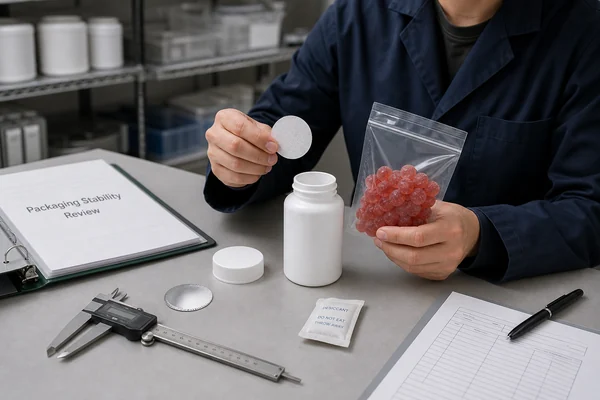
ACV gummy safety and stability checks should cover digestive sensitivity, medication cautions, tooth and acidity concerns, moisture control, stickiness, packaging barrier, and shelf-life behavior.
Digestive Sensitivity, Teeth, and Medication Cautions
ACV gummies are often marketed as gentler than liquid vinegar. That may be true for taste and direct acidity exposure, but the product still needs careful safety language.
Some consumers may have digestive sensitivity. Some may take medications or manage health conditions. Some may assume gummies are harmless because they taste like candy. Product education should avoid medical advice, while the label and consumer copy should encourage appropriate caution.
Tooth enamel language also needs balance. Gummies avoid drinking liquid vinegar directly, but they may still contain acids and sugar[^6]. A brand should avoid promising "no enamel risk" as a blanket statement.
For supplement brands, safety language should be practical and clear. Keep instructions simple. Avoid medical promises. Make the label, usage guidance, and marketing copy match the actual product.
Moisture, Stickiness, and Shelf-Life Stability
Moisture is one of the most practical problems in gummy production. A gummy can taste good during sampling and still become sticky, sweaty, hard, misshapen, or clumped after packing and storage.
ACV formulas add pressure because acid, sweeteners, water activity, coating, and packaging interact. Sugar-free versions can be more sensitive because some sweetener systems affect texture and moisture behavior.
Shelf-life stability is not only a date on a bottle. It is a proof process. The brand should understand texture change, active-content expectations, package condition, clumping risk, flavor shift, and consumer experience over time.
I would not view stability as a final packaging detail. If the gummy base cannot hold the acid profile and serving system through normal storage, the benefit story does not matter.
Packaging Choices for High-Acid Gummy Concepts
Packaging is part of the formula system. It protects texture, moisture behavior, flavor, and consumer confidence. For ACV gummies, packaging should be reviewed with the formula, not after the quote is almost finished.
Bottle size, desiccant use, induction sealing, closure choice, fill count, and label space can all affect the final product. A higher-moisture or stickier gummy may need stronger packaging protection. A sugar-free gummy may need a different review than a traditional sugar gummy.
| Packaging choice | Best use | Watch point |
|---|---|---|
| Bottle with desiccant | Retail-ready gummy formats | Must match moisture risk and fill count |
| Induction-sealed bottle | Added protection and consumer confidence | Adds line and material considerations |
| High-barrier pouch | Flexible launch formats | Closure and repeated opening need review |
| Individual wrapping | Stick-prone or premium concepts | Higher cost and slower packing route |
Brands should also think about the sales channel. A product that ships through warm warehouses, online fulfillment, or seasonal temperature swings needs packaging decisions that match that route. For a broader production view, see Talvenda's gummy vitamin manufacturing guide.
How to Evaluate an ACV Gummy Concept Before Production
Before production starts, the brand should test the concept against three connected questions.
To evaluate an ACV gummy concept, check the consumer promise, formula reality, and label-documentation readiness together. If one area is weak, the SKU may taste good but fail as a credible supplement.

Consumer Promise
The consumer promise should be narrow enough to defend. A brand can say the product supports a wellness routine, offers a convenient ACV format, or fits digestive wellness or appetite-management positioning. It should be careful with stronger outcome claims.
The promise also needs to match the target buyer. A keto-focused ACV gummy needs a different formula and label review than a general wellness gummy. A beauty-positioned ACV gummy needs a different ingredient logic than a simple ACV gummy.
I would ask one question first: what should the customer believe after reading the label? If that belief is stronger than the formula can support, the concept needs to be adjusted before production.
Formula Reality
Formula reality is where the concept becomes clearer. The team should check ACV input form, serving size, sweetener system, base type, acid balance, flavor direction, piece weight, coating, and packaging route.
This is also where the brand should decide whether the product is a simple market-test SKU, a custom ACV formula, or a more complex functional gummy. A simple ACV gummy may move faster. A keto ACV gummy with added vitamins and botanicals may need more development work.
| Formula filter | Key question |
|---|---|
| ACV source | What material is used, and what does it support? |
| Serving logic | How many gummies deliver the intended serving? |
| Taste system | Can the acid profile be masked without over-sweetening? |
| Base system | Does pectin or gelatin fit the claim and stability needs? |
| Packaging route | Will the package protect texture and moisture behavior? |
For a broader production brief, a brand can prepare questions around active load, texture, stability, packaging, and documentation before speaking with a gummy partner. Talvenda's gummy supplement manufacturer checklist can help organize that discussion.
Label and Documentation Readiness
Label and documentation readiness should not wait until the end. The brand should know which claims are intended, which ingredients support them, what documents exist, and what finished-product checks are needed.
The packet may include ingredient specs, COA review, supplement facts logic, allergen or dietary-positioning notes, batch records, packaging decisions, and finished-product testing expectations. The exact packet depends on the formula, market, and claim strength.
I see this as the final bridge between a wellness idea and a real SKU. The concept is not ready because it sounds marketable. It is ready when the formula, label, production route, and proof chain tell the same story.
FAQs About Apple Cider Vinegar Gummies
What do apple cider vinegar gummies do?
Apple cider vinegar gummies provide a convenient, better-tasting way to take an ACV-inspired supplement. Consumers often use them for digestive wellness, appetite support, daily energy positioning, or low-carb routines. Brands should describe these areas carefully and avoid guaranteed results.
Are ACV gummies good for weight management?
ACV gummies may fit into a broader weight-management routine, but they should not be treated as a weight-loss product. A credible formula needs clear serving logic, careful claim language, and realistic consumer expectations around diet, lifestyle, and supplement use.
Do apple cider vinegar gummies expire?
Yes. ACV gummies should have a shelf life based on formula, packaging, storage conditions, and quality review. Brands should check texture, stickiness, flavor, active content, package protection, and finished-product documentation before setting shelf-life expectations.
Conclusion
ACV gummy benefits are only credible when the formula, acid taste, sugar direction, label language, packaging, and proof expectations support the same consumer promise.
For an ACV gummy, the launch risk is usually not the ingredient alone; it is whether acid taste, serving logic, sugar direction, packaging, and claim support can work together. Talvenda can support brands as a private label gummy manufacturing partner, with options ranging from low-MOQ market-tested in-stock gummies to stock formula modification or custom gummy development. That gives your team a practical way to review sample development, packaging and label support, documentation and testing expectations, and quality-controlled production before committing to a full custom launch. Contact Talvenda through the project inquiry form.
[^1]: "Health Products Compliance Guidance - Federal Trade Commission", https://www.ftc.gov/business-guidance/resources/health-products-compliance-guidance/. Use this only to support cautious advertising-substantiation language. Evidence role: advertising substantiation boundary; source type: official regulatory / enforcement guidance. Supports: Health-related marketing claims need evidence and should not overstate what a product can support.. Scope note: Does not evaluate Talvenda, any customer product, or any specific ACV gummy advertisement. [^2]: "The effect of apple cider vinegar on lipid profiles and glycemic ...", https://pmc.ncbi.nlm.nih.gov/articles/PMC8243436/. Use this only to support the conservative evidence-boundary statement, not to strengthen gummy efficacy claims. Evidence role: evidence boundary; source type: peer-reviewed / indexed biomedical source. Supports: ACV benefit discussions should be treated cautiously and should not be transferred automatically from liquid vinegar evidence to finished gummies.. Scope note: Does not prove finished ACV gummies deliver the same effects as liquid vinegar. [^3]: "21 CFR 101.36 -- Nutrition labeling of dietary supplements. - eCFR", https://www.ecfr.gov/current/title-21/chapter-I/subchapter-B/part-101/subpart-C/section-101.36/. Use this for general label-structure context only. Evidence role: Supplement Facts / serving design context; source type: official regulatory source. Supports: Serving size and amount-per-serving thinking matters when matching product claims to supplement labeling.. Scope note: Does not determine the correct serving or claim language for a specific ACV gummy SKU. [^4]: "Label Claims for Conventional Foods and Dietary Supplements - FDA", https://www.fda.gov/food/nutrition-food-labeling-and-critical-foods/label-claims-conventional-foods-and-dietary-supplements/. Use this only for claim-boundary and label-review context. Evidence role: label-claim boundary; source type: official regulatory source. Supports: Consumer benefit expectations should be separated from permitted or supportable supplement label claims.. Scope note: Does not provide legal advice or approve any specific ACV gummy claim. [^5]: "21 CFR Part 111 -- Current Good Manufacturing Practice in ... - eCFR", https://www.ecfr.gov/current/title-21/chapter-I/subchapter-B/part-111/. Use this to support process-documentation context only. Evidence role: manufacturing documentation context; source type: official regulatory source. Supports: Dietary supplement production should connect formulation, records, quality control, and finished-product documentation.. Scope note: Does not claim any specific Talvenda batch, certificate, test result, or regulatory approval. [^6]: "In vitro study on dental erosion caused by different vinegar varieties ...", https://pubmed.ncbi.nlm.nih.gov/24839821/. Use this only for cautious safety wording. Evidence role: safety caution boundary; source type: peer-reviewed / clinical or dental source. Supports: Acid exposure and sugar/acidity context justify cautious tooth-enamel language.. Scope note: Does not prove the risk profile of a specific ACV gummy formula.