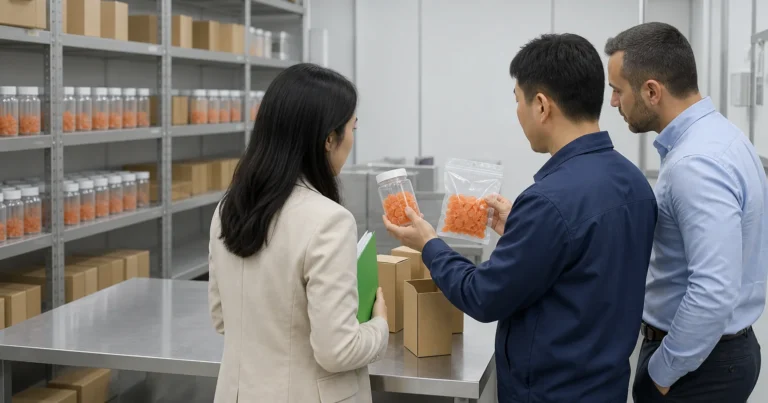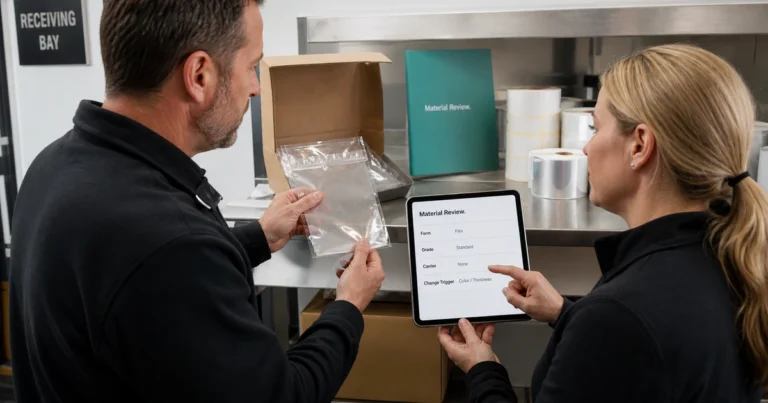
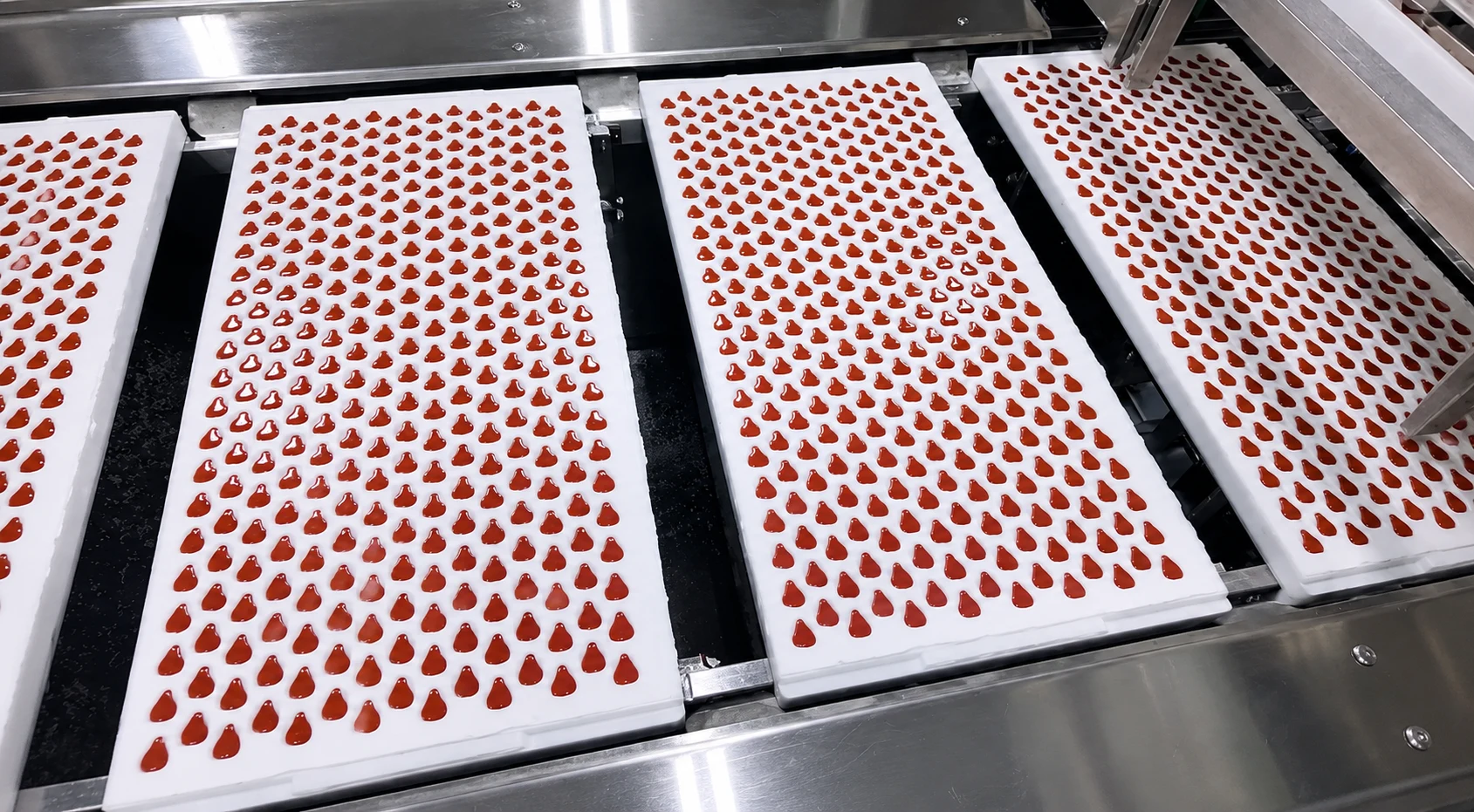

Sports nutrition gummies ingredients should be chosen by gummy-format feasibility, not by copying a powder supplement label.
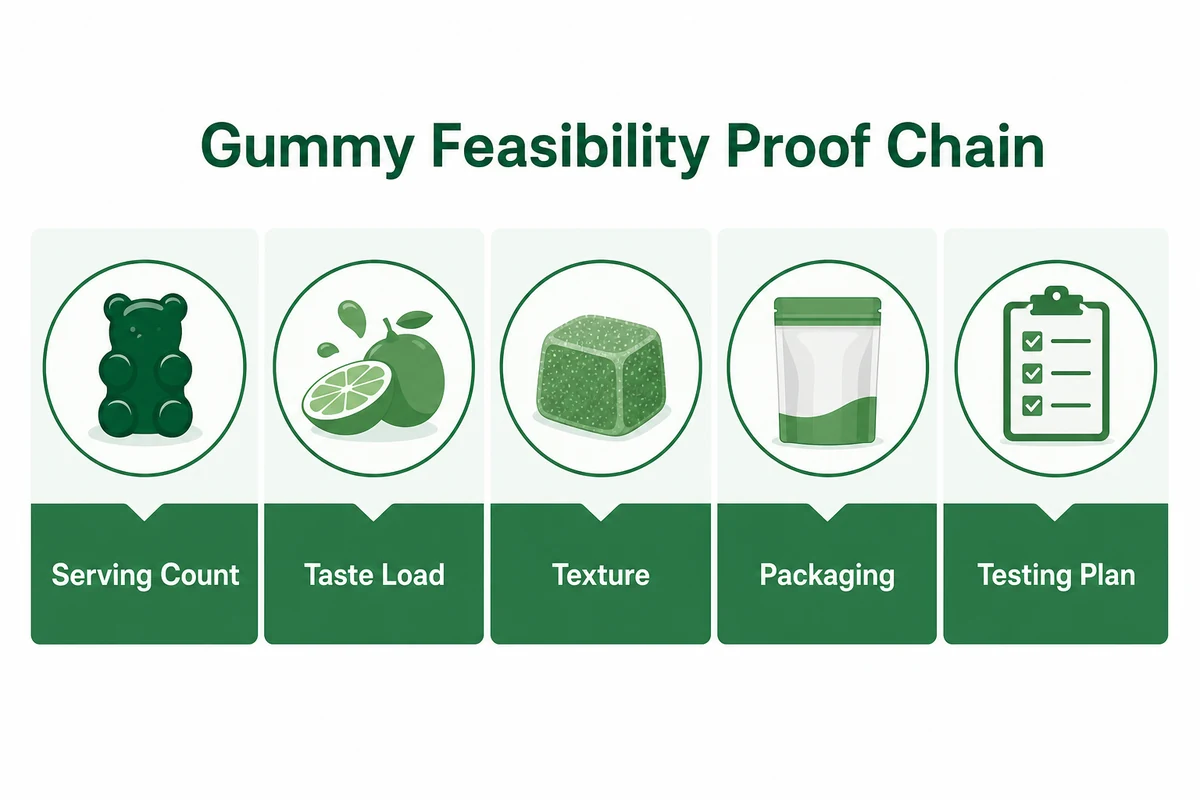
Strong candidates are actives that can survive the serving count, taste, texture, moisture, label claim, and finished-product testing demands of a gummy SKU.
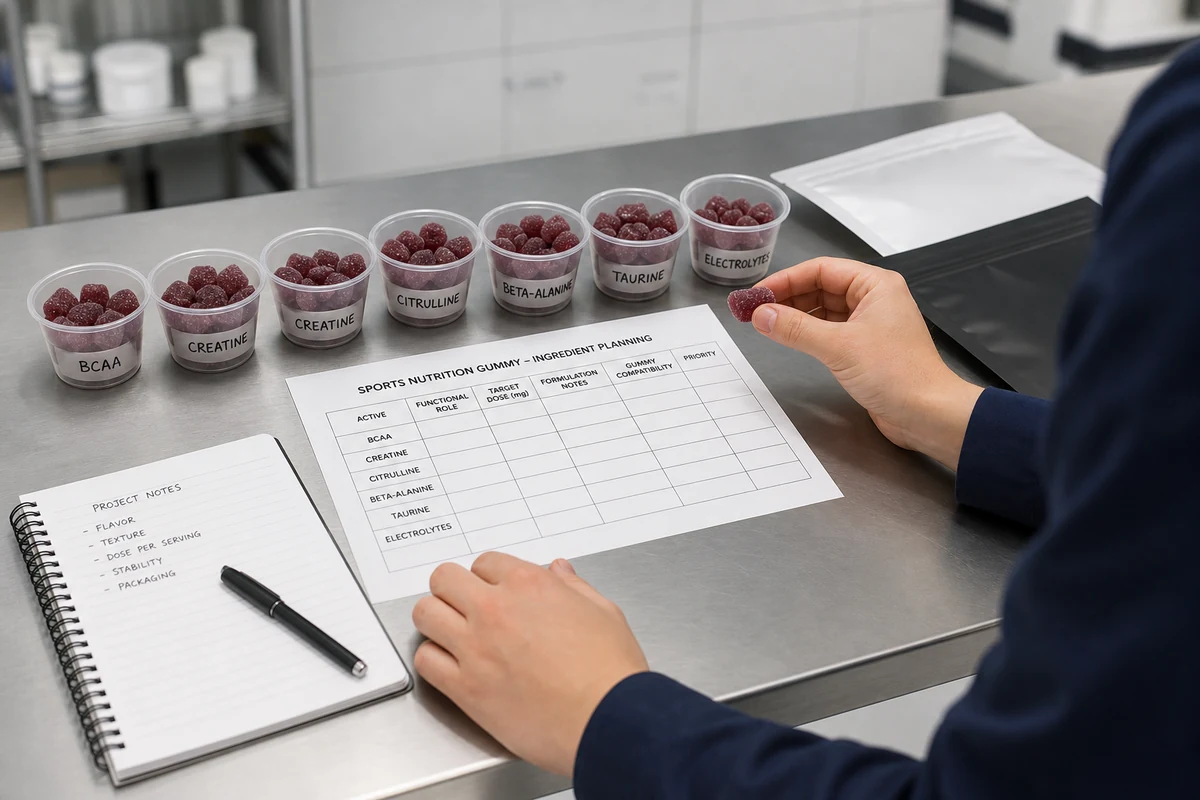
For brands, the practical question is whether an ingredient can still make commercial, sensory, documentation, and production sense after it becomes a gummy.
Decision Snapshot
- Start from the product promise and target serving experience, then choose actives that fit that promise.
- Separate hero actives, supporting actives, and gummy base ingredients before asking for a quote.
- Screen each active for load pressure, flavor burden, moisture behavior, packaging needs, and claim support.
- Use qualitative feasibility ranges early; avoid locking exact amounts before manufacturer review and testing.
- Ask the manufacturer about sampling, COA expectations, finished-product testing, MOQ, and scale-up limits before finalizing the brief.[^1]
What Sports Nutrition Gummies Ingredients Really Need to Prove
Sports nutrition gummy ingredients need to prove they can carry a product promise inside a constrained dosage form.
Sports nutrition gummy ingredients need to remain usable, stable, palatable, and defensible in the finished SKU. The most famous sports supplement ingredient is not automatically the best fit when active load, flavor, serving count, or testing support breaks the product brief.
Why Gummy SKUs Cannot Simply Copy Powder Supplement Labels
Powder products give brands a large serving space. Gummies do not. A powder scoop can hold bulky actives, strong flavors, sharp acids, and flexible serving directions. A gummy has a small physical piece size, a texture target, a water-management requirement, and an expectation that the consumer will enjoy repeating the serving.
This is why a powder label should not become the gummy brief. A brand may have a strong pre-workout or recovery powder, but the same ingredient panel can become crowded, bitter, sticky, unstable, or commercially awkward when moved into a chewable format. The issue is not only whether an active can technically be added. The issue is whether the finished SKU still feels convenient, tastes acceptable, supports its label language, and can be produced consistently.
I usually start from the gummy piece, not from the powder tub. What serving count would the customer actually accept? Which active deserves hero status? Which ingredients are support signals rather than core product drivers? Which claim would still be fair if the active amount, flavor system, and testing plan are reviewed conservatively?
This shift saves time. A brand that asks these questions before sampling can avoid a cycle where every pilot batch is trying to fix a formula that was overloaded from the start.
Active Ingredients vs Gummy Base Ingredients
Sports nutrition gummies ingredients fall into two working layers. Active ingredients carry the product promise. Base ingredients make the gummy possible.
| Ingredient role | Examples | What the manufacturer must review |
|---|---|---|
| Hero active | Creatine, caffeine, taurine, beta-alanine, amino acids, electrolyte blend | Active role, feasible serving count, taste burden, claim boundary, test method |
| Supporting active | B vitamins, vitamin C, zinc, lower-load electrolytes, positioning ingredients | Compatibility, label role, taste impact, documentation need |
| Gummy base | Pectin or gelatin, sweetener system, acid, flavor, color, water | Texture, pH, moisture behavior, vegan or clean-label fit, packaging requirement |
| Protection layer | Coating, bottle, pouch, desiccant, barrier film | Stickiness control, moisture protection, shelf handling, consumer experience |
Brands often focus only on the active list. That is understandable, but it is incomplete. The base ingredients decide whether the active has a stable, pleasant, and commercially useful home. A high-load active can weaken chew, create graininess, pull moisture, or make a flavor system work too hard. A clean-label base can also limit which flavors, colors, sweeteners, or acids are available.
The practical brief should mark which ingredients are non-negotiable and which can flex. If caffeine is the hero active, the manufacturer can protect that role while adjusting supporting vitamins or flavors. If vegan positioning is non-negotiable, the pectin system needs to be reviewed before the active list is locked.[^2]
When a Sports Nutrition Gummy Works Better as a Support SKU
Not every sports nutrition gummy should try to replace a powder, capsule, or ready-to-drink product. Some gummy SKUs work better as support products inside a broader sports nutrition line.
A support SKU can still be valuable. It may offer a convenient daily format, a travel-friendly option, a taste-led entry product, or a light pre-workout or hydration support product. It can also help a brand test gummy demand before moving into more complex active systems.
The important point is honesty in the product role. If the gummy cannot carry a full powder-style promise without too many pieces, too much taste masking, or too much label pressure, the brand can position it as a complementary format. This often leads to a cleaner formula, faster sampling, simpler testing, and a stronger consumer experience.
The strongest sports gummy concepts usually answer one question early: is this gummy the main delivery format for the active, or is it a convenient support SKU that makes the product line easier to use?
Core Sports Nutrition Gummies Ingredients to Review
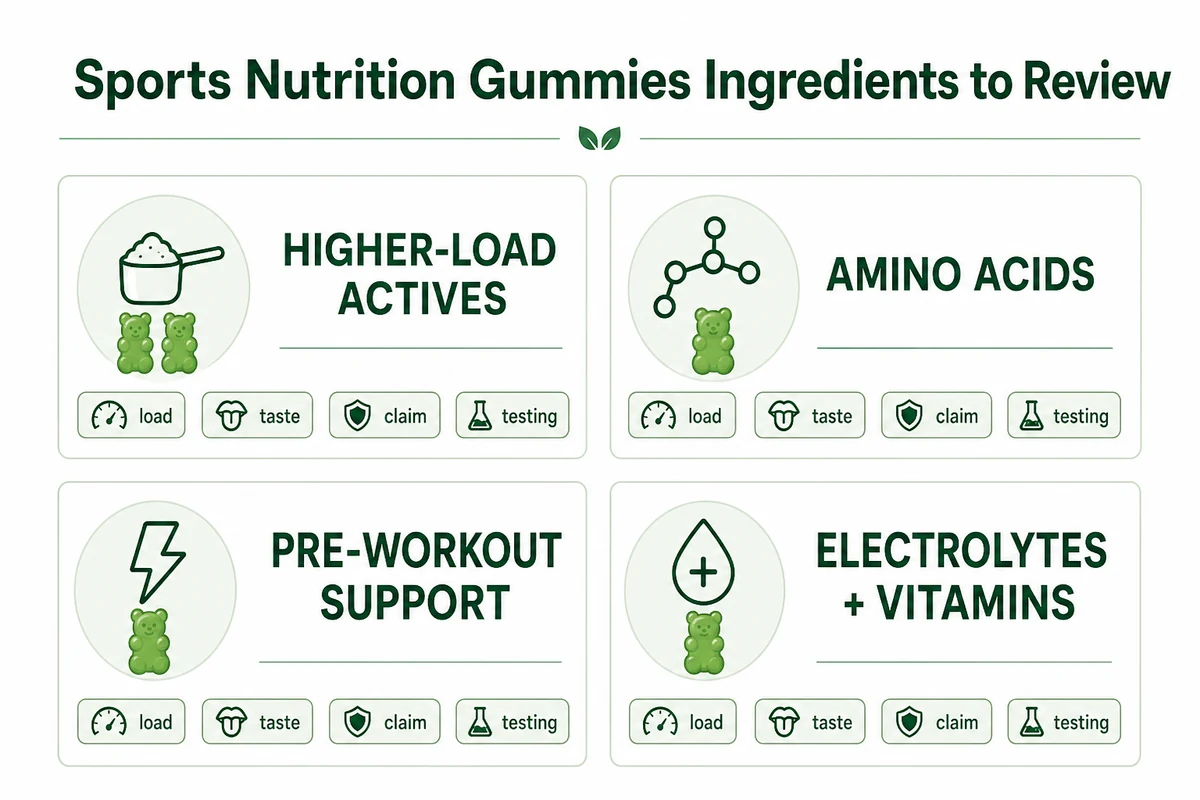
Sports gummy ingredient planning becomes clearer when brands group ingredients by development burden.
Creatine, amino acids, stimulants, nitric-oxide positioning ingredients, electrolytes, and vitamins create different formulation, flavor, claim, and testing questions.
Creatine and Other Higher-Load Actives
Creatine is one of the most requested sports nutrition ingredients for gummies, but it also shows why gummy feasibility must come before label enthusiasm. It is familiar, easy for consumers to understand, and strongly associated with the sports category. It is also a higher-load active that can pressure serving count, texture, taste, and cost per serving.
For brands, the first decision is not "Can creatine appear in a gummy?" It is "What job does this creatine gummy have in the line?" A convenience SKU, a trial-friendly format, a maintenance-positioned gummy, and a direct powder replacement are different briefs. They need different serving expectations, packaging counts, label language, and testing plans.
Higher-load actives should be reviewed with a simple feasibility table before sampling.
| Feasibility question | Why it matters for higher-load actives |
|---|---|
| Is the active the hero or a support ingredient? | Hero status creates stronger load, testing, and claim pressure. |
| What serving count is commercially acceptable? | Too many pieces can reduce the convenience benefit of the gummy. |
| Does the active affect chew or surface texture? | Higher loads can change firmness, graininess, and consumer repeat use. |
| Can flavor masking stay clean-label friendly? | Heavy masking may conflict with natural flavor or sugar-positioning goals. |
| Can the final active amount be verified? | Finished-product testing must support the declared label role. |
For broader format comparison, a dedicated page such as creatine gummies vs powder is the better place to discuss powder-versus-gummy practicality. Here, creatine mainly illustrates a wider rule: ingredient popularity does not remove active-load pressure.
Amino Acids, BCAAs, Taurine, and Beta-Alanine
Amino acid gummies can look attractive because amino acids already belong to sports nutrition language. The problem is that amino acids do not behave as one category. BCAAs, taurine, beta-alanine, L-citrulline, and other amino acids can create very different load, flavor, pH, and consumer-experience questions.
Some amino acids bring bitterness or lingering aftertaste. Some create sensory effects that need clear label communication. Some are easier to position as support ingredients than as the main promise. A crowded amino acid gummy may sound strong on paper but become difficult to taste-mask, verify, and explain.
| Ingredient family | Gummy fit signal | Main review point |
|---|---|---|
| Taurine | Often more manageable | Confirm role, taste, and serving logic. |
| Beta-alanine | Possible but needs care | Review sensory communication and claim boundary. |
| BCAAs | More challenging | Review bitterness, active load, and masking burden. |
| L-citrulline | Dedicated review needed | Avoid repeating full formulation detail; route deeper feasibility to L-citrulline gummy formulation. |
| Mixed amino acid blends | Highest complexity | Check whether each active earns its place. |
My usual recommendation is to test the hero amino acid logic before adding a broad blend. If the main active already creates taste or serving-count pressure, supporting amino acids should be added only when they strengthen the product promise. For plant-based formula and sourcing context, vegan amino acid supplements can carry the broader vegan amino acid discussion.
Caffeine, Nitric Oxide, and Pre-Workout Positioning Ingredients
Pre-workout gummies ingredients often include caffeine, amino acids, nitric oxide positioning ingredients, taurine, beta-alanine, electrolytes, or B vitamins. This category can work well in gummy form, but only when the brand resists the urge to copy a full powder panel.
Caffeine is compact compared with many bulky sports actives, so it often fits gummies more naturally. It still needs serving clarity, caution wording, total daily use review, and packaging language that makes the product feel like a dosed supplement rather than candy. Nitric oxide positioning ingredients can create higher active-load pressure, so they need a separate feasibility review before being placed in a multi-active gummy.
A cleaner pre-workout gummy usually has one clear hero active and a support layer. The support layer may include electrolytes, B vitamins, flavor cues, or other positioning ingredients. The manufacturer should review whether the active role, taste burden, and label promise still fit together after the formula becomes a gummy.
If a brand needs full L-citrulline gummy feasibility, active-load detail, and powder-dose translation, that belongs in L-citrulline gummy formulation. This sports nutrition ingredient article should stay at the selection level.
Electrolytes, Vitamins, and Lower-Load Support Ingredients
Electrolytes, vitamins, and lower-load support ingredients often fit gummies more naturally than high-load actives. They can support hydration, active lifestyle, recovery positioning, or daily performance-adjacent concepts without necessarily creating the same serving-count pressure.
That does not make them automatic. Minerals can create taste, metallic notes, pH effects, or texture issues. Vitamins may need stability review, color review, odor review, or claim-boundary discussion. Electrolyte positioning also needs care so the label does not promise more than the formula and testing plan can support.
For first-time sports gummy launches, a lower-load support concept can be a useful entry point. It gives the brand a clearer path to taste, packaging, and label review while still staying in the sports nutrition category. The brief should still define whether these ingredients are the product's hero promise or a support layer that helps round out the label.
The manufacturer can usually respond faster when this distinction is clear. A hydration-support gummy, a pre-workout energy gummy, and a daily active lifestyle gummy may all contain overlapping ingredients, but they are not the same product.
How to Judge Whether an Active Ingredient Fits a Gummy Format
An active ingredient fits gummies only when it passes load, sensory, stability, claim, and verification checks together.
A sports gummy concept can fail even when each ingredient is familiar. The failure usually appears in serving count, taste, texture, moisture, label support, or testing.
Active Load and Serving Count Pressure
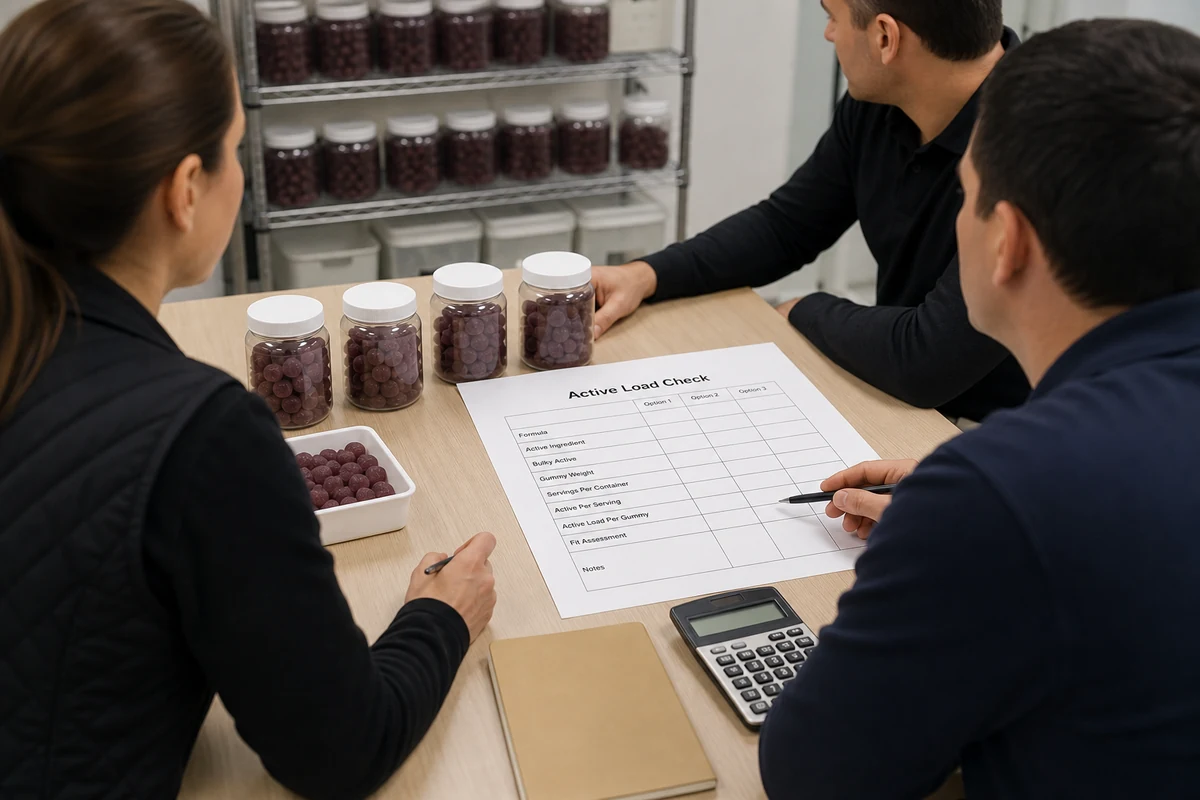
Active load is the first feasibility screen for many sports nutrition gummy concepts. A gummy has limited room for active material because the base must still provide structure, chew, flavor, moisture control, and shelf handling. As active load rises, the formula has less room to protect taste and texture.
Serving count is the commercial side of the same question. A brand can sometimes add more gummies per serving, but every extra piece affects convenience, packaging count, flavor fatigue, unit economics, and consumer perception. If the serving feels less convenient than the powder, the gummy has lost part of its reason to exist.
Instead of using one universal capacity number, the brief should ask for a per-active feasibility read.
| Review item | Manufacturer question |
|---|---|
| Target active role | Is this active the hero promise or a support cue? |
| Feasible piece count | How many gummies would the proposed active target require? |
| Texture risk | Does the active create graininess, firmness, softness, or surface issues? |
| Cost pressure | Does active load change piece size, bottle count, or packaging economics? |
| Quote readiness | Can the manufacturer quote this formula, or does it need a feasibility sample first? |
This is where active load becomes a procurement issue, not only a lab issue. It affects COGS, label layout, MOQ assumptions, shipping weight, and the sampling path. A high-load ingredient can still be a good choice, but only when the serving design is commercially realistic.
Taste, Odor, Acidity, and Texture Impact
Sports nutrition actives are rarely neutral. Some are bitter, sour, salty, metallic, earthy, chalky, or aromatic. In a powder, the consumer can dilute those notes with water. In a gummy, the active is concentrated in a chewable piece, so flavor masking and texture are part of the core feasibility review.
Acidity matters because gummy systems work inside a controlled pH range. Some actives and acids can support a bright flavor. Others can disturb texture, create a harsh sourness, or make the base harder to manage. Sweeteners, acids, flavors, and colors should be reviewed as a system, not as separate label choices.
Texture must be checked beyond the first bite. The brand should ask whether the active affects chew, firmness, stickiness, graininess, surface finish, or piece-to-piece consistency. A sample that tastes acceptable on day one may still be weak if it changes texture during storage or packaging trials.
This is why single-active or low-complexity screening can be useful before a crowded blend. If the hero active already creates a major sensory burden, adding more actives can make the formula harder to stabilize and harder to explain.
Moisture, Stability, and Packaging Considerations
Gummies are moisture-sensitive products. Ingredient choices can influence stickiness, texture change, drying behavior, color behavior, odor, and packaging needs. Some active materials may be sensitive to heat, humidity, acidity, or extended storage conditions.
The safe approach is to make packaging part of ingredient selection. A gummy with moisture-sensitive or hygroscopic materials may need a different packaging review than a simple vitamin gummy. Bottles, pouches, closures, desiccants, barrier films, and serving count all affect how the product behaves after production.
Brands should avoid treating packaging as a late design decision. If the ingredient system requires more moisture protection, that affects cost, shelf appearance, fulfillment, and retailer fit. A beautiful formula that needs expensive or unusual packaging may still be commercially difficult.
The safer position is to say that stability, moisture behavior, and packaging should be reviewed, not that a specific shelf-life result or packaging solution is assured before testing.
Claim Boundary and Label Review
Sports nutrition language can become too strong quickly. Ingredients such as caffeine, amino acids, creatine, electrolytes, vitamins, and nitric oxide positioning materials all have familiar consumer associations. A gummy label still needs to support what the finished product actually delivers.
The brand should define what the formula can say conservatively, what requires evidence or testing, and what should be avoided. This applies to product names, front-of-pack callouts, supplement facts, usage directions, warning language, and ecommerce copy.
Label review should happen while the formula is still flexible. If the desired claim requires an active amount or verification plan that the gummy cannot support, the product promise should be revised before packaging and launch copy are locked.
Talvenda can support the manufacturing-side discussion by helping brands identify what documentation, sample testing, finished-product checks, and packaging review may be needed. Regulatory claim approval remains a brand-owned decision, but the manufacturing brief should make the claim boundary visible early.[^3]
Clean-Label Base Ingredients and Sports Nutrition Trust Signals
The gummy base and trust signals shape how credible the active ingredient plan feels to buyers and consumers.
Clean-label sports nutrition gummy bases depend on pectin or gelatin, sweetener choices, allergen positioning, and supportable testing language. These decisions define the product's format promise and commercial risk rather than serving as decorative marketing claims.
Pectin vs Gelatin and Vegan Positioning
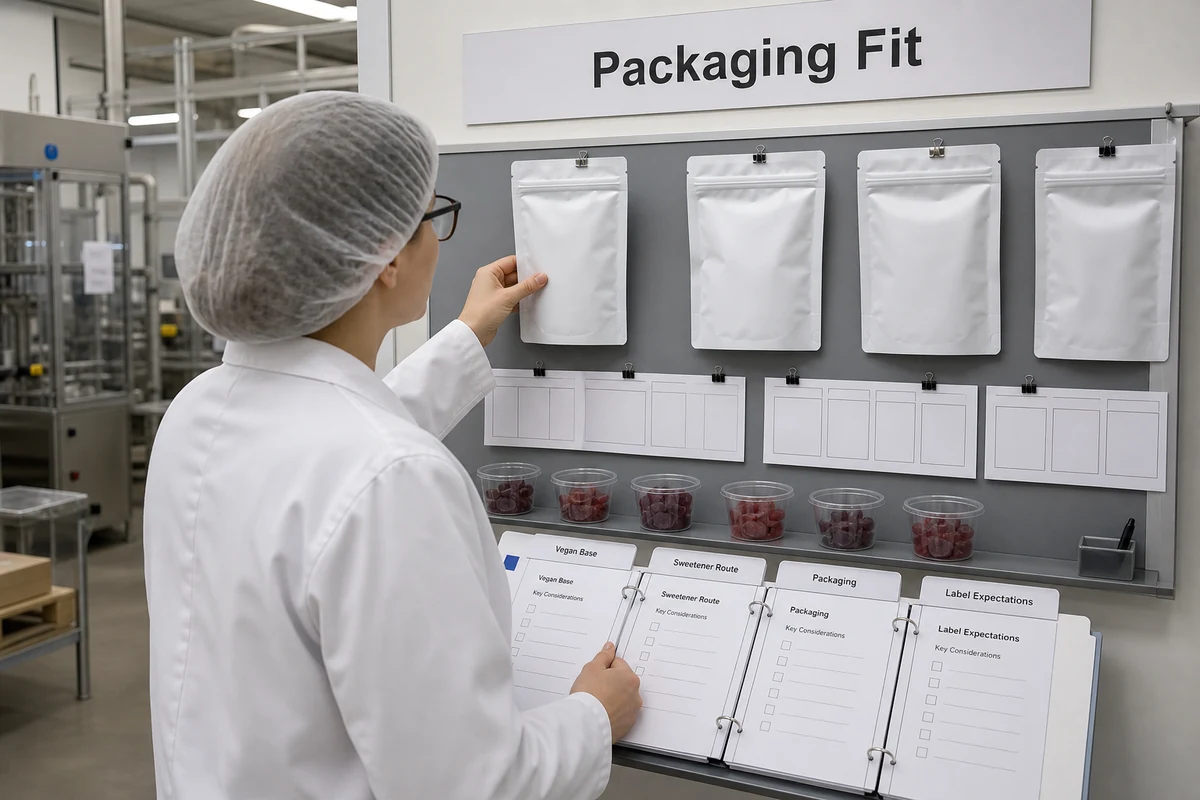
Pectin and gelatin create different product and production conversations. Gelatin gives a familiar chew and has broad gummy manufacturing history. Pectin supports vegan and plant-based positioning when the rest of the formula, colors, flavors, and processing aids also fit that claim.
For sports nutrition gummies, vegan positioning can matter because many active consumers already compare products by diet, allergen, and lifestyle fit. However, vegan should not be treated as a simple swap. Pectin systems behave differently from gelatin systems. They can have different pH sensitivity, texture, moisture, and processing requirements.
The brand should decide whether vegan positioning is a core product promise before active selection is finalized. If vegan is non-negotiable, the active list should be screened against a pectin-based route from the beginning. Retrofitting the base after sampling can force a major reformulation.
Sweeteners, Sugar Alcohols, Acids, Flavors, and Colors
Sweeteners, sugar alcohols, acids, flavors, and colors are part of the product architecture. They affect water activity, chew, sweetness, flavor masking, label appeal, digestive comfort, and repeat use.
| Base decision | What it affects | Brief question |
|---|---|---|
| Sugar or reduced-sugar route | Texture, sweetness, calorie positioning, moisture | Does the target consumer accept sugar, or is sugar reduction essential? |
| Sugar alcohol system | Sweetness, cooling effect, tolerance language, texture | Does the serving size create consumer-comfort or label-review concerns? |
| Acid system | Flavor brightness, pH, pectin behavior | Does the active ingredient shift acidity enough to affect set or taste? |
| Natural flavor / color | Clean-label appeal, stability, cost | Can the flavor and color hold up through processing and shelf handling? |
A caffeine gummy, electrolyte gummy, amino acid gummy, and creatine-positioned gummy may all need different balancing work. The brand should not lock flavor, color, or sugar claims before the active system has been tested in a real gummy sample.
Clean-label choices are valuable only when they work with the product. A natural-color claim is not useful if the color fades too quickly. A sugar-free claim can become a problem if the texture, tolerance, or moisture behavior is poor. The better brief states which clean-label signals matter most, then lets the manufacturer screen them against the active plan.
Allergen, Gluten-Free, and Consumer Label Expectations
Sports nutrition buyers often look beyond the active list. They may ask whether the product is gluten-free, allergen-friendly, vegan, low sugar, naturally colored, or free from certain artificial ingredients. These expectations can affect retailer fit and consumer trust.
The manufacturing brief should make these expectations explicit. If the brand needs allergen-related positioning, it should discuss ingredient sourcing, facility controls, documentation, and label wording with the manufacturer before packaging is finalized.
Not every trust signal belongs on every SKU. A label crowded with every possible claim can distract from the product promise. The best sports gummy labels usually choose a few relevant trust points and support them properly through documentation and testing plans.
Third-Party Testing and NSF Certified for Sport Considerations
Some sports nutrition brands may want third-party testing or sport-certification pathways. These topics should be treated as planning considerations, not casual marketing language. Certification, banned-substance testing, and finished-product verification require specific programs, documents, costs, timelines, and acceptance criteria.
If a brand wants to mention NSF Certified for Sport or a similar program, it should confirm the actual certification route and claim permissions before using that language. A manufacturer can help prepare documentation and finished-product testing discussions, but the brand must not imply a certification that has not been earned.[^4]
Even without a sport-specific certification, the product should have a sensible testing plan. Raw material COAs, active verification, microbiological checks, heavy metal review where relevant, and finished-product documentation all help the brand protect trust as the SKU moves from sample to production.[^5]
The safer message is that third-party testing may be relevant, requires planning, and should be confirmed through the proper program before the brand uses certification language.
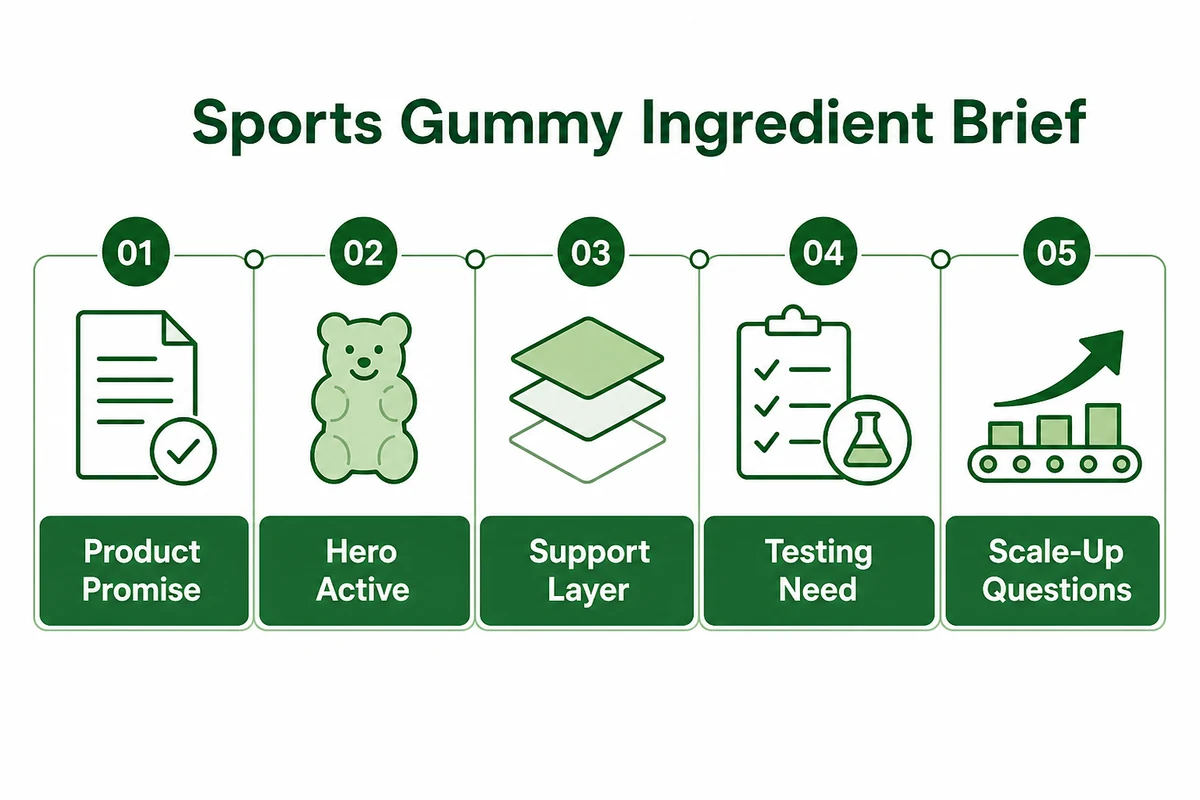
How Brands Should Build a Sports Gummy Ingredient Brief
A strong sports gummy ingredient brief turns a broad product idea into a manufacturable decision path.
The brief should define the promise, hero active, support ingredients, claim boundary, testing expectation, packaging needs, MOQ discussion, and scale-up constraints.
Define the Product Promise Before Choosing Actives
Ingredient selection should begin with the product promise. Is the gummy meant to support pre-workout energy, daily active lifestyle, hydration support, recovery positioning, strength category entry, or convenient sports supplement use? Each promise leads to a different ingredient plan.
A vague promise creates crowded formulas. Brands add creatine because it is popular, caffeine because it is recognizable, amino acids because they sound athletic, electrolytes because they feel functional, and vitamins because they are easy to understand. The result can be a gummy with too many weak signals and no strong product job.
The better approach is to choose one main promise and build around it. The hero active should support that promise clearly. Supporting ingredients should earn their place by improving the label story, flavor experience, testing plan, or consumer use case.
The product promise also helps the manufacturer respond. A brief that says "sports nutrition gummy with multiple actives" is difficult to quote. A brief that says "two-piece pre-workout support gummy with caffeine as the hero active and electrolytes as a support layer" gives the manufacturer a clearer starting point.
Separate Hero Actives from Supporting Ingredients
Hero actives carry the product's main promise. Supporting ingredients help position, round out, or stabilize the product story. Confusing these roles is one of the fastest ways to create a weak sports gummy concept.
| Role | Definition | What to specify in the brief |
|---|---|---|
| Hero active | Main ingredient tied to the product promise | Target role, preferred form, feasible serving count, claim boundary, test expectation |
| Supporting active | Secondary ingredient that improves label depth or use case | Flexible range, compatibility, taste impact, documentation need |
| Base ingredient | Matrix that makes the gummy work | Pectin/gelatin route, sweetener route, acid/flavor/color preference, restricted ingredients |
| Commercial constraint | Business limit that shapes the formula | Target piece count, packaging count, MOQ tolerance, target launch channel |
For example, a pre-workout gummy may not need every familiar pre-workout ingredient. A hydration-positioned gummy may not need to imitate a full electrolyte powder. A daily active gummy may benefit more from a clear vitamin and electrolyte profile than from a crowded performance blend.
A manufacturer can review the ingredient list more effectively when the brand identifies which materials are non-negotiable and which are optional. That lets the discussion focus on active load, flavor masking, cost, claim support, and serving design instead of treating every ingredient as equally important.
Plan Active Verification, COA, and Finished-Product Testing
Sports nutrition gummies need a documentation plan that matches the claim risk. Raw material COAs are a starting point, not the entire proof chain. The brand should also consider how active content, safety checks, and finished-product quality will be reviewed after manufacturing.[^5]
Finished-product testing expectations can affect ingredient choice. Some formulas are easier to verify than others. Some active combinations may complicate assay methods, label claims, or batch-release documentation. If the brand wants a strong performance-positioned product, it should not leave verification until the final production run.
A practical verification plan can be simple at the brief stage.
| Verification item | Why it belongs in the brief |
|---|---|
| Raw material COA expectation | Confirms identity and baseline supplier documentation. |
| Active declaration | Shows which ingredients require finished-product verification. |
| Finished-product testing plan | Connects label promise to actual gummy pieces. |
| Shelf-handling review | Flags moisture, packaging, and storage questions early. |
| Batch documentation expectation | Helps prepare commercial production and retailer review. |
For Talvenda-style project planning, I would discuss testing expectations before the commercial formula is locked. That does not mean every sample needs the same test package. It means the brand should understand what proof it will need before it prints labels and commits to launch claims.
Ask the Manufacturer About MOQ, Sampling, and Scale-Up Limits
MOQ, sampling, and scale-up questions belong in the ingredient brief because they affect what a brand can realistically launch. A complex formula may be possible in a lab sample but difficult to scale cleanly, source consistently, or package within the brand's commercial plan.
The brand should ask direct questions before approving the final concept.
| Manufacturer question | Decision it informs |
|---|---|
| Which active creates the biggest feasibility risk? | Whether to simplify or split the SKU concept. |
| What sample route is needed before quoting production? | Timeline and budget for pilot work. |
| Which ingredients may affect MOQ or sourcing? | Procurement planning and supplier redundancy. |
| What packaging assumptions affect stability? | Bottle, pouch, desiccant, closure, and count decisions. |
| What could change during scale-up? | Risk planning between lab sample and commercial batch. |
| Which documents will support the label promise? | COA, testing, batch record, and retailer review readiness. |
These questions do not weaken the concept. They protect it. A sports nutrition gummy screened early for manufacturing constraints has a better chance of becoming a stable SKU instead of an attractive sample that becomes difficult to commercialize.
Talvenda can support this review by helping brands clarify active roles, sample expectations, documentation needs, packaging assumptions, MOQ planning, and scale-up risks before the project moves into commercial production.
FAQ: Sports Nutrition Gummies Ingredients
Sports nutrition gummies ingredients raise practical questions about serving count, format fit, active combinations, and when another dosage form is stronger.
The safest answer is usually ingredient-specific: review the active, base system, label promise, and production path together before choosing the format.
Can sports brands make electrolyte or hydration gummies?
Yes, but the concept should be defined as a hydration-support gummy rather than assumed to be a full powder replacement. The manufacturer should review electrolyte load, mineral salt taste, acid and sweetener balance, sugar-free texture, moisture protection, serving count, and packaging before the brand locks the brief. For a deeper sports active-load review, see L-citrulline gummy formulation. For a mineral-focused product route, see magnesium and potassium gummies for electrolyte balance. Label language should stay within the formula and finished-product testing support; it should not imply medical rehydration or prevention or treatment of dehydration, heat illness, or cramps.[^1]
How much active ingredient can fit in each gummy?
It depends on the active material, gummy base, texture target, flavor system, and serving design. Brands should avoid assuming that a powder serving can be copied into a gummy. The manufacturer should review active load and serving count by active, not by a universal capacity rule.
Are sports nutrition gummies as practical as powders?
They can be practical for convenience, taste, travel, and daily use, especially for lower-load or support-positioned concepts. Powders usually handle high-load actives more efficiently. For a broader format comparison, see gummies vs capsules supplements. Gummies work best when the product promise fits the format.
Can multiple performance ingredients be combined in one gummy?
Yes, but combining actives increases pressure on taste, texture, active load, claim support, and testing. A cleaner formula with one clear hero active often works better than a crowded gummy that tries to copy a full powder blend.
When should a brand choose a different supplement format?
A brand should consider another format when the desired active amount, taste, stability, claim, or serving count cannot be supported in a gummy. Capsules, powders, stick packs, or ready-to-drink formats may fit some sports nutrition promises better.
Conclusion
Sports nutrition gummies ingredients work best when ingredient choices match gummy-format feasibility, not powder-market habits.
As a contract gummy supplement manufacturer, Talvenda can help teams with a clear sports-nutrition brief review low-MOQ market-tested in-stock gummies, stock formula modification, or custom gummy development before the product becomes overbuilt. The discussion can connect hero active direction, serving goal, flavor constraints, claim position, and first-order expectation with sample development, quality-controlled production, documentation and testing expectations, and scale-up support, so the launch route stays practical before formulation work expands. Start with the project inquiry form.
[^1]: U.S. Food and Drug Administration, "Questions and Answers on Dietary Supplements," accessed July 1, 2026, https://www.fda.gov/food/information-consumers-using-dietary-supplements/questions-and-answers-dietary-supplements. [^2]: U.S. Food and Drug Administration, "Current Good Manufacturing Practice in Manufacturing, Packaging, Labeling, or Holding Operations for Dietary Supplements," 21 CFR Part 111, accessed July 1, 2026, https://www.ecfr.gov/current/title-21/chapter-I/subchapter-B/part-111. [^3]: U.S. Food and Drug Administration, "Questions and Answers on Dietary Supplements," accessed July 1, 2026, https://www.fda.gov/food/information-consumers-using-dietary-supplements/questions-and-answers-dietary-supplements. [^4]: NSF Certified for Sport, "Certified Products," accessed July 1, 2026, https://www.nsfsport.com/certified-products/. [^5]: U.S. Food and Drug Administration, "Current Good Manufacturing Practice in Manufacturing, Packaging, Labeling, or Holding Operations for Dietary Supplements," 21 CFR Part 111, accessed July 1, 2026, https://www.ecfr.gov/current/title-21/chapter-I/subchapter-B/part-111.