
Dogs should not have gummy bears as treats. Regular gummies can cause stomach upset and create choking or packaging hazards, while some sugar-free products may contain xylitol and require urgent professional attention. If your dog ate a gummy, find the exact package and contact a veterinarian or pet poison-control service when the ingredients, amount, packaging, or symptoms are uncertain.
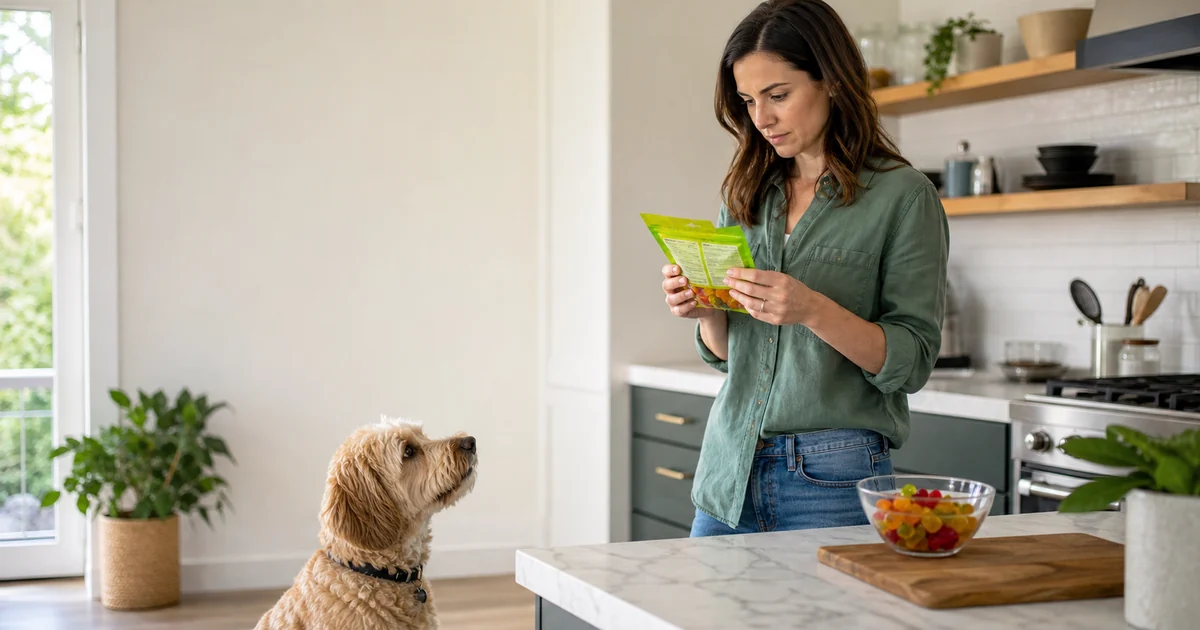
The package is the first useful object to find. A gummy's color, shape, or front-label claim cannot tell you whether it contains a risky sweetener, a human supplement active, or another ingredient that changes the response.
Decision Snapshot
- Do not offer regular, sugar-free, vitamin, sleep, or CBD gummies to a dog.[^1]
- Check the exact product, full ingredient list, likely amount, and missing wrappers or container parts.
- Treat suspected xylitol exposure, symptoms, unknown ingredients, or swallowed packaging as reasons for prompt professional help.
- Do not induce vomiting, give a home remedy, or calculate a personal “safe dose” from internet advice.[^4]
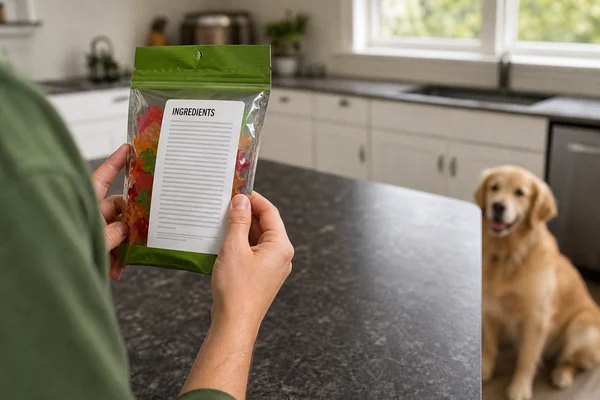
A calm, label-first response avoids two mistakes: dismissing a genuine emergency and guessing from a product's appearance instead of identifying what the dog actually reached.
Can Dogs Have Gummy Bears? The Short Answer
Gummy bears look small and familiar, but their ingredients, serving assumptions, texture, and packaging were designed for people rather than dogs.
Dogs should not eat gummy bears as treats. A single-piece count cannot establish safety because the exact product, ingredients, amount, dog, and missing packaging all affect the response. Xylitol, human actives, symptoms, unknown details, or possible swallowed packaging call for prompt professional guidance.
Why the safest answer is no
“Gummy bear” describes a format, not one fixed formula. A regular candy may be built around sugar, syrup, gelatin, acids, colors, and flavors. A sugar-free version may use one of several sweeteners. A vitamin, sleep, CBD, or wellness gummy can place active ingredients inside the same familiar shape.
That variability makes human gummies poor dog treats even when no particular toxin has been identified. Dogs do not need a candy sweetener system or a product designed around human taste and serving size. The possible benefit is a moment of flavor; the avoidable concerns include digestive upset, choking, swallowed packaging, and exposure to ingredients intended for people.
A simple household rule is also easier to follow than a list of exceptions. Human gummies stay out of reach, and dog treats remain clearly separate. Children, visitors, and family members do not have to decide whether a particular color or variety is acceptable. That separation reduces accidental sharing and discourages dogs from treating bags, purses, counters, and bedside tables as sources of rewards.
Will one gummy hurt my dog?
One gummy does not provide enough information to predict the outcome. The exact product, ingredients, amount, the dog's condition, and any missing wrapper or container parts determine the next response.
Use the package-first checklist below instead of guessing from appearance or piece count. Keep the package and note any missing wrappers or container parts.
The full response belongs in the ingestion-response section. Seek prompt professional help whenever xylitol or human actives may be involved, key details are unknown, packaging may have been swallowed, or the dog shows symptoms.
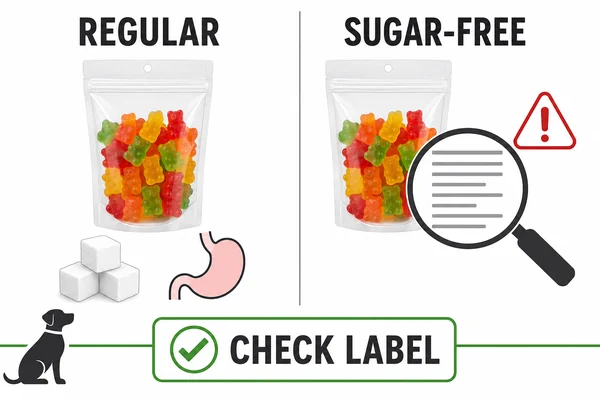
Regular gummy bears vs sugar-free gummy bears
Regular and sugar-free gummies create different questions, but neither is a dog treat. Regular candy commonly adds concentrated sugar or syrup, unnecessary calories, and a sticky chew. Sugar-free candy may use several different sweeteners; some products may contain xylitol, while others do not. The ingredient label, not the front claim, controls the next decision.[^3]
Use this package-first checklist to organize the facts. It should support a professional call, not delay one.
| Check | Record | Why it matters |
|---|---|---|
| Product | Exact name, flavor, and regular or sugar-free version | Similar-looking packages can use different formulas |
| Ingredients | Xylitol, human actives, unfamiliar sweeteners, and other notable ingredients | Front-label language does not show the full risk picture |
| Product type | Candy, vitamin, sleep, CBD, energy, or other supplement | A human active can create a concern beyond the gummy base |
| Exposure | Best estimate of pieces and time | A professional needs the clearest available account |
| Packaging | Missing wrapper, pouch, lid, desiccant, or container part | Packaging may create a separate choking or blockage concern |
| Dog's condition | Vomiting, weakness, unusual sleepiness, poor coordination, tremors, seizures, collapse, gagging, or breathing trouble | Symptoms require prompt veterinary attention |
Keep the original package. A clear photograph can help if the package cannot travel with you, but do not spend time creating a perfect record before making an urgent call.
Why Traditional Gummy Bears Are Bad for Dogs
Removing xylitol from the question does not turn concentrated candy, a sticky chew, or loose packaging into a suitable dog treat.
Traditional gummy bears are poor dog treats because they combine unnecessary sugar, a human-focused ingredient system, a chewy shape, and packaging risks without a clear nutritional benefit. The concern is the complete product and feeding habit, not a claim that every regular gummy causes poisoning.
High Sugar Content and Digestive Issues
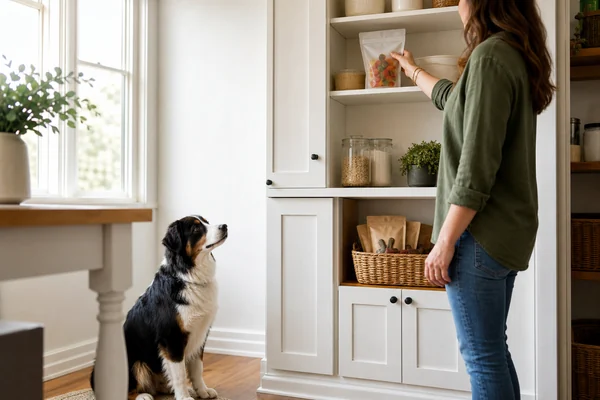
Traditional gummies commonly rely on sugar and syrups for sweetness, body, and chew. A dog's normal diet does not need this candy load. After accidental exposure, some dogs may develop vomiting, loose stool, gas, reduced appetite, or discomfort. A larger or uncertain amount deserves more caution, particularly when the dog has a health condition or dietary restriction.[^1]
The repeated habit is a separate problem. Sharing one small candy can feel harmless, which makes it easy to do again. Regular sharing adds calories without useful nutrition, teaches the dog to beg for packaged human food, and can increase the chance of a future accident. The dog begins to associate handbags, children's snacks, or bedside containers with something worth stealing.
The practical response is not to search for a routine “allowed amount.” Keep gummy bears outside the dog's treat pattern. Use appropriately portioned dog treats, and ask a veterinarian about treat choices when weight, dental, digestive, allergy, or other medical concerns affect the dog's diet.
The Danger of Corn Syrup and Artificial Ingredients
Corn syrup is a concentrated sweetener in this context. It is not accurate to label every syrup, color, acid, flavor, or processing aid as poisonous to dogs. The clearer concern is that a complex human candy formula adds ingredients the dog does not need and makes accidental exposure harder to assess.
Colors, acids, glazing agents, oils, flavors, and sweetener blends vary across brands and markets. The same bear shape may also carry vitamins, botanicals, sleep ingredients, caffeine-related components, cannabinoids, or other actives. Familiar appearance therefore says very little about the actual product.
Front-of-pack terms such as “natural,” “vegan,” “low sugar,” “wellness,” or “vitamin” do not establish suitability for a dog. Read the ingredient list and supplement panel. If the formula contains an unfamiliar ingredient or human active, preserve the package and ask a veterinarian or pet poison-control resource for product-specific guidance.
Choking and Intestinal Blockage Risks
Gummies are soft for people, but a dog may gulp them whole or swallow several pieces stuck together. A small dog, a puppy, or a fast eater may have more difficulty managing the size and texture. Coughing, repeated gagging, distress, or breathing difficulty requires immediate veterinary help.
The package can create a separate hazard. Dogs may swallow a wrapper, resealable pouch, twist tie, desiccant packet, lid, or plastic container part while reaching the candy. A missing package should not be assessed only through the gummy ingredients. Swallowed material may lodge in the throat or digestive tract, and signs may not appear immediately.[^2]
Do not assume a wrapper will pass because another dog once swallowed something similar. Tell the veterinary professional what material is missing, its approximate size, and when it may have been swallowed.
The Extreme Danger of Sugar-Free Gummy Bears (Xylitol)
“Sugar-free” can sound reassuring, yet the sweetener system may create the most urgent risk in a dog-gummy incident.
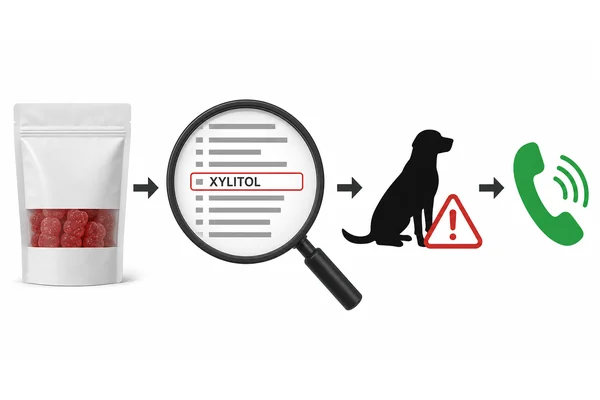
Xylitol in sugar-free gummy bears is an emergency concern for dogs. Not every sugar-free gummy contains xylitol, so check the ingredient list. If xylitol is listed, may be present, or the product cannot be identified, contact a veterinarian or pet poison-control service rather than waiting for symptoms.
What is Xylitol and Why is it Toxic?
Xylitol is a sugar alcohol used as a sweetener in some sugar-free foods, candies, gums, oral-care products, medicines, and supplements. Its use varies by product, so a sugar-free claim should trigger a label check rather than an assumption that xylitol is definitely present.
In dogs, xylitol can cause a rapid insulin release and a dangerous drop in blood sugar. More severe exposures can also involve liver injury. These possibilities are why confirmed or suspected exposure needs prompt professional attention even when the dog appears normal at first.[^4]
Do not calculate a toxic threshold from the dog's weight and the number of gummies. The xylitol amount may vary between products and may not be clear on the consumer label. A veterinarian or animal poison-control professional can interpret the product, dog information, possible timing, and current condition together.
If xylitol appears on the package—or the formula cannot be confirmed—use the ingestion-response steps below and contact a veterinarian or pet poison-control service promptly.
Symptoms of Xylitol Poisoning in Dogs
Possible signs include vomiting, weakness, unusual sleepiness, poor coordination, difficulty standing or walking, tremors, seizures, and collapse. A dog may develop serious effects before an owner sees a clear progression, and a normal appearance immediately after exposure is not a dependable all-clear.[^3][^4]
Do not turn that list into a home diagnostic test. The same signs can have different causes, and a dog does not have to display every sign before a situation is urgent. Confirmed or suspected xylitol exposure itself is enough reason to seek immediate professional direction.
While arranging help, prevent further exposure and keep the dog in a safe area. Follow professional directions and do not attempt home treatment.
What to Do If Your Dog Eats Gummy Bears
An anxious owner can lose time searching for certainty while the most useful facts are printed on the package.
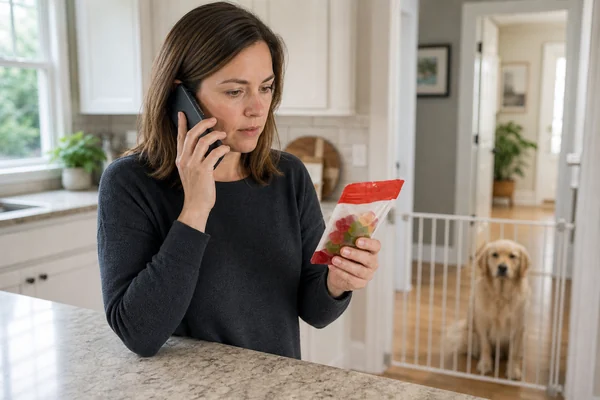
A dog that ate gummy bears needs a label-first response. Remove access, identify the product, check ingredients and missing packaging, note the likely time and amount, observe the dog, and contact a veterinarian or pet poison-control service promptly when xylitol, human actives, symptoms, or uncertainty are involved.
Immediate Steps to Take at Home
The safest immediate actions collect information and prevent further exposure. They are not treatment.
- Secure the product. Move the dog and other pets away, then collect loose gummies, wrappers, and container parts.
- Identify the package. Record the exact product name, variety, ingredients, supplement panel, and warning statements.
- Estimate the exposure. Note the best estimate of missing pieces, packaging, and time without delaying contact or calculating a toxic dose.
- Observe the dog. Look for vomiting, weakness, unusual behavior, poor coordination, tremors, seizures, collapse, gagging, or breathing trouble.
- Call the appropriate professional. Contact a veterinarian, emergency veterinary clinic, or pet poison-control service when the product or situation raises concern.
Do not induce vomiting or try another home treatment unless the veterinarian responsible for the case specifically directs it. An unsuitable home action can add injury, aspiration, or delay.
If the dog is unconscious, having a seizure, struggling to breathe, or collapsing, seek emergency veterinary care while following the clinic's instructions. Do not place your hands near the mouth of a seizing dog.
When to Call the Vet or Pet Poison Control
Call promptly when xylitol is listed or suspected, the ingredients cannot be confirmed, the product contains human supplement actives, the amount is large or uncertain, the dog has symptoms, or packaging may have been swallowed. Breathing trouble, seizures, collapse, marked weakness, or severe distress require emergency veterinary care.
A call is also appropriate when the product is a vitamin, sleep aid, energy gummy, CBD gummy, medication gummy, or mixed wellness formula. In those cases, the active ingredient may matter as much as the gummy base. Keep the complete label available because a product name can cover several formulas or strengths.[^1]
Useful call details include the dog's approximate weight, age, known medical conditions, exact product, ingredient list, best estimate of the amount and time, current signs, and missing packaging. These fields help the professional assess the case; they are not a home-treatment checklist.
Do not wait for a regular office to open when the situation appears urgent. If a professional advises monitoring, follow those case-specific instructions and call back if the dog's condition changes.
Are Nutritional or CBD Gummy Bears Safe for Dogs?
A gummy marketed for wellness can be more concerning than candy because it combines a human active system with sweeteners, flavors, and a human serving unit.
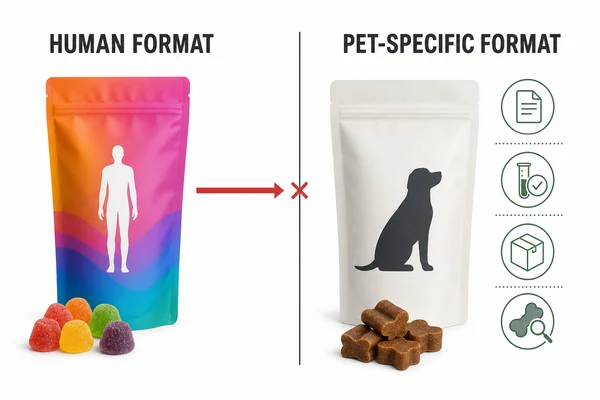
Human vitamin, nutritional, sleep, and CBD gummies are not dog supplements. Their actives, strengths, sweeteners, flavor systems, and serving units were designed for people. Do not give them to a dog or repurpose a human label into a pet dose. Animal safety and suitability belong with qualified animal-use professionals.
The Risks of Human Supplements and Wrong Dosages
Human supplement gummies may contain vitamins, minerals, melatonin, caffeine-related ingredients, botanicals, cannabinoids, or mixed active systems. An exposed dog may encounter the active ingredient, gummy base, and supporting ingredients at the same time. Two gummies with the same shape can carry completely different formulas and strengths.
CBD gummies add another layer of uncertainty. A human CBD gummy should not be selected or dose-adapted for a dog. Questions about whether any CBD product is appropriate for an animal belong with a veterinarian familiar with the animal and the exact pet-specific product.[^5]
“Vitamin,” “natural,” and “wellness” are not pet-safety guarantees. Even familiar nutrients can create problems when the amount, chemical form, combination, or animal's condition is unsuitable. Treat accidental ingestion as an exposure question, not a serving decision, and use the label-first response in the previous section.
The same boundary applies to gummies made for children. A small piece, gentle-looking package, or child-friendly flavor does not convert a human product into a pet product.
Safe Alternatives: Powders, Chews, and Pet-Specific Supplements
When a veterinarian recommends supplementation, use a pet-specific format with directions intended for the animal. Depending on the purpose, that may be a powder used with its supplied measuring tool, a veterinary chew, a capsule, a liquid, or another pet-labeled format. The format should support controlled use rather than imitate household candy.
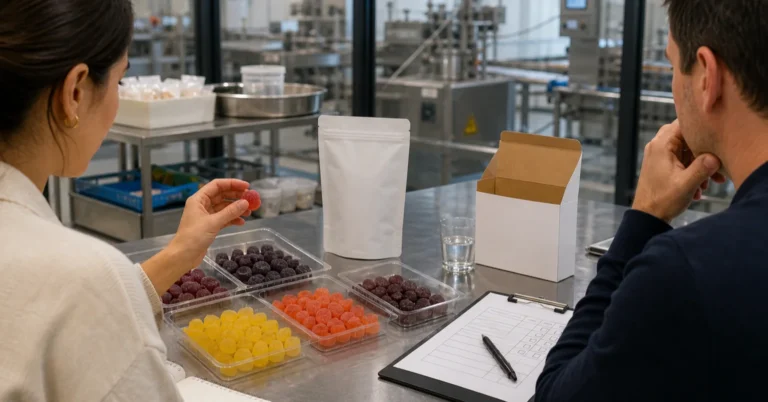
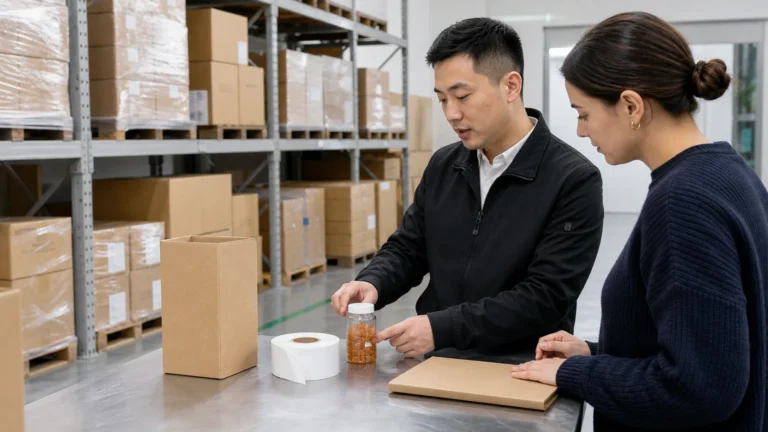
For pet supplement brands, the product-development lesson begins only after the pet-owner safety answer is complete: a human formula plus a dog image is not a pet product. In a manufacturing coordination role, I start by defining the animal-use case and collecting the qualified veterinary or animal-use review inputs that govern safety and suitability. From there, I can coordinate sweetener and active documentation, serving-format feasibility, packaging and warning-label work, samples, and scale-up without making the animal-suitability decision.
I would coordinate the manufacturing handoffs in a sequence that keeps formula and presentation connected:
| Development field | Decision to document | Failure mode to prevent |
|---|---|---|
| Animal use case | Species, intended function, relevant age or size boundaries, qualified review owner, and veterinary input route | Borrowing a general human-use assumption |
| Sweetener and base | Sweeteners, carriers, flavors, colors, and other formula components plus qualified animal-use review status | Allowing a human-friendly ingredient to pass without animal-use review |
| Active system | Ingredient identity, source records, manufacturing compatibility inputs, and qualified animal-use review status | Treating a human supplement blend as transferable |
| Portion control | Unit size, format feasibility, and directions governed by the approved animal-use brief | Depending on an unsuitable fixed unit or informal breakage |
| Flavor and acceptance | Palatability inputs approved for the intended animal use without candy positioning | Encouraging sharing, confusion, or uncontrolled consumption |
| Warning label | Species, use, storage, and accidental-ingestion language | Packaging that resembles an ordinary household gummy |
| Access control | Closure, count control, storage, and separation from human products | Easy access or loss of serving accountability |
| Documentation path | Ingredient records, specifications, testing expectations, and change control | Advancing before formula, evidence, and label language align |
The failure-mode column matters because each field has a downstream handoff. I also coordinate whether a change in sweetener, active source, flavor, piece size, or package has been reflected across formulation review, sample planning, label language, documentation expectations, and scale-up discussion. A pet-positioned format needs its own decision trail rather than a human formula with a new presentation.
Safe, Sweet Treat Alternatives for Your Dog
Replacing candy works best when the alternative is simple, portioned, and compatible with the dog's normal diet rather than merely sweet.
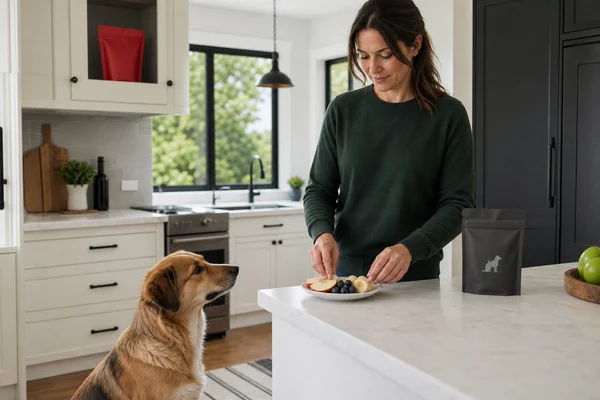
Safer dog treats are dog-appropriate foods offered in moderation. Plain fruit or a simple homemade treat may fit an individual dog's diet only after ingredient, health, allergy, weight, and dietary restrictions are considered. Ask a veterinarian before introducing a new food when suitability is uncertain.
Dog-Safe Fruits to Feed in Moderation
Plain apple flesh with the core and seeds removed, blueberries, banana, and seedless watermelon flesh without rind are examples a veterinarian may consider in an individual dog's diet. Suitability depends on the dog and the preparation, so confirm unfamiliar foods or diet-sensitive choices with a qualified professional.[^6]
“Dog-safe fruit” does not mean unlimited or appropriate for every animal. Fruit contributes sugar and fiber, and an individual dog may have a sensitive stomach, allergy, medical condition, or prescribed diet that changes what fits. Treats should remain a small part of the overall diet rather than replace balanced food.[^7]
Keep grapes and raisins away from dogs. Avoid fruit pits, cores, large seeds, tough rinds, stems, and moldy or fermented fruit. Do not coat fruit with chocolate, xylitol-sweetened products, syrup, yogurt candy, or another ingredient blend that has not been checked for the dog.[^6][^8]
Supervise any approved treat, then store the rest out of reach. If a new food is followed by vomiting, diarrhea, itching, swelling, unusual behavior, or another concern, stop offering it and contact a veterinarian.
Healthy Homemade Dog Treat Ideas
Homemade does not automatically mean balanced or suitable, so keep the idea simple. Instead of recreating a gummy bear, consider a veterinarian-approved ingredient, a little of the dog's regular food in a puzzle toy, or a plain treat made only from ingredients already confirmed for that dog. The goal is controlled enrichment, not candy texture or intense sweetness.
Avoid copying an exact internet recipe without checking whether every ingredient fits the dog. Familiar categories such as peanut butter, yogurt, broth, baking mixes, and purees can contain unexpected sweeteners, seasonings, fat, or other additions. Read each ingredient label rather than trusting the category name.
Portion, texture, and storage matter as much as the ingredient list. Make treats suitable for the dog to manage safely. Store them where the dog cannot reach the container. Label pet treats clearly so family members do not confuse them with human snacks, and discard homemade food when freshness is uncertain.
For dogs with allergies, digestive problems, weight-management needs, or a veterinary diet, ask the veterinarian for ingredient and portion guidance before making treats. A commercial dog treat with a complete label may be the clearer option when household ingredients or storage practices are difficult to control.
Conclusion
Can dogs eat gummy bears safely? The safest rule is no: keep human gummies away, identify any accidental exposure, and seek prompt professional guidance when xylitol, human actives, symptoms, uncertainty, or swallowed packaging are involved.
For a pet supplement concept, feasibility and qualified animal-use review must come before route selection. Talvenda can support brands as a gummy product-development and manufacturing partner by coordinating ingredient documentation, serving-format manufacturability, sample planning, packaging and warning-label work, documentation expectations, and scale-up handoffs. With animal safety and suitability owned by qualified professionals, the brand can use those inputs to compare and choose whether a genuinely applicable stock route, stock formula modification, or custom gummy development deserves investigation. Share the target animal, intended function, and serving concept through Talvenda's contact page to define the next manufacturing review.
[^1]: ASPCA Animal Poison Control Center, Help! My Dog Just Ate Some Gummies! What Do I Do?, covering gummy-specific risks from sugar, xylitol, CBD, vitamins, minerals, sleep ingredients, and other human actives. [^2]: Merck Veterinary Manual, Gastrointestinal Obstruction in Small Animals, covering foreign-body obstruction and variable clinical signs. [^3]: U.S. Food and Drug Administration, Paws Off Xylitol; It's Dangerous for Dogs, covering ingredient-label checks, hypoglycemia, possible signs, and immediate veterinary contact after suspected xylitol ingestion. [^4]: Merck Veterinary Manual, Xylitol Toxicosis in Dogs, covering insulin release, hypoglycemia, possible liver injury, clinical signs, and veterinary-supervised emesis. [^5]: U.S. Food and Drug Administration, FDA Regulation of Cannabis and Cannabis-Derived Products, Including Cannabidiol (CBD), covering the absence of FDA-approved cannabis uses in animals and the recommendation to discuss animal treatment options with a veterinarian. [^6]: ASPCA Animal Poison Control Center, Sharing is Caring: Foods You Can Safely Share with Your Pet, covering selected fruits, preparation, small portions, and ingredient-label checks. [^7]: World Small Animal Veterinary Association, Feeding Treats to Your Dog, covering individual suitability, supervision, choking-aware size and shape, and the recommendation that treats remain a limited share of daily calories. [^8]: Merck Veterinary Manual, Grape, Raisin, and Tamarind Toxicosis in Dogs, covering the association between grape or raisin ingestion and acute kidney injury in dogs.