
The comparison between creatine gummies and powder has become a common question for supplement consumers and brands planning new product formats. Gummies are everywhere now, yet launch teams often run into dosage limits, stability problems, and rising production costs after launch.
Creatine gummies vs powder depends on dosage, stability, cost, and user routine. Powder is better for low-cost, high-dose flexibility. Gummies can work well for convenience and daily compliance when manufacturing controls, packaging, and shelf-life testing protect the labeled creatine dose.
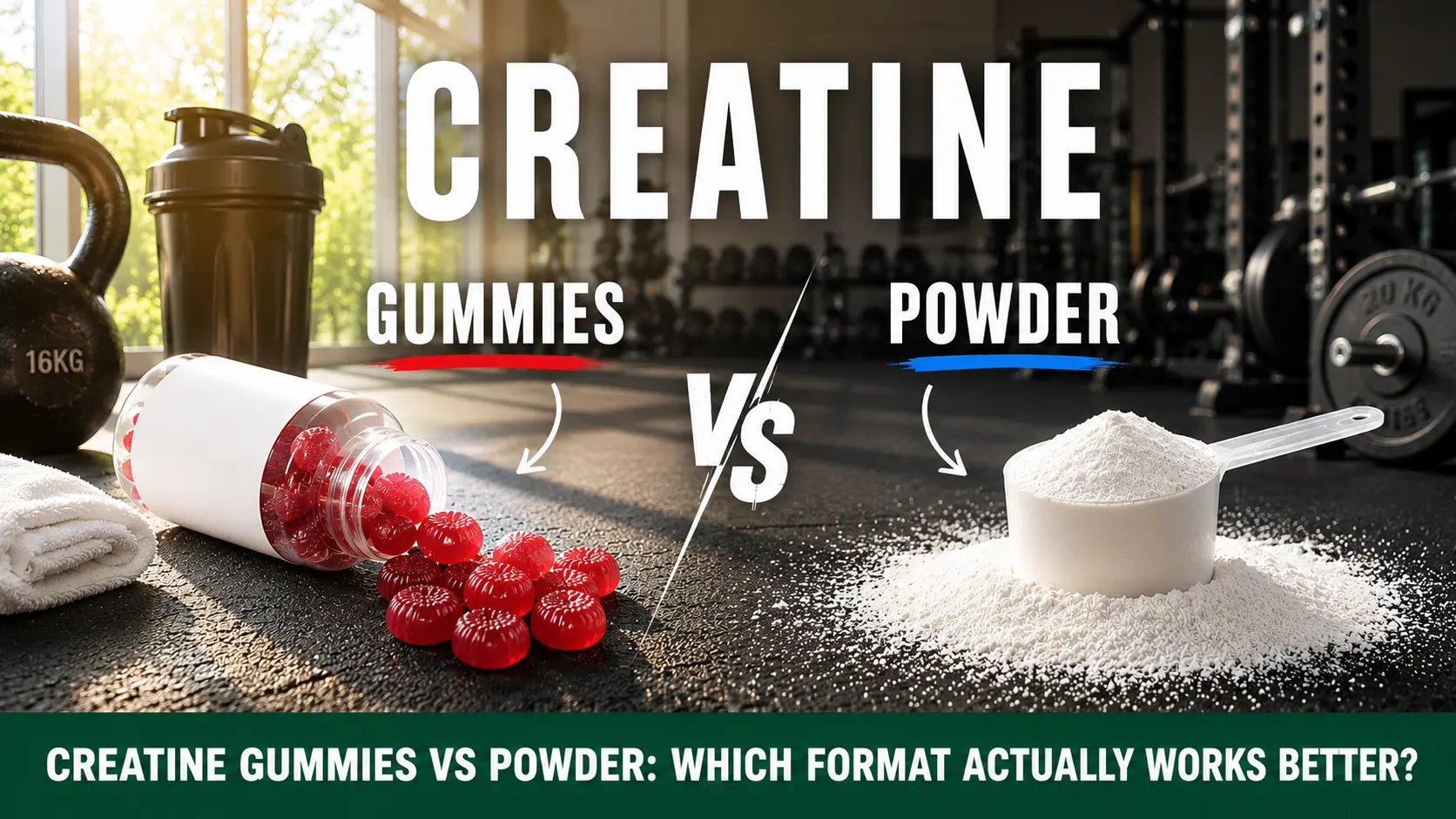
After working with gummy production line planning and automation solutions, I have seen how quickly supplement trends can move from a strong product idea to a difficult production problem. Creatine gummies are growing because consumers want easier formats.
Behind that trend, brands often discover problems they did not expect. Early formulas may fail stability testing, lose potency during storage, or become difficult to scale once production volumes increase. This guide compares the consumer experience, the manufacturing reality, and the decisions supplement brands should make before launching a creatine gummy product.
Quick Answer: Creatine Gummies vs Powder
| Question | Better Fit | Why It Matters |
|---|---|---|
| Same effectiveness at equal dosage? | Both | Creatine monohydrate is the same active ingredient when dosage and stability are controlled. |
| Lowest cost per 5g serving? | Powder | Dry powder avoids the cooking, drying, coating, and packaging costs of gummies. |
| Easiest daily routine? | Gummies | No shaker, water, or mixing step is needed. |
| Loading phases or high-dose use? | Powder | Large daily intakes are easier to consume with scoops than multiple gummies. |
| Brand differentiation? | Gummies | Gummies can support convenience-focused positioning if the formula remains stable. |
Creatine Gummies vs Powder: Are They Equally Effective?
This article is for general supplement education and product-format comparison. It does not replace advice from a qualified healthcare professional, especially for users with kidney disease, medical conditions, or creatine restrictions.
Consumers often like gummies, but they still worry that a candy-like format may be weaker than traditional sports nutrition powder. For the broader mechanism question, see whether creatine gummies work before judging format alone.
Creatine gummies can be as effective as powder if users consume enough total creatine daily and the active ingredient remains stable through manufacturing and shelf life. Current evidence mainly supports total creatine intake as the key factor, while gummy-specific absorption advantages have not been clearly established.
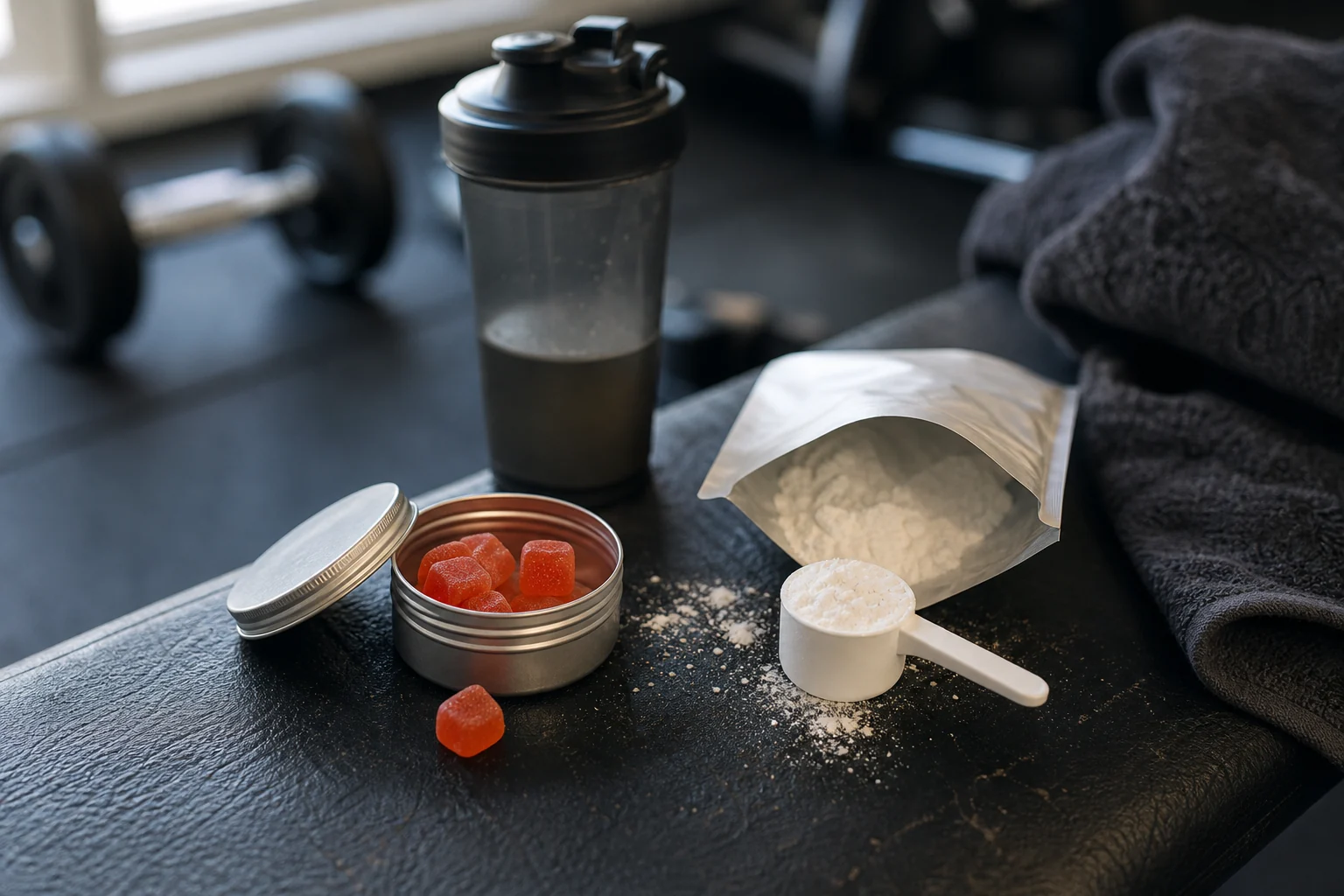
Creatine monohydrate is still the same active ingredient whether it comes from powder or gummies. The body mainly responds to total creatine intake, not the delivery format itself.[^1] The bigger issue is dosage consistency and whether consumers take the product every day.
What Makes the Same Dose Harder in Gummies?
Powder keeps dosing simple. One scoop usually delivers 3 to 5 grams immediately.[^2] Gummies work differently. Most products contain around 0.5 to 1.5 grams per piece. This means consumers often need several gummies per serving, so creatine gummy dosage needs separate label math.
At manufacturing scale, higher loading creates pressure on the gummy system:
- Depositing speed may slow down.
- Weight variation becomes harder to control.
- Texture may turn grainy or dense.
I once saw a pilot gummy batch pass internal review without major problems. Three months later, the same formula showed texture hardening because the moisture barrier inside the bottle was too weak.
Consumer behavior also matters. Users who dislike carrying shaker bottles or mixing powder daily may find gummies easier to repeat.
Gummies remove that friction. In repeated-use routines, simpler steps can improve long-term supplement compliance.[^3]
| Factor | Creatine Powder | Creatine Gummies |
|---|---|---|
| Typical Serving | 3-5g scoop | 3-6 gummies |
| Convenience | Lower | Higher |
| Dosage Flexibility | High | Limited |
| Mixing Needed | Yes | No |
| Daily Compliance | Moderate | Higher |
The ingredient itself is not the real challenge. The challenge comes from delivery format, production stability, and long-term consumer behavior.
Do Creatine Gummies Work for Muscle Gain?
A common concern is that gummies feel more like candy than a serious muscle-building supplement.
Creatine gummies can support muscle gain like powder when users consume enough creatine consistently over time. The key factor is total daily dosage, not whether the format is a scoop, drink, capsule, or gummy.
This discussion usually falls into two groups. The first group includes experienced gym users and athletes. Loading protocols may reach 20 grams daily.[^4] Powder clearly works better in those situations. Few consumers want to chew twenty gummies every day.
Which Format Fits Different Fitness Goals?
The second group includes lifestyle wellness users. This buyer group often cares more about convenience and taste than strict dosing efficiency. Gummies fit naturally into that routine. Younger supplement buyers also tend to prefer formats that feel simpler and less clinical.
Cost creates another major difference. At retail, a 5g serving of creatine powder may cost only a fraction of a gummy serving. Gummies often cost more because manufacturing requires cooking systems, drying time, flavor masking, coating, stronger packaging protection, and stability testing.
Sugar content matters for specific users. Standard creatine gummies often use syrup systems or added sugars to support texture and flavor. For calorie-conscious users or low-carb diets, powder may still feel cleaner and easier to manage.
| If You Want... | Better Option | Practical Reason |
|---|---|---|
| Lowest Cost | Powder | It delivers more creatine per dollar. |
| Easy Travel Use | Gummies | No scoop, shaker, or water source is required. |
| Loading Phases | Powder | High daily intakes are easier and cheaper. |
| Better Taste | Gummies | Flavor systems can mask chalky notes. |
| Simpler Daily Routine | Gummies | Pre-portioned pieces reduce preparation friction. |
| Flexible Dosage | Powder | Scoops can be adjusted more easily. |
Ironically, high-potency gummies can become less convenient when serving counts grow too large. Users may enjoy gummies at first, then realize a full serving requires half a handful every day.
Brands often underestimate how much convenience affects repeat purchases. Consumers tend to stick with products that fit naturally into daily routines.
Is Creatine Powder Stronger Than Gummies?
Powder often looks stronger because the serving is larger, but appearance can confuse dosage efficiency with ingredient strength.
Creatine powder is not chemically stronger than gummies. Both formats can deliver creatine monohydrate. Powder simply makes high daily dosages easier, cheaper, and more flexible to consume than a multi-gummy serving.
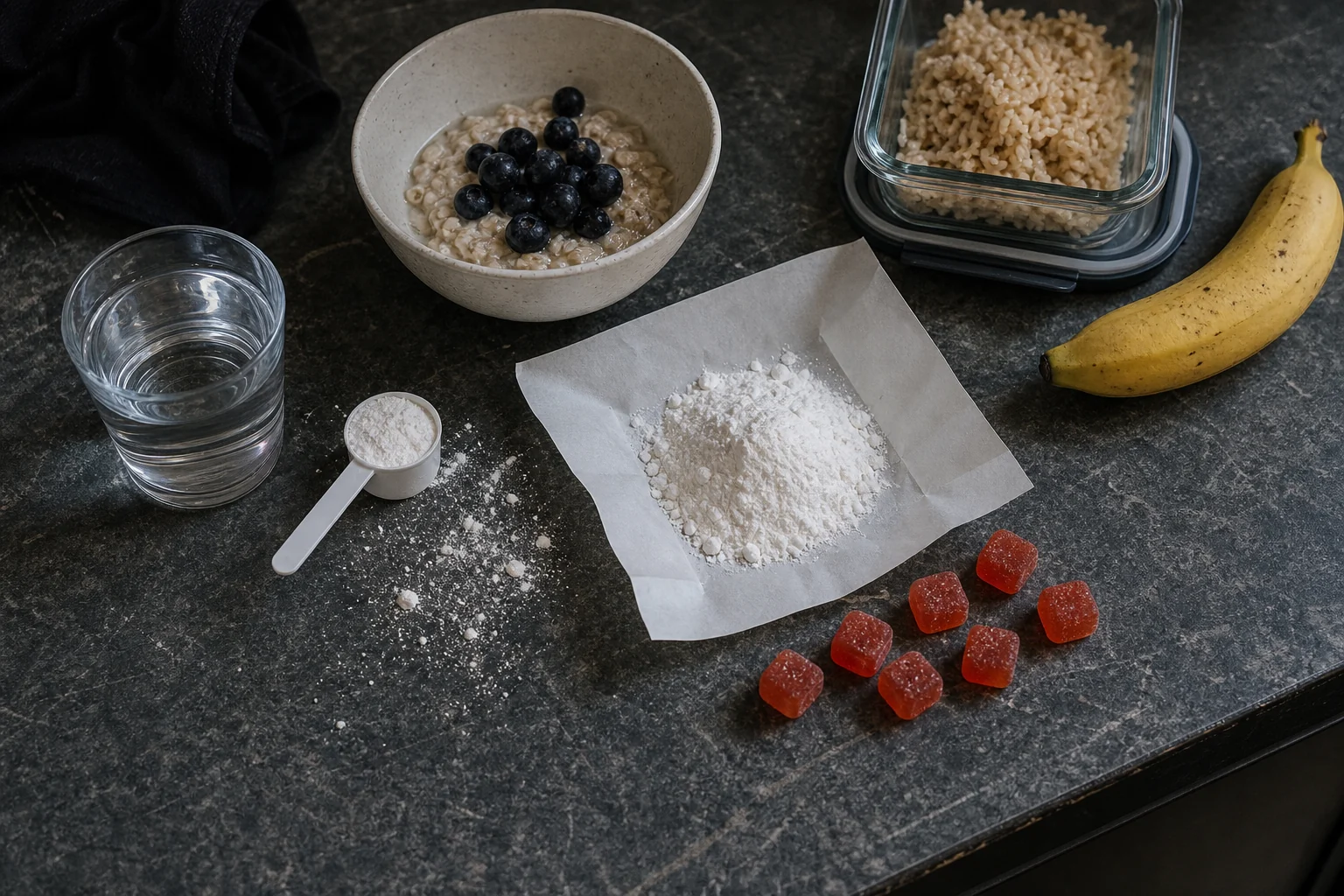
Creatine monohydrate remains the same ingredient in both products. The difference comes from serving practicality. Powder allows users to consume large dosages quickly with one scoop. Gummies spread the dosage across multiple pieces.
Why Does Powder Feel More Powerful to Some Users?
This becomes important during loading phases or high-volume sports nutrition programs. A 20g loading phase may require four scoops of powder or more than twenty gummies depending on the formulation.
From a manufacturing perspective, powder is also much simpler. Dry powder products avoid several issues found in gummy systems:
- moisture exposure
- texture instability
- sticking problems
- active degradation
- packaging sensitivity
Gummies create more production complexity. The active ingredient has to survive cooking, depositing, drying, coating, packaging, and long-term storage.
| Comparison Point | Powder | Gummies |
|---|---|---|
| Active Ingredient | Same | Same |
| High-Dose Efficiency | Higher | Lower |
| Convenience | Lower | Higher |
| Production Complexity | Lower | Higher |
| Moisture Sensitivity | Lower | Higher |
That does not make gummies weaker. It simply means gummies require tighter process control and stronger formulation planning to maintain the same labeled potency over time. For routine-driven consumers, the easier format is often the one they use more consistently.
Can Creatine Gummies Lose Potency Over Time?
A gummy may look stable on the shelf, but heat, moisture, and acidic systems can quietly reduce performance.
Creatine gummies can lose potency over time because heat, moisture, acidic gummy systems, and long processing conditions may gradually degrade creatine monohydrate. Strong formulation control, packaging, and stability testing are needed to protect label claims.

This issue has become more visible across the supplement industry recently. In 2025, independent supplement testing groups reported that sampled creatine gummies tested far below labeled potency.[^5] The tested products reportedly contained 40% to 50% less creatine than claimed.[^6]
Where Do Potency Problems Usually Begin?
Creatine behaves differently inside gummy systems compared to dry powder. Powder remains relatively stable if moisture stays low.[^7] Gummies create more stress because they involve heat, water activity, acidic flavor systems, and longer drying cycles.
Most potency problems begin in predictable places:
- Excessive heat during cooking or depositing
- Moisture exposure during drying and storage
- Acidic gummy systems that pressure stability
- Weak barrier packaging during shipping
- Long-term humidity exposure after launch
In commercial production, brands may push creatine loading aggressively because larger dosage claims sound attractive in marketing. Yet higher loading often creates new stability problems later during storage.
Packaging also becomes critical. Gummies absorb environmental moisture much more easily than powder.[^8] Weak induction seals or poor barrier bottles may slowly reduce shelf-life stability.
Consumers also notice real-world problems during daily use. Gummies left inside hot cars or gym bags may soften, stick together, or lose texture faster than expected.
| Risk Factor | Potential Result |
|---|---|
| High Heat Exposure | Creatine degradation |
| Moisture Absorption | Potency decline |
| Acidic Systems | Stability pressure |
| Long Drying Cycles | Active loss |
| Weak Packaging | Shelf-life instability |
This is why production planning matters as much as formulation itself. A formula that works during lab development may still fail later under real commercial conditions.
What Manufacturing Tradeoffs Come With Creatine Gummies?
For everyday users, the choice is mostly about cost, dosage, taste, and routine.
For supplement brands, the same comparison goes one layer deeper: can the gummy stay stable, pleasant to chew, and accurate to its label claim after production, shipping, and storage?
Creatine gummies look simple to consumers, but high active loading can create difficult production tradeoffs for brands.
The main creatine gummy tradeoffs involve dosage limits, texture instability, moisture management, flavor masking difficulty, and scale-up consistency. These issues make creatine gummy manufacturing more complex than dry powder blending.
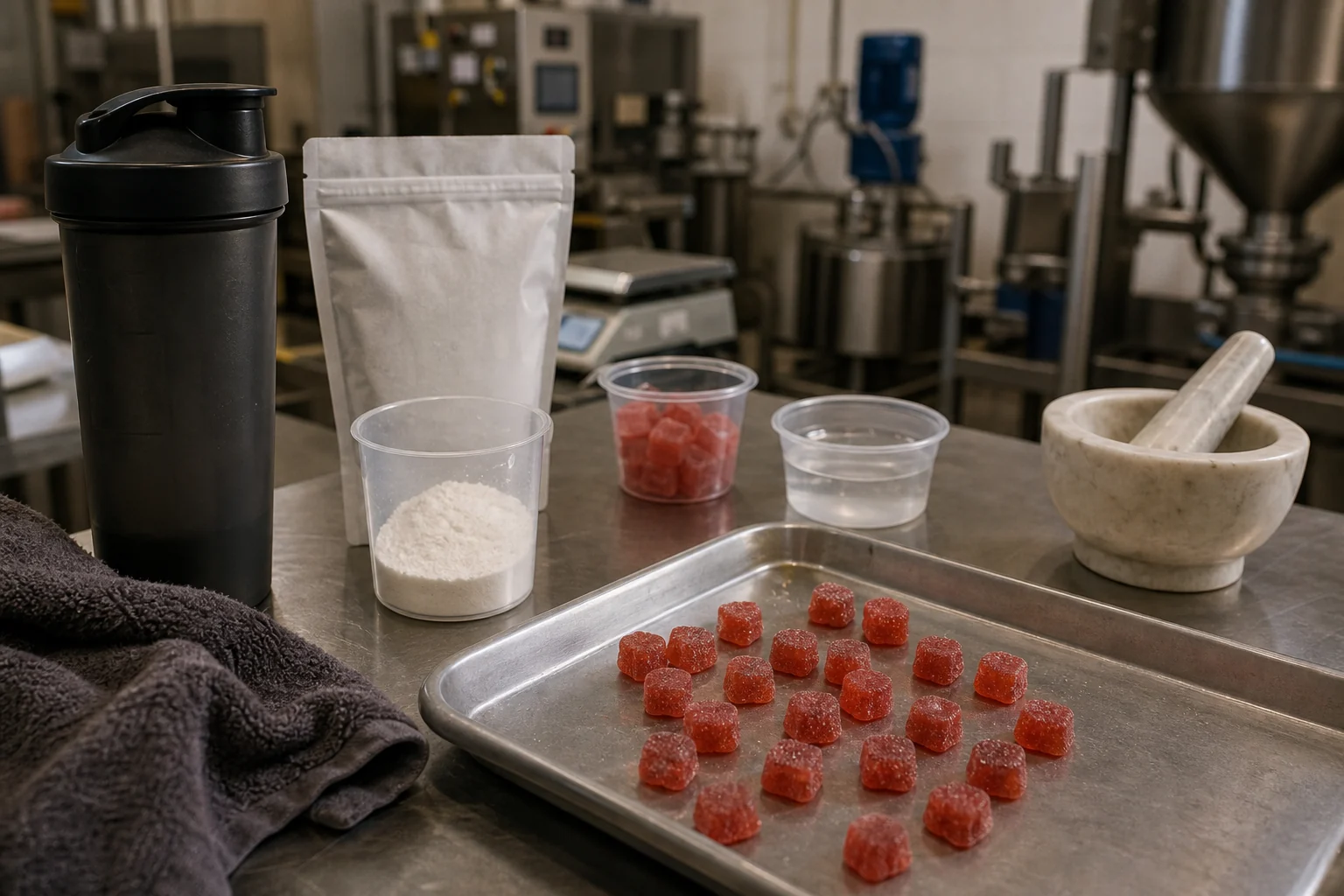
In gummy vitamin manufacturing, every ingredient affects the entire system. Creatine monohydrate creates additional pressure because it is a dense crystalline powder. As loading increases, the gummy matrix becomes harder to manage consistently.
Why Is High Active Loading Difficult?
One common issue appears during depositing. At higher viscosities, depositing speed often slows and weight variation becomes harder to control.[^9] Texture may also become rough or sandy.
In commercial gummy projects, creatine loading above roughly 1.5 grams per piece can start creating:
- drying inconsistency
- shape deformation
- sticking problems
- poor chewability
- texture instability
Flavor masking creates another challenge. Creatine carries a mild chalky taste, and larger dosages are harder to hide.
Common masking choices include:
- strong fruit profiles
- tart notes
- layered flavor systems
These choices can improve taste, but they also change acidity and moisture behavior.
| Manufacturing Challenge | Production Impact |
|---|---|
| High Active Loading | Texture instability |
| Moisture Exposure | Potency decline |
| Poor Depositing Control | Weight variation |
| Weak Flavor Masking | Poor user experience |
| Scale-Up Changes | Batch inconsistency |
I have also seen flavor optimization create unexpected side effects. Additional syrup systems or acid balancing may improve taste while increasing moisture sensitivity later during storage.
Scale-up creates another layer of difficulty. A formula that behaves well in small pilot batches may respond differently during full commercial production because cooling behavior, drying conditions, and depositing speed all change at larger volumes.
This is why pilot production matters before commercial launch. A formula that works in theory may still need adjustment in real production.
What Should Supplement Brands Consider Before Launching Creatine Gummies?
Brands often start with flavor ideas and label claims, but production feasibility usually decides whether the launch survives.
Before launching creatine gummies, brands should evaluate dosage feasibility, piece weight, sugar or sugar-free direction, flavor masking, packaging protection, pilot testing, MOQ, and long-term manufacturability.

One question matters first: how many gummies per serving will consumers realistically accept?
That answer shapes nearly every part of the formulation strategy.
Which Product Decisions Should Come First?
High daily dosage sounds attractive in marketing. In production, high loading often creates:
- larger gummy size
- texture problems
- longer drying cycles
- flavor balancing issues
- shelf-life instability
Brands also need to decide early between sugar-based and sugar-free systems. Sugar-free creatine gummies are possible, though they usually require tighter moisture management and more process optimization. A sugar-free direction can support modern active nutrition positioning, but it should be validated through texture, taste, and stability testing instead of treated as a simple ingredient swap.
Piece weight planning also matters. Standard gummies may not carry enough creatine for an efficient serving. Heavier gummies can increase payload, but they may create slower drying, denser texture, and higher packaging stress.
The best format is not only the one with the strongest label claim. It is the one consumers can use daily while the product remains stable through shelf life.
Supplement brands may also start from existing product concepts instead of developing a creatine gummy completely from zero. For faster market testing, Talvenda offers a stock creatine gummy formula with a ready-to-launch product option and a minimum order quantity of 1,000 bottles. This approach can help brands validate consumer interest with a shorter lead time before investing in a fully customized creatine gummy project.
For brands planning a longer-term product line, the stock option can work as a practical bridge. It allows them to enter the market sooner and collect early feedback. That insight can then guide customized creatine gummies with adjusted dosage targets, flavor systems, packaging direction, or positioning needs.
| Pre-Launch Area | Why It Matters |
|---|---|
| Dosage Feasibility | Determines manufacturability |
| Piece Weight Design | Impacts texture and compliance |
| Sugar or Sugar-Free System | Affects taste, calories, and moisture control |
| Flavor Masking | Protects user experience |
| Packaging Selection | Controls moisture exposure |
| Pilot Production | Validates scale-up consistency |
Packaging decisions should happen early as well. Creatine gummies are more sensitive than powder products. Desiccants, induction seals, and barrier packaging often become necessary for long-term stability. Mylar pouches may support a modern look and shipping efficiency, while bottles can offer stronger structure when paired with proper sealing and moisture control.
At Talvenda, pilot production is an important step for identifying stability and scale-up risks before full commercial manufacturing begins. Small lab samples rarely reveal every issue.
One problem appears often during scale-up. Brands approve a formula after short-term review, then stability testing later shows texture collapse or potency decline.
In creatine gummy manufacturing, getting the formula right is only the beginning. The harder part is keeping that formula stable through scale-up, shipping, and real shelf-life conditions.
How Should Brands Choose a Private Label Creatine Gummy Manufacturer?
A weak manufacturing partner can turn a strong market idea into inconsistent dosage, poor texture, and costly relaunch work.
Brands should choose a private label creatine gummy manufacturer that can support formulation feasibility, precision dosing, flavor masking, stability testing, packaging selection, pilot runs, MOQ planning, and commercial scale-up.

Private label creatine gummies require more than a basic gummy base and a label design. Buyers often compare creatine powder and gummies around efficacy and dosage, so the manufacturing process must protect the actual active ingredient through production and shelf life.
What Should a Brand Verify Before Production?
A serious OEM or contract manufacturing discussion should start with dosage and stability, not only flavor. Brands should ask whether the target creatine amount is realistic for the desired piece weight, serving count, texture, and packaging format. The same questions also matter when choosing a creatine gummy manufacturer.
If a manufacturer says every claim is easy, that may be a warning sign. Creatine gummies need practical tradeoff management.
| Manufacturing Point | What to Check |
|---|---|
| Active Ingredient Stability | Process conditions, moisture control, and stability testing plan |
| Precision Dosing | Uniform dispersion and finished-piece weight control |
| Flavor and Texture Control | Masking chalky notes without destabilizing the gummy |
| Packaging Support | Bottle, pouch, desiccant, seal, and shipping considerations |
| Pilot Runs | Small-scale production before full commercial commitment |
| MOQ Planning | Launch volume that fits budget and market testing needs |
For supplement brands, a useful manufacturing partner should support dosage planning, pilot production, packaging review, and commercial scale-up instead of only offering flavor samples and label design.
Talvenda supports these areas for brands evaluating creatine gummy launches.
A good manufacturing partner should also help brands avoid overpromising. A very high creatine claim may look attractive on a product page, but it can create a large serving size, gritty chew, longer drying time, or weak shelf-life performance.
A better path is often to design a serving that consumers can actually take every day while protecting potency and texture over time. For market-facing proof signals, the best creatine gummies comparison shows how public dose claims and testing visibility shape buyer trust.
If you are evaluating a creatine gummy launch, Talvenda can help assess manufacturability, stability risks, packaging requirements, and production feasibility before full commercial rollout.
FAQ About Creatine Gummies vs Powder
Shoppers and brands often ask the same questions about effectiveness, dosage, cost, serving size, and stability. Here are the short answers.
Do creatine gummies work the same as powder?
Yes, they can work similarly when the total daily creatine dose is the same and the gummy remains stable through shelf life. The format does not make creatine stronger, but poor formulation can reduce the amount users actually receive.
Are creatine gummies better than powder?
Gummies are better for convenience, travel, and taste. Powder is better for low cost, flexible dosing, and loading phases. The better choice depends on whether the user values dosing efficiency or an easier daily routine.
Are creatine gummies worth it?
Creatine gummies may be worth it for users who dislike mixing powder or often skip supplements because of inconvenience. Powder is still better for users who want the lowest cost per gram or need flexible high-dose intake.
Do creatine gummies contain less creatine?
Usually, yes. One gummy often contains less creatine than one powder serving, so users may need several gummies to reach a full daily dose.
Why are creatine gummies more expensive?
Creatine gummies require cooking, depositing, drying, coating, flavor masking, packaging protection, and stability testing. Powder production is simpler, so the cost per gram is usually lower.
Can creatine gummies be sugar-free?
Yes. Sugar-free creatine gummies are possible, but they need careful moisture control, sweetener selection, texture testing, and pilot production before launch.
Are creatine monohydrate gummies different from powder?
The active ingredient can be the same: creatine monohydrate. The difference is the delivery format. Powder is dry, scoopable, and flexible. Gummies are chewable, flavored, pre-portioned, and more sensitive to processing and storage conditions.
Conclusion
Creatine powder is still the better choice for low-cost, high-dose, flexible supplementation. Creatine gummies are better for users who value taste, convenience, and a routine they can stick with.
For everyday users, the better choice is the one that fits your routine without making dosage, cost, or consistency harder than it needs to be.
For supplement brands, the real question is not whether creatine gummies can work. They can. The harder question is whether the formula can hold its labeled dose, texture, taste, and stability through pilot production, packaging, shipping, and shelf life.
That is where formulation review, pilot runs, packaging checks, and the right manufacturing partner matter.
Talvenda can help brands review creatine loading, texture risk, shelf-life testing, MOQ, and scale-up feasibility before they move from sample approval to commercial production.
If you are comparing these two formats for a new product line, send the target dose, serving plan, and packaging idea for a practical feasibility review.
[^1]: "Creatine Supplementation for Muscle Growth: A Scoping Review of ...", https://pmc.ncbi.nlm.nih.gov/articles/PMC8949037/. Supports the total-intake mechanism for creatine supplementation. Scope note: not gummy-specific. [^2]: "A short review of the most common safety concerns regarding ... - PMC", https://pmc.ncbi.nlm.nih.gov/articles/PMC12702719/. Supports the common 3-5 g/day maintenance-dose range. Scope note: serving sizes vary by commercial product. [^3]: "Impact of Medication Regimen Simplification on ... - PMC - NIH", https://pmc.ncbi.nlm.nih.gov/articles/PMC7646472/. Supports the general adherence principle that simpler routines can improve repeated-use compliance. Scope note: not creatine-gummy specific. [^4]: "Short-Term Creatine Loading Improves Total Work and Repetitions ...", https://pmc.ncbi.nlm.nih.gov/articles/PMC8001551/. Supports common creatine loading protocols of about 20 g/day. Scope note: exact protocols vary. [^5]: "Men's - Independent lab testing reveals gummies contain ...", https://www.facebook.com/mensfitness/photos/independent-lab-testing-reveals-gummies-contain-less-creatine-than-advertised/1414122210753675/. Documents potency shortfalls in sampled products. Scope note: applies only to tested products and lots. [^6]: "NOW tests creatine gummies, identifies limitations in third party ...", https://www.nutritionaloutlook.com/view/now-tests-creatine-gummies-identifies-limitations-in-third-party-gummy-testing. Reports measured creatine content below label claims in sampled products. Scope note: not a full-market conclusion. [^7]: "Stability of creatine monohydrate and guanidinoacetic acid during ...", https://pmc.ncbi.nlm.nih.gov/articles/PMC6852548/. Supports the principle that dry creatine is more stable when protected from moisture. Scope note: commercial formulas still need their own testing. [^8]: "Physicochemical and Sensory Stability Evaluation of Gummy ... - PMC", https://pmc.ncbi.nlm.nih.gov/articles/PMC10818720/. Supports gummy moisture sensitivity during storage. Scope note: applies to gummy systems generally. [^9]: "Rheological analysis in food processing: factors, applications, and ...", https://pmc.ncbi.nlm.nih.gov/articles/PMC12828905/. Supports the manufacturing principle that viscosity affects depositing and filling accuracy. Scope note: not a creatine-gummy production trial.