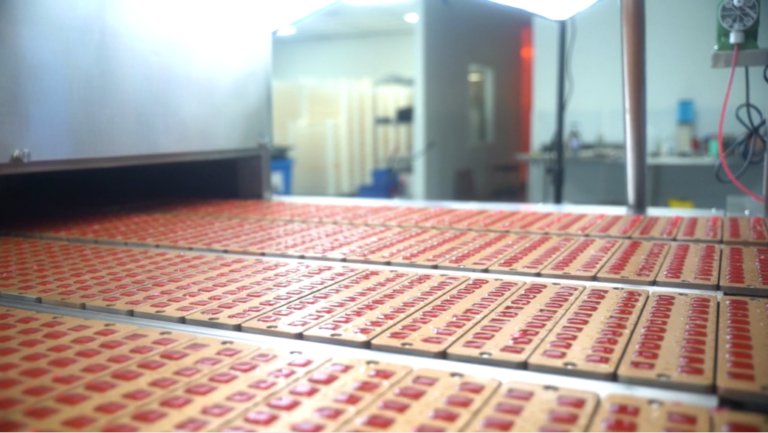
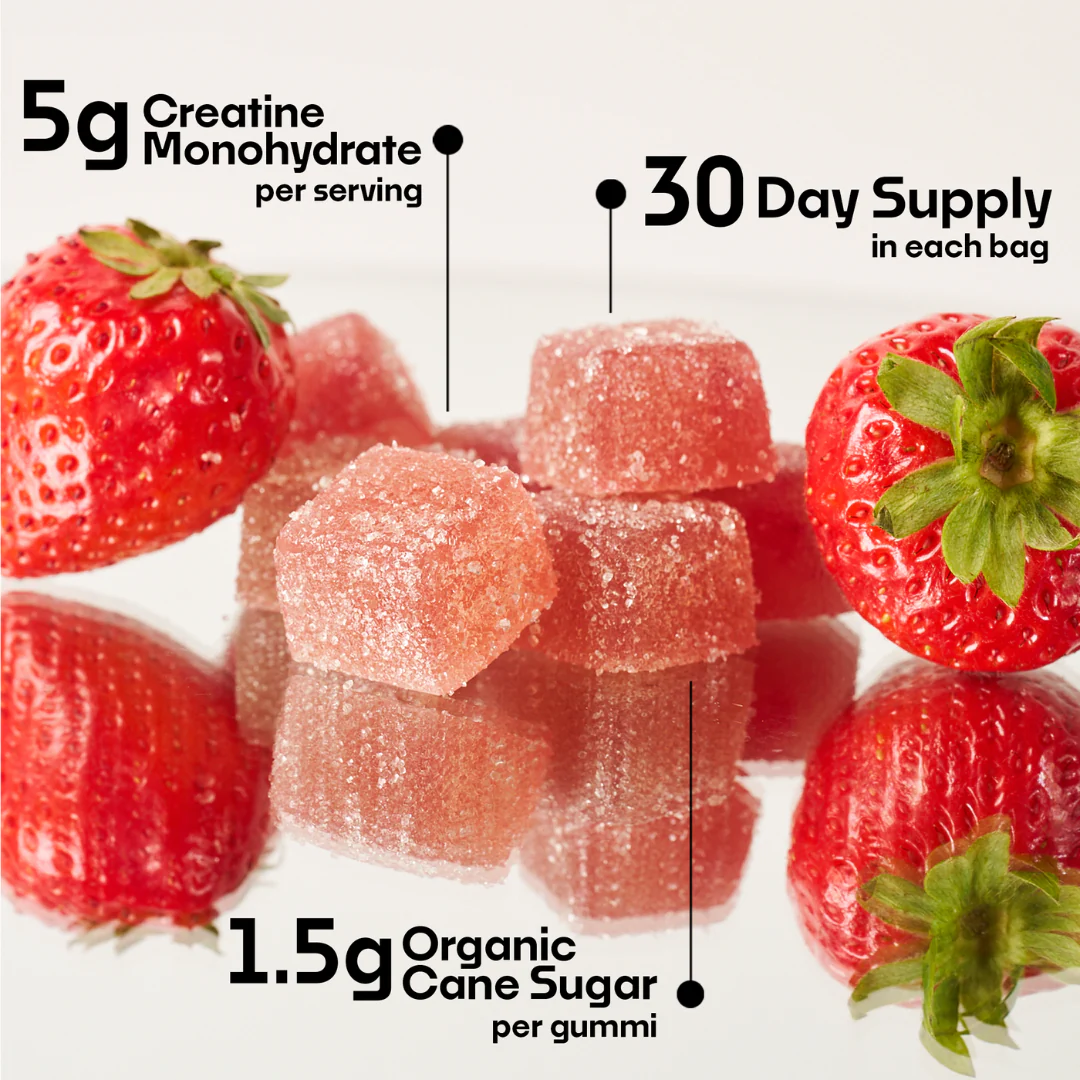

Creatine gummy dosage looks simple until the label claim, serving size, and gummy texture start pulling in different directions.
Creatine gummy dosage depends on the amount of creatine per serving, not only the number of gummies. Most maintenance-style products are planned around 3-5g of creatine per day, but the usable dose depends on per-gummy loading, serving size, label clarity, and finished-product testing.
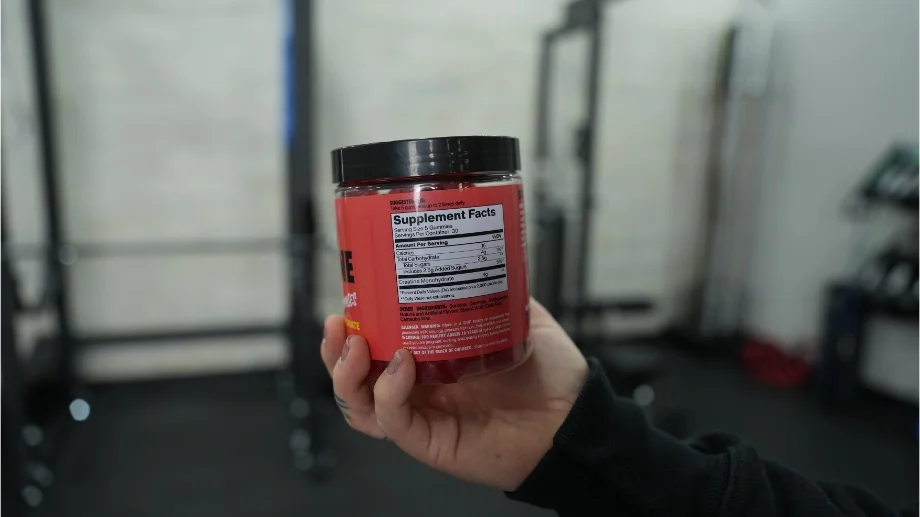
I have seen creatine gummy ideas look strong on a label and become much harder in production. A number like 5000mg can attract attention, but it can also confuse buyers if they do not know whether it means one gummy, one serving, or a full daily amount.
For brands, dose planning is not only a consumer question. It is also a formulation, testing, packaging, and scale-up question. For the broader format question, see whether creatine gummies work before judging dosage alone.
What Is a Practical Creatine Gummy Dosage?
Most users want one number. The practical work starts when that number has to fit a gummy serving users will actually take.
A practical creatine gummy dosage is planned around a daily serving users can take consistently while the product keeps its labeled dose, texture, and shelf-life performance realistic.
How Many Grams of Creatine Do People Usually Look For?
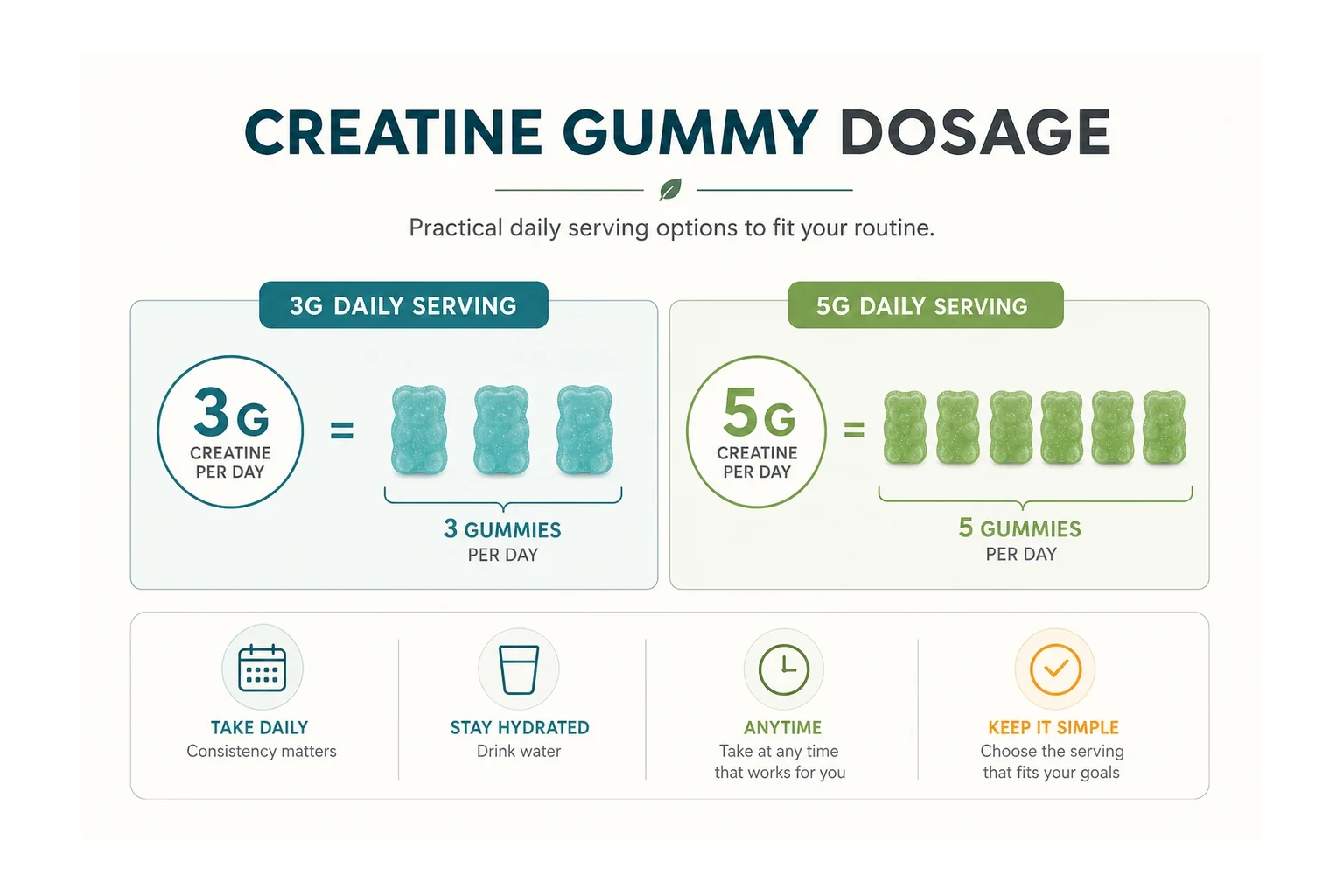
Adult creatine routines often use 3-5g of creatine monohydrate per day as a maintenance reference. Loading protocols may use a higher amount at the beginning, often around 20g per day for several days, followed by a lower maintenance amount. I use those numbers as product planning references, not as personal medical advice.
For gummies, the maintenance range is usually the more realistic commercial target. A 3g serving may be easier to formulate. A 5g serving may look stronger on the front label, but it often requires either more gummies or a higher active load per piece.
That decision affects texture, cost, serving count, packaging, and repeat use. A brand choosing between 3g and 5g is also choosing a product experience.
| Target Daily Creatine | Common Gummy Approach | Practical Note |
|---|---|---|
| 3g | 2-3 gummies at about 1-1.5g each | Easier to formulate and explain |
| 5g | 4-5 gummies at about 1-1.25g each | Clear dose, but higher serving count |
| 5g | 2 gummies at about 2.5g each | More convenient, but higher texture risk |
| 10g+ | High piece count per day | Usually less practical than powder |
How Many Creatine Gummies Should You Take Daily?
The number depends on the product. Two gummies may deliver 3g if each gummy contains 1.5g. Four gummies may be needed to reach 5g if each gummy contains 1.25g. The supplement facts panel matters more than the front-label number.
This is where consumers often misread 5000mg creatine gummies. A large front-panel number often refers to the full serving, not one gummy. That is not automatically misleading if the serving size is clear. The problem begins when the label makes the user guess.
Why Dosage Depends on Per-Gummy and Per-Serving Claims
| Label Point | What It Means | Why It Matters |
|---|---|---|
| Creatine per gummy | Active amount in one piece | Shows real piece loading |
| Creatine per serving | Active amount in the suggested serving | Defines the daily dose |
| Gummies per serving | Number of pieces users take | Affects convenience and repeat use |
| Active stability | Creatine retained over shelf life | Protects label credibility |
A brand can write a strong dose claim on the front label. The product still has to carry that amount in a chewable gummy. It also has to stay stable after production, packaging, shipping, and storage.
If the serving needs too many gummies, the product may lose the convenience advantage. If the serving claims too much per gummy, the formula may become gritty, dense, or hard to scale.
The practical target is not automatically the largest claim. It is the dose a user can take daily and the production team can repeat with consistent weight, texture, and active content.
How Should You Read a Creatine Gummy Label?
A creatine gummy label can look clear at first glance. It can still hide the key dose detail in the serving panel.
Read a creatine gummy label by separating the front claim from the supplement facts panel. Serving size and creatine per serving define the actual dose; per-gummy math explains how many pieces deliver that dose.
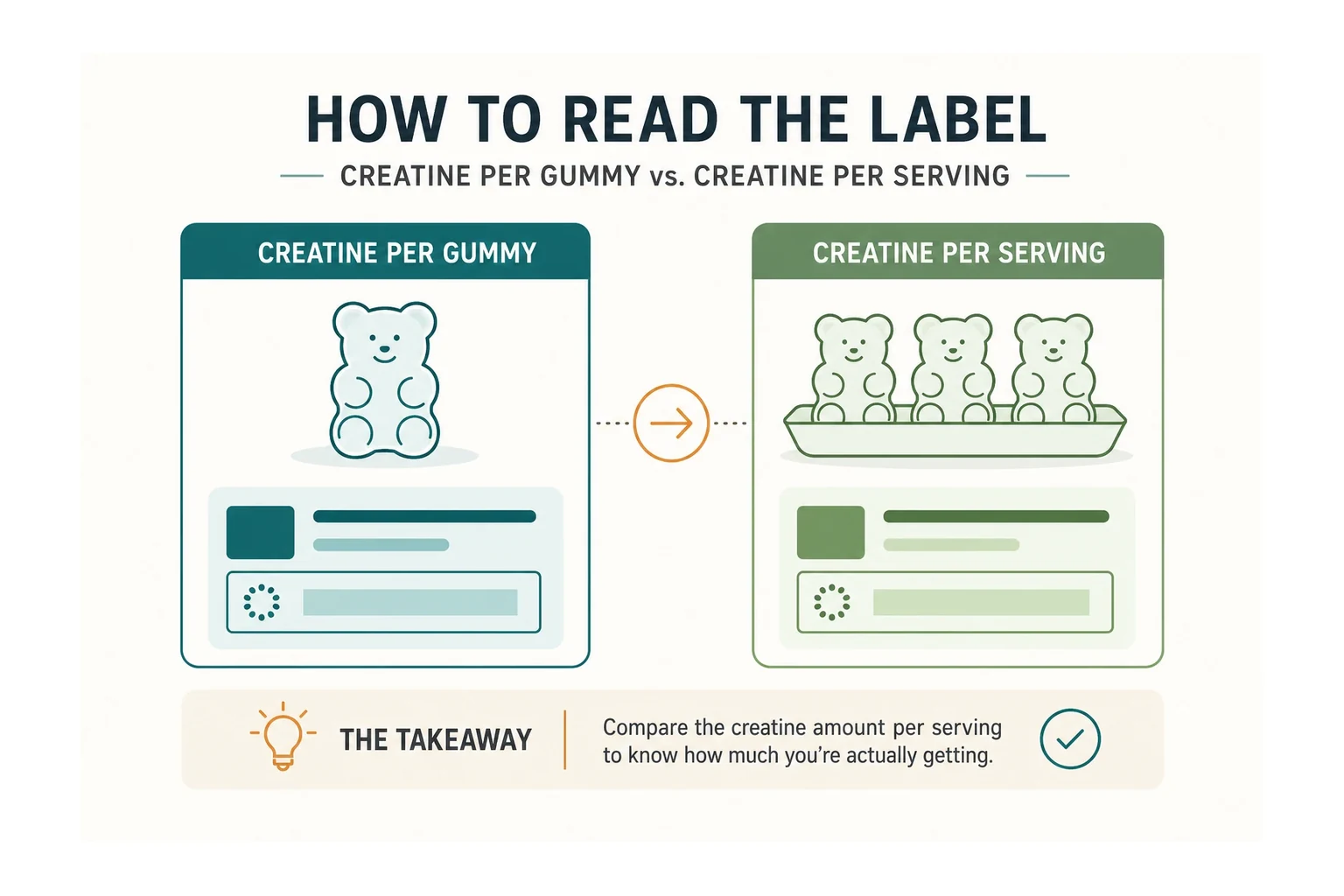
Creatine Per Gummy vs Creatine Per Serving
Per-gummy and per-serving amounts are not the same:
- Four gummies at 1.25g each deliver a 5g serving.
- Two gummies at 2.5g each also deliver a 5g serving.
- One gummy at 5g is a different technical challenge, even though the math looks simple.
The total dose may be similar, but the formulation behind each product is different.
Fewer gummies may feel more convenient to the user. But fewer gummies usually means each piece must carry more active. That puts pressure on texture, fill weight, drying behavior, and dose uniformity.
Those details decide whether the label claim holds in production, not just in a sample.
| Front Claim | Per-Gummy Creatine | Serving Size | Actual Serving Dose |
|---|---|---|---|
| 5000mg creatine | 1250mg | 4 gummies | 5g |
| 5000mg creatine | 2500mg | 2 gummies | 5g |
| 5000mg creatine | 5000mg | 1 gummy | 5g, technically difficult |
| 3000mg creatine | 1000mg | 3 gummies | 3g |
Why 5000mg Creatine Gummies Need Careful Reading
The phrase 5000mg creatine gummies needs careful reading. It usually means 5000mg per serving. It may be tied to two, three, four, or more gummies. I would not judge the product from that phrase alone.
Creatine monohydrate is a dense active powder. Loading 2.5g or more into a single gummy can add mass, change chew, increase grittiness, and make moisture control more important.
Products may use other creatine forms, but the label should make the form clear. For a serious brand launch, the claim should be checked with the formula, the finished product test result, and the packaging plan before the label design is locked. If the product team is comparing raw-material form choices before it finalizes the label, creatine monohydrate vs hcl gummies is the more precise follow-on than guessing from the front panel.
What Quality Signals Should Buyers Look For?
| Quality Signal | Consumer Meaning | Brand Meaning |
|---|---|---|
| Creatine form listed | The active is easier to understand | Formula planning is clearer |
| Clear serving size | The user knows how many gummies to take | The claim is easier to defend |
| Per-serving amount stated | The daily dose is visible | Label communication is cleaner |
| Finished-product testing | The claim feels more credible | Documentation supports launch control |
| Moisture-aware packaging | Gummies may stay usable longer | Shelf-life planning is part of the product |
I also look at sugar, sweeteners, acids, and other active ingredients. Gummies are not dry powder. A chewable system has water, texture builders, flavor systems, and packaging needs.
If a product claims a high dose but gives little detail about serving size or quality support, I would slow down. A strong label should be easy for the user to read and practical for the production team to make.
The label is not only marketing. It is a promise that has to survive production and shelf life.
Can High-Dose Creatine Gummies Work in Real Formulation?
High-dose gummies can sound like an easy way to stand out. The hard part begins when active loading changes texture, taste, and process control.
High-dose creatine gummies can work when the active load fits the gummy system. Texture, moisture, acidity, heat exposure, dose uniformity, and finished-product testing all need to support the claim.

Why Higher Active Loading Can Affect Texture
Creatine is not a light flavor or a low-dose botanical. It is a dense powder active. When the load increases, the gummy can become heavier, rougher, or less pleasant to chew. A sample can look acceptable at the bench and still become difficult when the same concept moves into longer runs, drying time, packaging, and storage.
In gummy vitamin manufacturing, the workable range depends on the base, piece weight, creatine particle size, flavor system, gel system, and water activity target. Certain formulas may handle about 1-1.5g per gummy with less trouble. Higher per-piece loading can be possible, but it usually needs more careful texture design and stronger process control.
| Creatine Loading Per Gummy | Typical Texture Risk | What Should Be Checked |
|---|---|---|
| Below 1g | Lower | Standard chew and dose uniformity |
| 1-1.5g | Moderate | Water activity, binding, sensory quality |
| 1.5-2.5g | High | Particle size, grit, piece weight, drying |
| Above 2.5g | Very high | Larger piece size or specialized formulation |
Why Moisture, Acidity, and Heat Matter
A gummy formula depends on water balance, acid balance, cooking conditions, drying, and packaging. Creatine can degrade toward creatinine when exposed to moisture and acidic conditions over time. Heat can also accelerate stability problems. That does not mean every creatine gummy fails. It means the formulation and packaging should be planned around the active, not treated like a standard candy base.
This is why the package is part of the dosage story. A moisture-barrier pouch, bottle seal, desiccant, storage direction, and shelf-life study can matter as much as the starting formula. If a product states 3000mg or 5000mg per serving, the brand should care about what remains available through the claimed shelf life, not only what was added at mixing.
Why Dose Accuracy Must Be Checked After Production
Batch records are useful, but they are not the same as finished-product assay. A batch record can show how much creatine was added to the batch. It does not prove that each serving in the finished package delivers the label claim.
Gummy manufacturing involves depositing, cooling, drying, demolding, coating or oiling when used, and packing. Fill variation, moisture loss, active distribution, and storage conditions can all affect final serving accuracy. For a high dose creatine gummies project, I would confirm pilot data first. Then I would check finished-product active testing, stability direction, and label consistency before moving to commercial production.
Creatine Gummies vs Powder: Does Dosage Change the Comparison?
Powder often wins the dose math. Gummies can still win the daily habit when the serving is practical and the formula is stable.
Creatine powder is more flexible for high or changing doses. Creatine gummies are more convenient when the serving count is reasonable and the product consistently delivers the claimed dose.
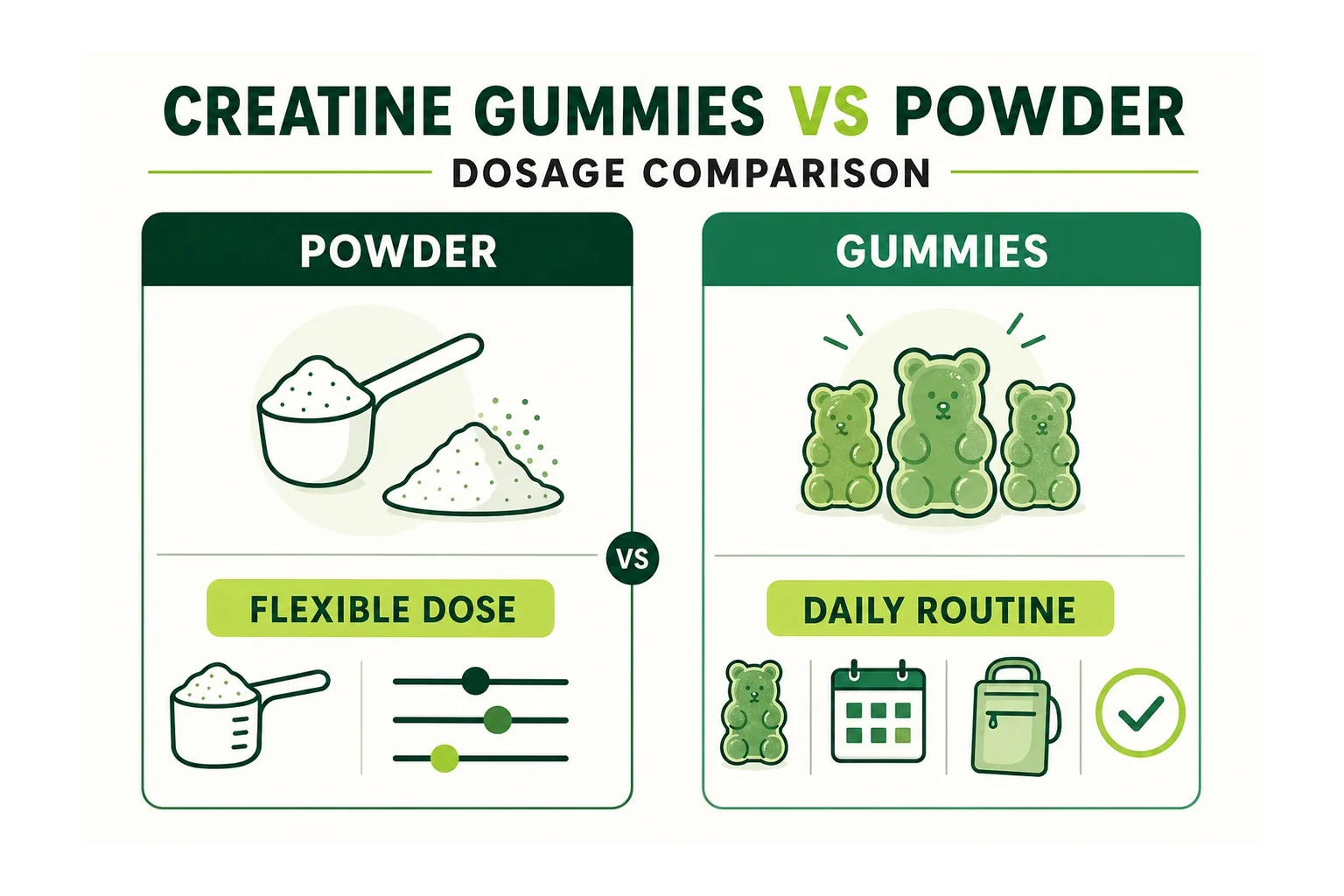
Why Powder Is Easier for Flexible High Doses
A scoop of creatine monohydrate powder can deliver 5g without building that mass into a chewy matrix. The user can adjust the amount more easily, and the format avoids gummy texture and moisture constraints. For a loading protocol, powder is usually more practical because the total daily amount can become too high for gummies.
From a production view, powder also has a cost and dose-efficiency advantage. Gummies require a functional matrix, taste masking, drying control, packaging, and serving-count planning. That makes the product more complex per gram of active.
Why Gummies Can Still Fit Daily Compliance
The case for gummies is not maximum dose flexibility. It is habit. Some users dislike powder texture, mixing, shaker bottles, or carrying a tub. Gummies can make daily use easier when the serving count stays reasonable.
For a 3-5g daily maintenance target, gummies can be practical if the product delivers the claim and the user follows the full serving. A user who takes a moderate gummy serving every day may be more consistent than a user who keeps skipping powder. This is where product positioning matters. Gummies should be designed around routine, taste, portability, and repeat use rather than trying to copy every powder use case.
When Gummies Become Less Practical Than Powder
| Situation | Powder Advantage | Gummy Risk |
|---|---|---|
| Flexible high dose | Easy scoop adjustment | Too many gummies |
| Loading phase | Easier to reach high daily total | Serving count becomes impractical |
| Low cost per gram | Usually stronger | Higher production cost |
| Moisture-sensitive active | Dry format | Packaging and stability need more control |
| Convenience | Needs mixing | Strong when serving count is reasonable |
I would not turn dosage planning into a simple "gummies are better" or "powder is better" answer. For a wider format comparison, review creatine gummies vs powder before deciding where the dosage trade-off matters most.
The better question is what the user needs the product to do. A gym-heavy user, a casual wellness user, and a brand building a convenient performance line may need different dose logic.
For Talvenda buyers, this means the target user and serving target should be aligned before formula development goes too far.
How to Optimize a Creatine Gummy Routine?
Users often ask about timing because they want better results. I usually start with consistency before timing.
A creatine gummy routine should follow the label, keep total daily intake consistent, and avoid accidental overuse. Timing is usually less important than taking the intended serving regularly.
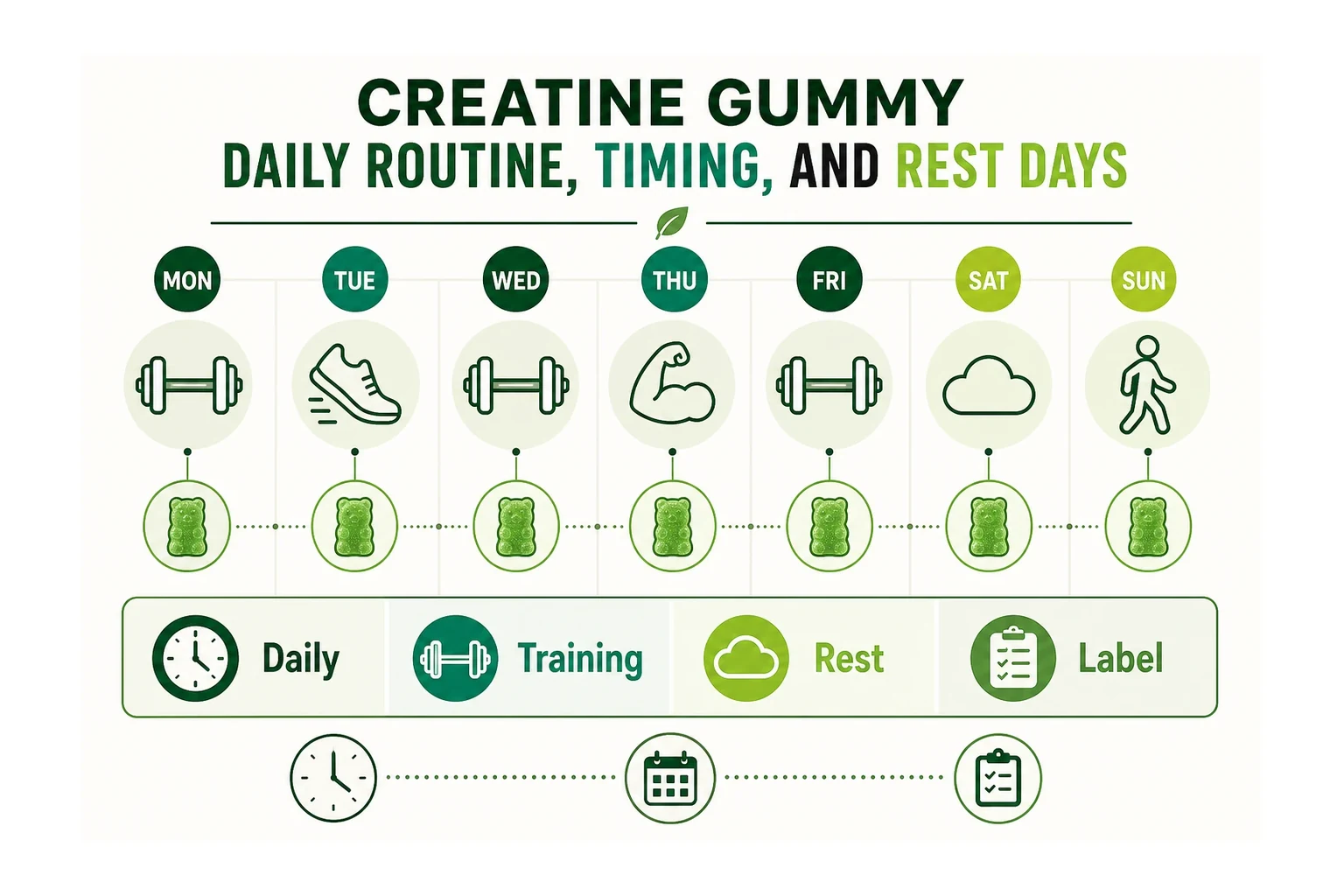
When Should Creatine Gummies Be Taken?
Users often take creatine gummies around workouts because the habit is easy to remember. Others take them with meals. I would not make timing the main issue unless the brand has specific substantiated directions. If the user still wants the dedicated timing answer after the serving math is clear, when to take creatine gummies is the cleaner next read.
The routine should be easy enough that the user does not forget it.
For label copy, direct directions usually work better than complicated timing claims. A product positioned for beginners should not require the user to calculate grams, workout timing, rest days, and supplement stacking every day.
Should You Take Creatine Gummies on Rest Days?
Most maintenance-style creatine routines are built around daily use, including rest days. The label should explain this in a responsible way without sounding like personal medical instruction.
If the product is sold as a daily creatine supplement, the usage directions should make the intended routine clear.
This matters for branding. Creatine gummies are sometimes presented like a pre-workout candy. That can confuse users because creatine is usually planned as a consistency-based supplement rather than an immediate stimulant-style product. Clear label instructions help reduce underuse, overuse, and customer disappointment.
Do Creatine Gummies Need a Loading Phase?
A loading phase may saturate muscle creatine stores faster, but it is not required for every user. For gummies, loading is often inconvenient because the daily amount can require a large number of pieces.
| Routine Question | Practical Answer | Brand Planning Point |
|---|---|---|
| Timing | Choose a repeatable time | Keep directions simple |
| Rest days | Follow label guidance for daily use | Avoid confusing use cases |
| Loading phase | Often impractical for gummies | Do not overpromise convenience |
| Stacking | Check total daily intake | Watch formula overlap |
I prefer a creatine gummy routine that a user can follow without doing math every day. This also helps the brand team.
Clear directions reduce customer confusion, support better reviews, and make packaging communication easier. A good serving plan should feel simple to the user and realistic to the production team.
Creatine Gummy Dosage Safety, Side Effects, and Precautions
Creatine gummies can look harmless because they are chewable and flavored. That does not mean users should ignore serving directions.
Creatine gummy users should follow the labeled serving and consider total creatine intake, sweeteners, other supplements, and personal health factors. Anyone with a medical condition or other suitability concern should seek qualified guidance before use.
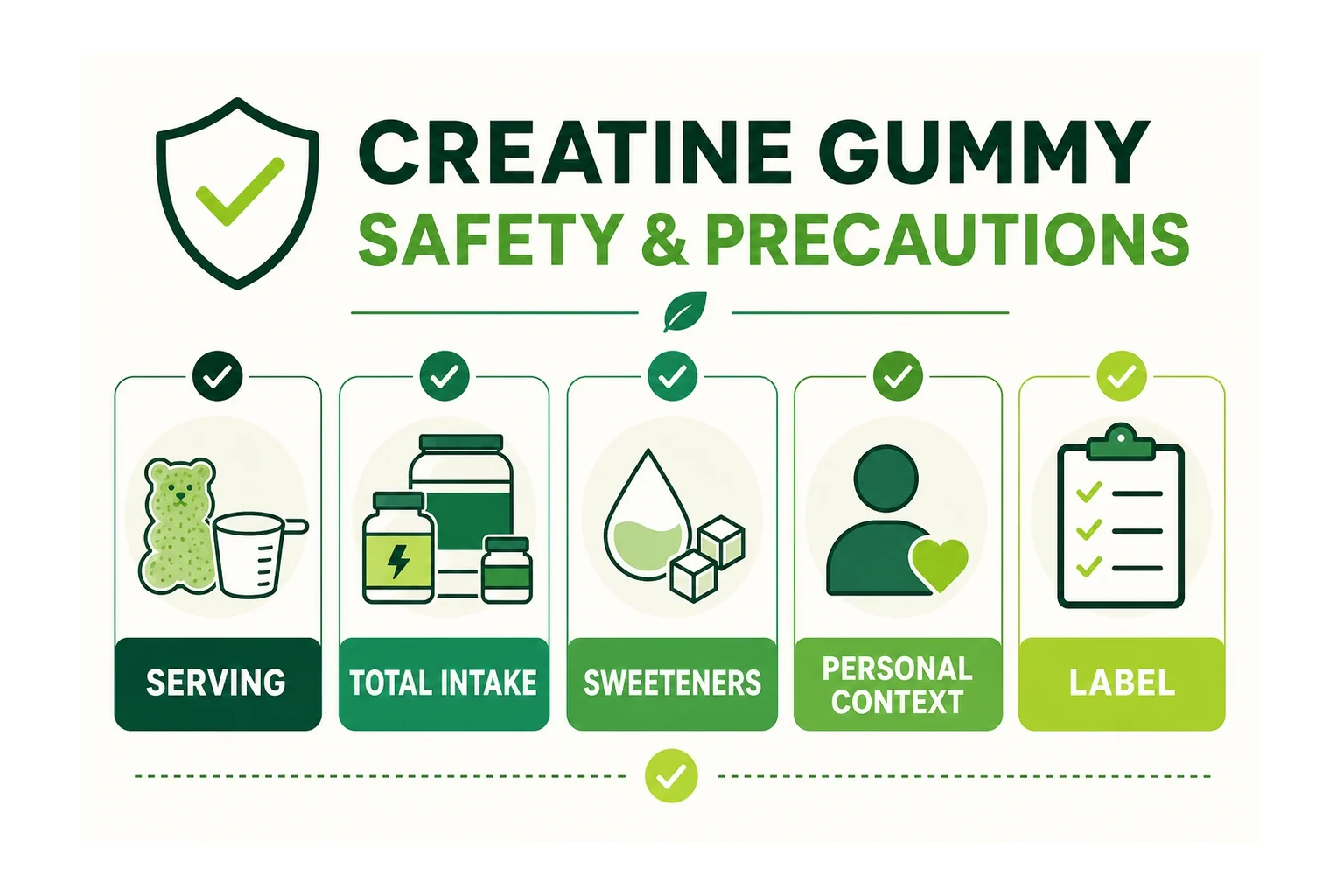
Can You Take Too Many Creatine Gummies?
Yes, a user can take more gummies than the suggested serving. I would not frame gummies as candy. They are supplements in a chewable format.
If the taste is strong and the serving is unclear, overuse can become more likely.
The risk is not only the creatine amount. It can also come from the full formula: sugar, sugar alcohols, acids, fibers, flavors, and other active ingredients. If a user doubles the gummy serving to chase a higher creatine amount, they also double those non-active ingredients.
What About Bloating, Water Weight, or Digestive Discomfort?
Users may report water weight changes, bloating, or digestive discomfort with creatine routines. Gummies can add another layer because they may contain sweeteners, acids, fibers, or multiple actives.
The full supplement panel matters, not only the creatine line.
I would avoid promising that gummies are automatically gentler than powder. They may be easier for some users, but the formula and serving count decide the experience.
Large servings, sugar alcohols, or aggressive loading-style use can reduce comfort.
Who Should Ask a Qualified Professional First?
People with kidney disease, liver disease, medical conditions, medication use, pregnancy or nursing status, adolescent use, or tested-athlete concerns should seek qualified guidance before using creatine products. The label should also avoid implying that the product is suitable for every population without restriction.
| User Situation | Practical Caution | Label Planning Need |
|---|---|---|
| Medical condition | Seek qualified guidance | Avoid medical promises |
| Multiple supplements | Check total intake | Make active amounts clear |
| Sensitive digestion | Review sweeteners and acids | Consider formula tolerance |
| Tested athletes | Check testing standards | Support documentation and transparency |
| Beginners | Follow serving directions | Use simple instructions |
Safety language needs care because manufacturing experience does not replace healthcare advice. A brand can explain label clarity, serving design, and formula planning without promising that one serving is right for every person.
A responsible gummy brand should make the serving size easy to follow, avoid extreme claims, and prepare documentation before production moves too far.
What Should Brands Confirm Before Launching Creatine Gummies?
A consumer asks how many gummies to take. A brand should ask whether that serving can be made accurately at scale.
Before launching creatine gummies, brand and production teams should confirm dosage feasibility, sensory performance, packaging, shelf-life planning, testing, documentation, and scale-up control.

Dosage Feasibility
Start with the serving target:
- How much creatine should the user get per serving?
- How many gummies will that require?
- Can the active level fit the piece weight without making the gummy too large, gritty, or unstable[^1]?
These questions should come before label design.
Pilot work should not only ask whether a sample can be made once. It should check whether the dose can be repeated with acceptable unit weight, chew, appearance, active distribution[^2], and serving clarity.
Formula and Sensory Feasibility
Taste and texture are not secondary details. If a high dose creates a rough chew, the user may not repeat the purchase.
The formula has to balance active loading, flavor masking, acid level, sweetness, gel system, water activity, drying behavior, and packaging compatibility. If the brand is aiming for sugar-free creatine gummies, sweetener and texture decisions need even earlier testing.
A formula that feels acceptable at the sample stage can change after storage. For a commercial launch, sensory review should look beyond day one. Texture, stickiness, grit, and active stability should be checked across the intended shelf-life plan.
Packaging and Shelf-Life Plan
Packaging should be discussed early. Creatine gummies can be sensitive to moisture and storage conditions[^3].
Bottles, pouches, desiccants, seals, barrier materials, and shipping conditions all affect the final user experience.
The shelf-life claim should be supported by stability data[^4]. If the product is positioned for a long shelf life, the active content, texture, and moisture control should be tested through that plan. Without that check, the brand is taking on avoidable quality and compliance risk.
Testing and Documentation
| Launch Area | What I Would Confirm | Why It Matters |
|---|---|---|
| Dosage feasibility | Per gummy and per serving target | Protects label clarity |
| Sensory feasibility | Taste, chew, grit, size | Protects repeat use |
| Packaging plan | Moisture barrier and storage needs | Protects shelf life |
| Finished-product testing | Active content after production | Protects claim confidence |
| Stability data | Active and texture over time | Supports shelf-life claims |
| Documentation | Batch, quality, and label records | Supports buyer trust |
This is where Talvenda's production-first view matters. I do not see the dose target as only a nutrition line on a label. I see it as a chain of decisions.
The brand team, formula team, packaging team, and production team should align before moving from sample work to commercial production. The launch path, cost, MOQ, loading feasibility, packaging plan, stability data, documentation, and production, packaging, and documentation support all need to support the same dosage promise.
A dose claim is only useful when the product can be made, tested, packed, shipped, and repeated with confidence.
Frequently Asked Questions About Creatine Gummy Dosage
Dosage questions repeat because labels can be confusing. I prefer short answers that help users read the serving panel before judging the front claim.
Creatine gummy dosage should be based on the labeled serving, the amount per gummy, and total daily intake. Users should follow the label and avoid guessing from marketing claims.

How Many Creatine Gummies Should I Take Per Day?
Check the supplement facts panel for serving size and creatine per serving. Products commonly require two to five gummies to reach a 3-5g serving, but the exact number depends on the formula.
Can I Take 5g of Creatine From Gummies?
Yes, if the product is formulated to deliver 5g per serving and you take the full labeled serving. The practical issue is how many gummies are needed and whether the formula can carry that amount with acceptable texture and stability.
Are 5000mg Creatine Gummies Per Gummy or Per Serving?
Usually per serving, not per individual gummy. A single 5g creatine gummy is technically difficult because of piece size, texture, and stability constraints. Check the serving size before comparing products.
Do Creatine Gummies Need a Loading Phase?
No, a loading phase is not required for every routine. Gummies are often less practical for loading because reaching a high daily amount may require several pieces. Most gummy users follow a consistent maintenance-style routine instead.
Should Women Take a Different Creatine Gummy Dosage?
I would avoid one-size-fits-all claims. Users should follow the label and consider body size, diet, training, and personal health needs. Qualified guidance can help when there are medical concerns or special populations involved.
Can Creatine Gummies Be Taken With Whey Protein or Collagen?
Users often combine supplements, but total intake should be checked. If gummies also contain other actives, the user should read the full supplement panel instead of looking only at creatine.
What Happens If Creatine Gummies Are Underdosed?
Underdosed gummies may not deliver the expected daily creatine amount. For brands, underdosing can also damage label trust, repeat purchase, retail confidence, and long-term product credibility.
Conclusion
Creatine gummy dosage works best when serving size, label claims, formula feasibility, testing, packaging, and scale-up are planned together from the start.
As an OEM/ODM gummy manufacturer, Talvenda can help teams turn a creatine dosage target into a practical production route: low-MOQ market-tested in-stock gummies, stock formula modification, or custom gummy development. The review connects serving goal, gummy count, flavor direction, and first-order expectation with sample development, documentation and testing expectations, quality-controlled production, and GMP-certified and FDA-registered manufacturing facilities, so the project can move toward a quote without overbuilding the first version. Start with a project inquiry form.
[^1]: "Physicochemical and Sensory Stability Evaluation of Gummy ... - PMC", https://pmc.ncbi.nlm.nih.gov/articles/PMC10818720/. Research on gummy and hydrocolloid gel dosage forms describes how solid loading, water activity, and gel-network composition can alter mechanical properties and physical stability, providing contextual support for evaluating size, grittiness, and instability risks during formulation. Evidence role: mechanism; source type: paper. Supports: High creatine loading may make a gummy too large, gritty, or physically unstable. Scope note: The support is likely to be contextual unless the source studies creatine gummies specifically; many studies address gummy gels or chewable dosage forms more generally. [^2]: "21 CFR Part 111 -- Current Good Manufacturing Practice in ... - eCFR", https://www.ecfr.gov/current/title-21/chapter-I/subchapter-B/part-111. FDA dietary supplement current good manufacturing practice regulations require manufacturers to establish and verify specifications for finished batches, including strength and composition, which supports checking whether the active ingredient is consistently distributed across units. Evidence role: general_support; source type: government. Supports: Pilot work should evaluate active distribution so the dose can be repeated reliably across gummies. Scope note: The regulation supports the need for strength and composition controls but does not prescribe a creatine-gummy-specific uniformity test. [^3]: "Analysis of the efficacy, safety, and regulatory status of novel forms ...", https://pmc.ncbi.nlm.nih.gov/articles/PMC3080578/. Studies of creatine stability report conversion of creatine to creatinine in aqueous environments, with degradation influenced by factors such as pH and temperature, supporting the need to consider moisture and storage conditions in creatine-containing gummies. Evidence role: mechanism; source type: paper. Supports: Creatine gummies can be sensitive to moisture and storage conditions. Scope note: Most stability data are from aqueous solutions or model systems rather than finished gummies, so the evidence supports the mechanism rather than proving the behavior of every gummy formulation. [^4]: "Expiration Dates - Questions and Answers", https://www.fda.gov/drugs/pharmaceutical-quality-resources/expiration-dates-questions-and-answers. FDA guidance and rulemaking on dietary supplement manufacturing indicate that, although expiration dating is not mandatory, any shelf-life or expiration claim used by a manufacturer should be supported by data demonstrating that product specifications are met over the stated period. Evidence role: expert_consensus; source type: government. Supports: Shelf-life claims for a creatine gummy should be backed by stability data. Scope note: The source supports the documentation principle for dietary supplements generally, not a specific shelf-life duration for creatine gummies.