

Most users ask about timing, but the real problem is not the clock. It is whether the gummy gives a clear dose the user can repeat every day.
The best time to take creatine gummies is the time you can repeat every day. Pre-workout, post-workout, or rest-day use can all work if the serving is clear, the dose is credible, and the routine is consistent. Creatine depends more on repeat intake than timing precision.
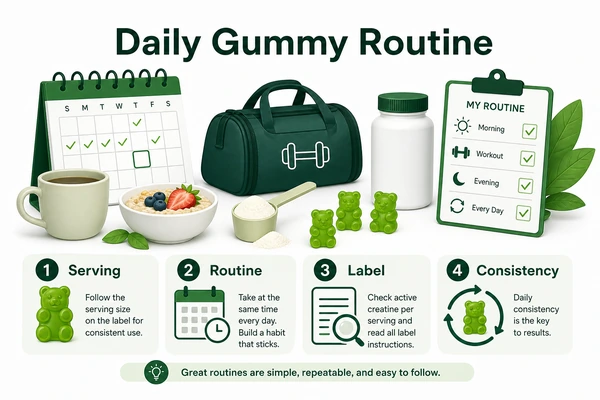
I look at creatine gummies from two sides. Consumers want a simple routine. Brands need a product that makes that routine believable, clear, and easy to repeat.
What Are Creatine Gummies and How Do They Work?
Creatine sounds simple, but confusion starts when the format changes from powder to gummies and the serving size is not clear.
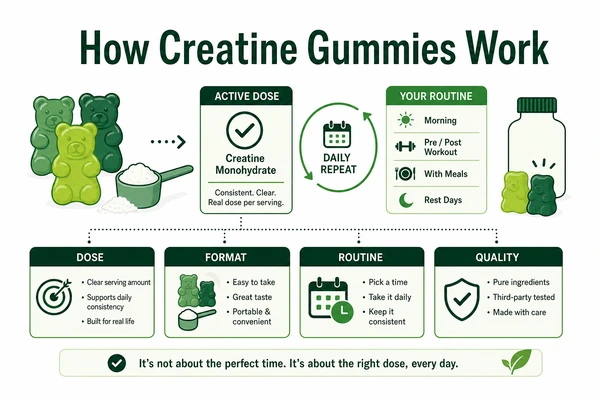
Creatine gummies are chewable supplements that usually deliver creatine in a flavored gummy format. They work best when the user takes a clear daily dose over time, not when the product depends on one perfect timing moment.
What Is Creatine Monohydrate?
Creatine monohydrate is one of the most common creatine forms used in sports nutrition. It is used because it is familiar, widely studied, and easier for many consumers to understand than newer ingredient names.[^1] In a gummy product, the key question is not only the ingredient name. The key question is whether the gummy can deliver a practical amount in a serving that people can follow.
I do not like building a creatine gummy story around magic timing. Creatine is not usually positioned like a fast stimulant. The common use case is steady daily intake that supports creatine availability in the body over time. That makes serving clarity very important. If one gummy contains a small amount, the label must make that clear. If a full serving needs several gummies, the package should not hide that behind attractive flavor claims.
How Creatine Supports Muscle Performance When the Daily Dose Is Consistent
For most users, creatine is connected with strength training, repeated effort, and workout performance support.[^2] The practical condition is consistency. A user who takes gummies on Monday, forgets them on Tuesday, and guesses the serving on Wednesday may not get the routine they expected.
That is why I see timing questions as routine questions. A user asks, "Should I take creatine gummies before or after workout?" What they often need is a daily pattern that fits training days and rest days. The answer should keep expectations conservative. Creatine gummies can support a daily supplement habit, but they should not promise instant performance changes from one timing choice.
The Benefits of Creatine in Gummy Form
The gummy format can make creatine easier to carry and easier to use. There is no shaker bottle. There is no powder dust on the counter. There is no mixing step before the gym. For some users, that lower friction is the biggest benefit.
From a manufacturing view, that convenience only matters if the product experience is stable. The gummy should taste repeatable, hold its texture, resist sticking as much as possible, and support clear dose instructions. If the product feels pleasant on the first day but the label creates dose doubt by the third day, the format has not solved the real problem.
Why Timing Questions Usually Point to Dose Clarity and Daily Routine
When people search for when to take creatine gummies, they are rarely asking only about the clock. They are asking whether the product will fit breakfast, a gym bag, a post-workout meal, or a nighttime habit. Brands should read that search intent carefully.
The strongest proof is not a claim that one time window is universally best. The stronger proof is that the user can understand the daily serving, repeat it, and trust the product experience. For a creatine gummy brand, timing content should guide behavior without overclaiming. It should make the daily routine easier, not make the product depend on a promise that the label cannot support.
When to Take Creatine Gummies: Is There a Best Time?
A narrow timing window sounds useful, but it can make users chase the wrong detail. The better question is which timing they can repeat without thinking.
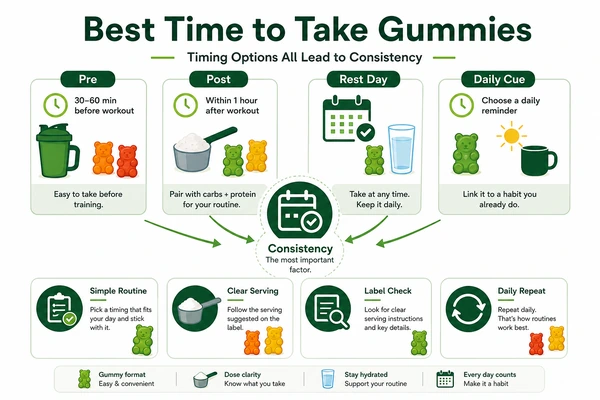
The best time to take creatine gummies is usually the time that fits your daily routine. Taking them before or after a workout can both be reasonable, while daily consistency is usually more important than a strict timing window.
Pre-Workout vs. Post-Workout Timing
Pre-workout use is easy to remember because it connects the gummy with the gym routine. A user packs shoes, fills a bottle, and takes the gummies before training. This can work well for people who want one simple cue. The risk is that some users may expect a fast, stimulant-like effect. A creatine gummy should not be framed that way unless the formula also contains other ingredients and the claims are handled carefully.
Post-workout use can also fit naturally. Many users already take protein, a meal, or other supplements after training. Taking creatine gummies after a workout may feel organized because it connects intake with recovery habits. But the article should avoid saying that post-workout timing is the only effective time. That type of claim is often too narrow for a routine-based creatine product.
Taking Creatine Gummies on Rest Days
Rest days are where many creatine routines fail. A workout day has reminders. A rest day has fewer cues. If a person only links creatine gummies to exercise, they may forget them on non-training days.
That is why I usually think a daily cue is stronger than a workout-only cue. Breakfast, lunch, a desk drawer, or an evening supplement routine can be easier to repeat. For users, this means rest-day use should follow the same serving instructions on the label unless their healthcare professional or product guidance says otherwise. For brands, this means the label should not only talk about workouts. It should also make daily use clear.
Why Daily Consistency Matters Most
Daily consistency matters because creatine use is usually about repeated intake over time.[^3] A single serving before one workout should not carry the whole promise. That is a weak product story and a weak user routine.
I prefer timing language that sounds practical: take it at a time you can remember, keep the serving consistent, and follow the product label. This is more useful than arguing that every user needs the same exact clock time. It also reduces customer confusion after purchase. When the consumer understands the routine, customer service questions usually become simpler.
What Brands Should Avoid Overclaiming About Timing
Brands should be careful with phrases like "instant results," "perfect timing," or "must take within minutes." These phrases may attract attention, but they can create trust problems. They also push the product into a narrow claim area that may not fit creatine's normal use pattern.
Here is the cleaner way to think about it:
| Timing message | Better practical framing |
|---|---|
| Take only before workouts | Take at a repeatable daily time, including training and rest days |
| Works instantly | Designed to support a consistent creatine routine |
| One timing window is best for everyone | Choose the time that helps you follow the serving instructions |
| More gummies means better results | Follow the serving size shown on the label |
This is where consumer SEO and product development meet. If a brand wants to answer "when is the best time to take creatine gummies," the answer should build trust. It should not create a claim the finished product cannot safely carry.
How to Take Creatine Gummies: Loading Phase vs. Maintenance Phase
Serving instructions can look simple, but creatine gummies become confusing when the dose per gummy and dose per serving are not obvious.
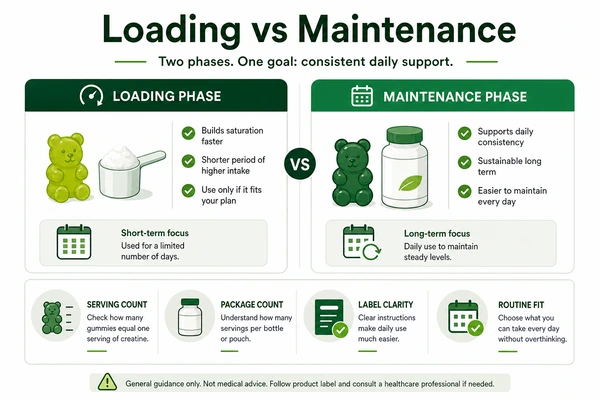
To take creatine gummies, follow the label serving size and keep the intake consistent. Some users consider a loading phase, while many use a maintenance phase. The important point is clear serving math and routine compliance.
The Loading Phase and Why Serving Math Matters
A loading phase usually means taking a higher total creatine amount for a short period before moving to a maintenance routine.[^4] I will not turn this article into a full dosage guide, because serving decisions should follow the product label and the user's own context. But loading is where gummy products face a practical issue: gummy count.
If each gummy contains a modest creatine amount, a loading-style routine may require many gummies per day. That can affect sugar intake, stomach comfort, package count, and cost. It can also make the product feel less convenient. A gummy format that looks simple on the front label can become awkward if the user needs to count too many pieces.
For brands, this is a product development issue before it is a marketing issue. The formula target, gummy size, texture, active load, flavor balance, and package count must work together. A loading claim should not be added casually if the serving experience does not support it.
The Maintenance Phase for Daily Use
The maintenance phase is usually easier for gummy products to support because it focuses on a repeatable daily serving. This is where creatine gummies can feel useful. A consumer can keep the bottle near breakfast, in a gym bag, or at the office. The routine becomes simple when the serving size is easy to remember.
For consumer content, the answer should stay direct: follow the label, take the serving daily, and choose a time that is easy to repeat. For product teams, the question is whether the label makes that action obvious. If the front panel says creatine gummies but the side panel makes users calculate the active dose, the routine is already less stable.
Can You Take Creatine Gummies Before Bed?
Some users ask whether creatine gummies can be taken before bed. For a plain creatine gummy, timing before bed may be acceptable for some people if it fits their routine and the product label does not suggest otherwise. But brands should avoid broad claims that nighttime use is better.
The more useful question is comfort and consistency. A gummy before bed may not suit every user, especially if the product has sugar, acids, or other active ingredients. If the formula includes caffeine or stimulant-like ingredients, bedtime use may not fit. This is why formula transparency matters. A timing-friendly gummy should make the full ingredient profile easy to understand.
Why Clear Label Instructions Matter for Repeat Use
Clear label instructions reduce friction. They tell the user how many gummies make one serving, how often to take the serving, and what not to exceed.[^5] They also protect the brand from avoidable confusion.
| Label element | Why it matters for repeat use |
|---|---|
| Active dose per gummy | Buyers need to trust the serving math |
| Daily serving recommendation | Removes guessing and supports habit formation |
| Loading phase guidance, if offered | Reduces early frustration and overuse risk |
| Rest-day instructions | Supports a full-week routine instead of a gym-day-only habit |
In my view, the label is part of the product experience. A good creatine gummy is not only a chewable piece. It is a routine system: bottle count, serving count, active amount, flavor, texture, and instructions. If those parts work together, the user can make a habit. If they do not, timing advice cannot repair the experience later.
When to Take Creatine Gummies in a Daily Routine
Users often blame timing when the real issue is hydration, meal pattern, inconsistent use, or unclear expectations.
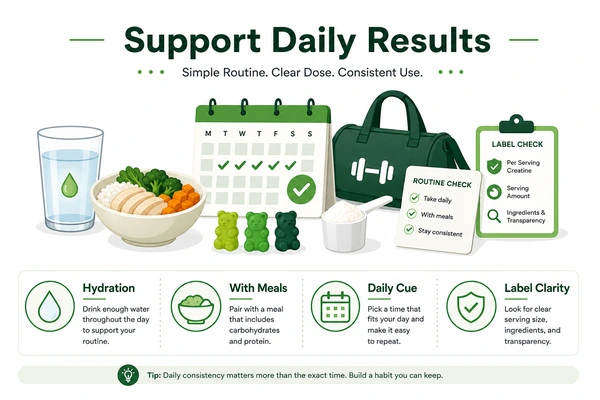
To support creatine gummy results, keep the daily serving consistent, stay hydrated, pair the routine with a meal or workout habit if useful, and give the routine time. The product should make repeat use easy.
The Importance of Proper Hydration
Hydration is a simple point, but it matters in daily supplement behavior. Creatine users often hear that they should drink enough water. This should be framed as a general routine habit, not as a dramatic medical claim. A person who trains hard, sweats, and uses supplements should pay attention to water intake because it supports normal training comfort and daily consistency.
From a brand side, hydration language should stay conservative. It is fine to remind users to drink water and follow label guidance. It is not smart to imply that water alone will deliver results or remove all discomfort. Clear, modest wording usually builds more trust than loud claims.
Pairing Creatine Gummies with Meals, Carbohydrates, or Protein
Some users like taking creatine with meals, carbohydrates, or protein because it fits their existing routine. This can be a good habit cue. Breakfast is easy for some people. Post-workout protein is easier for others. The exact pairing matters less than whether the user repeats it.
For a gummy format, meals can also help organize expectations. If the product has a sweet or acidic flavor, some users may prefer it with food. If the product is sugar-free, the sweetener system may affect taste and digestive comfort for different users. These details are not only nutrition points. They are product experience points.
Factors That Influence How Long It Takes to Notice Results
Users may notice changes at different speeds. Training program, diet, sleep, baseline creatine intake, body size, consistency, and total routine quality can all affect the experience. That is why a brand should not promise a fixed day when results will appear.
I prefer to write this clearly: creatine gummies are not a shortcut around training discipline. They are a format for taking creatine in a repeatable way. If a user trains inconsistently, eats poorly, or forgets servings, the timing question becomes much less important.
Product Experience Factors That Brands Can Actually Control
Brands cannot control every user's workout plan. They can control the product experience. This is where gummy development becomes practical.
Key controllable factors include:
| Factor | Why it matters for routine |
|---|---|
| Serving size | Users need to know how many gummies to take |
| Active dose | The formula must match the intended use case |
| Taste | Repeat use becomes harder if the flavor is tiring |
| Texture | Sticky or unstable gummies reduce trust |
| Packaging | A daily-use product needs practical bottle and serving counts |
| Label wording | Clear instructions reduce confusion and support compliance |
This is the main information gain in this topic. Timing is easy to discuss, but repeatable use is where a creatine gummy proves itself. A brand that understands this will design the formula, package, and copy around the daily habit, not only around search traffic.
Creatine Gummies vs. Traditional Powder and Pills
Format choice can look like a taste preference, but it affects dose clarity, serving behavior, cost, and repeat purchase.
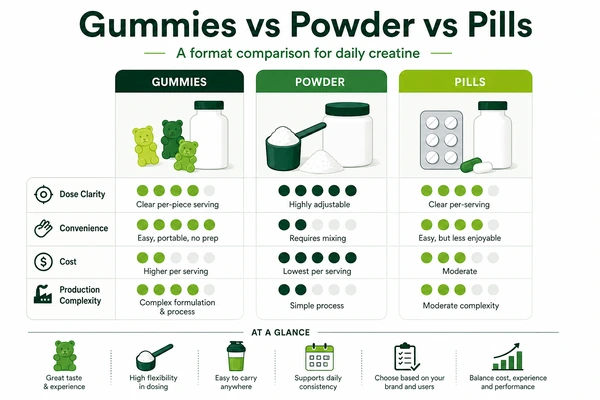
Creatine gummies are usually more convenient than powders and easier to take than pills, but powders may offer simpler high-dose flexibility. Gummies need clear serving math, controlled sugar content, and honest convenience claims.
Pros and Cons of Gummies vs. Powders
Powder is flexible. It can be mixed into water, shakes, or other drinks. It often works well for users who already accept scoops, tubs, and shaker bottles. The downside is friction. Some users dislike mixing, texture, residue, or carrying powder outside the home.
Gummies are easier to carry and easier to take. That is why they fit modern supplement behavior. A user can put a bottle in a gym bag or keep it at a desk. But gummies have less room for active ingredients than powder. They also need a texture system, flavor system, and stability plan. The convenience is real, but it is not free.
Dosage Differences and Sugar Content
Dosage is one of the most important differences. A scoop of powder can carry a larger amount of creatine with fewer format constraints. Gummies must balance creatine load with taste, chew, moisture, sweetness, acidity, and shelf stability.
Sugar content also matters. Some gummies use sugar for taste and texture. Some use sugar-free systems. Neither direction should be described as automatically better for every user. The better question is whether the product matches the target consumer and whether the label is honest about calories, sugars, sweeteners, and serving count.
Cost and Convenience Comparison
Gummies often cost more per serving than powder because the format is more complex to produce. There is formulation work, depositing, drying or curing control, packaging, and quality checks. The consumer is paying for convenience and experience, not only raw creatine.
For brands, this means the product story should be specific. A creatine gummy should not compete with powder only on price. It should compete on ease of use, taste, portability, and routine support. If the serving is confusing or the texture fails, the brand loses the very reason consumers chose gummies.
When to Read the Creatine Gummies vs. Powder Guide for Deeper Format Tradeoffs
This article should not repeat a full gummies-versus-powder guide. The short version is enough: choose gummies when convenience and repeat use are the main problems; choose powder when low-cost, flexible dosing is the main priority.
For deeper format tradeoffs, users and brand teams should read the dedicated creatine gummies vs. powder guide. That comparison can cover active loading limits, serving economics, taste masking, packaging, and product positioning in more detail. Here, the timing answer stays focused on routine. The best time to take creatine gummies is the time the chosen format helps the user repeat.
Safety, Side Effects, and Precautions
Creatine content often becomes too casual. That can create risk when users have health conditions, medication questions, or unclear product labels.
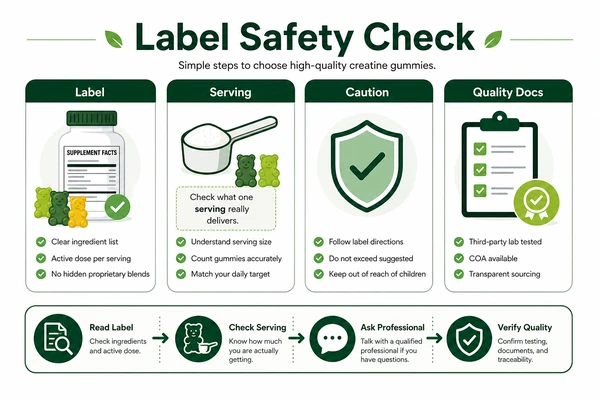
Creatine gummies should be used according to the product label. Some users may experience digestive discomfort, especially when a loading phase, sweetener system, or total gummy count does not suit them. People with medical concerns should ask a healthcare professional first.
Common Side Effects of Creatine Gummies
Some users report digestive discomfort, bloating, or stomach upset with creatine products. Gummies can add format-specific factors, such as sweeteners, acids, fibers, sugar alcohols, or a higher piece count. This does not mean the format is unsafe for every user. It means the experience can vary.
A careful article should not scare users, and it should not dismiss their questions. The practical guidance is simple: follow the serving size, avoid stacking multiple creatine products without thought, and pay attention to how the product fits the body and routine. If discomfort continues, the user should stop and ask a qualified professional.
Are Creatine Gummies Safe for Long-Term Use?
Long-term use questions should be answered carefully. Creatine monohydrate is widely used, but no brand should use that fact to make absolute safety promises for every person. A gummy product also contains more than creatine. It contains sweeteners, acids, colors, flavors, gelling agents, and sometimes other active ingredients.
For consumers, the practical answer is to read the label, use the product as directed, and ask a healthcare professional if they have kidney disease, are pregnant or nursing, take medication, or have other medical concerns.[^6] For brands, the practical answer is to keep documentation clean and claims conservative.
When to Consult a Doctor Before Using Creatine
A user should consult a doctor or qualified healthcare professional before using creatine if they have a medical condition, kidney-related concerns, pregnancy or nursing status, medication use, or uncertainty about whether creatine suits them. This is not a product weakness. It is responsible supplement communication.
Brands should make this easy to understand. Warning statements should not be hidden in tiny text while the front panel makes loud promises. A product that depends on daily use should also respect the user's need for clear precautions.
Why Brands Need Conservative Label Wording and Quality Documentation
Conservative label wording protects trust. Quality documentation protects execution. For creatine gummies, brands should confirm ingredient specifications, batch records, active content targets, allergen information, COA availability, and packaging controls.[^7]
This is especially important when the marketing topic is timing. Timing claims can drift into implied performance claims if the wording is careless. A safer brand message is: this product is designed to help users take creatine in a convenient daily format. That is commercially useful, consumer-friendly, and easier to support with real product design.
How to Choose the Best High-Quality Creatine Gummies
The best creatine gummy is not only the one with the strongest front-label claim. It is the one users can understand and repeat.
Choose creatine gummies with clear creatine form, clear serving size, transparent ingredient information, sensible sugar or sweetener choices, and quality documentation. For brands, confirm dose feasibility and label clarity before developing a timing-friendly gummy.
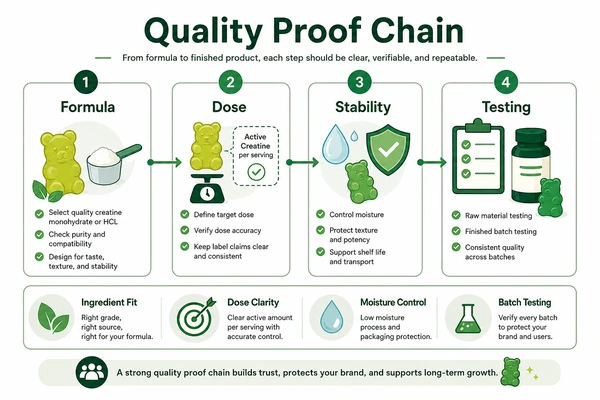
Look for Purity and Third-Party Testing
Consumers should look for clear ingredient information and quality signals. These may include the creatine form, serving size, batch testing, third-party testing where available, and transparent manufacturing information.[^8] Not every product will present the same documentation, but unclear labeling is a warning sign.
For brand teams, testing is not only a marketing badge. It is part of the development plan. If a product promises a certain active amount, the brand should understand how that amount is controlled in production and checked in finished goods. Creatine gummies are more complex than a simple scoop of powder because the active ingredient is inside a chewable matrix.
Creatine Monohydrate vs. Creatine HCL
Creatine monohydrate is the most familiar form for many consumers. Creatine HCL is also seen in the market, often positioned around solubility or serving size. This article does not need to declare one form as universally better. The better question is whether the chosen form fits the formula, dose target, taste system, cost target, and consumer promise.
In gummy development, ingredient form affects more than front-label copy. It can affect taste masking, texture, processing behavior, and how much active ingredient can fit into a pleasant serving. A brand should choose the form for practical product reasons, not only because a competitor used it.
Checking for Added Sugars, Fillers, and Vegan Options
Added sugars, fillers, colors, flavors, and vegan gelling systems can all affect the buying decision. Some consumers want sugar-free creatine gummies. Some prefer a standard gummy taste. Some care about pectin-based vegan positioning. The best option depends on the target market.
The label should make these choices easy to see. If a serving requires multiple gummies, sugar and calorie numbers matter more.[^9] If the product uses sugar alcohols or fibers, digestive tolerance may matter for some users. If the product is vegan, the gelling system and manufacturing controls must support that claim.
What Supplement Brands Should Confirm Before Developing a Timing-Friendly Gummy
Before developing a timing-friendly creatine gummy, a brand should confirm the active dose target, serving count, creatine form, flavor direction, sugar or sugar-free system, texture target, packaging size, testing plan, and label wording. These decisions shape whether the user can take the product every day without friction.
I would not start with a slogan like "best before workout" and then force the product to match it. I would start with the routine. How many gummies can the user accept? What active dose can the gummy carry? Will the flavor still work after production? Can the package support a full month of use? Can the label explain the serving in one glance?
Those questions are not decoration. They are the conditions that make the timing answer credible. A gummy format can support routine-building because it is portable and easy to use. But that advantage only matters when the serving size, active dose, label wording, and product experience are clear.
Conclusion
For creatine gummies, timing is secondary. The commercial product has to make daily use simple, repeatable, and clear enough for the formula, label, packaging, and first production run.
For a timing-led creatine gummy concept, Talvenda can help as a private label gummy manufacturing partner by turning the daily-use idea into a practical route: low-MOQ market-tested in-stock gummies, stock formula modification, or custom gummy development. The review can connect creatine amount, gummy count, packaging size, and claim direction with sample development, packaging and label support, documentation and testing expectations, and scale-up support, so the routine is easier to translate into a focused first production plan. Start with the project inquiry form.
[^1]: "Full article: International Society of Sports Nutrition position stand", https://www.tandfonline.com/doi/full/10.1186/s12970-017-0173-z. elink returned this as a preferred candidate for creatine form, safety, efficacy, and supplementation context. Used only to support broad creatine-monohydrate familiarity and research context, not gummy-specific superiority. [^2]: "Dietary Supplements for Exercise and Athletic Performance", https://ods.od.nih.gov/factsheets/ExerciseAndAthleticPerformance-Consumer/. elink returned this NIH ODS candidate for exercise-performance context. Used to support cautious performance-support wording, not guaranteed results. [^3]: "Timing of Creatine Supplementation around Exercise: A Real Concern?", https://pmc.ncbi.nlm.nih.gov/articles/PMC8401986/. elink returned this PMC timing-review candidate. Used to support keeping timing language conservative while emphasizing routine consistency. [^4]: "International Society of Sports Nutrition position stand: creatine supplementation and exercise", https://pmc.ncbi.nlm.nih.gov/articles/PMC2048496/. elink returned this PMC candidate for loading and maintenance context. Used only to explain why loading creates serving-math pressure for gummies. [^5]: "Dietary Supplement Labeling Guide: Chapter IV. Nutrition Labeling", https://www.fda.gov/food/dietary-supplements-guidance-documents-regulatory-information/dietary-supplement-labeling-guide-chapter-iv-nutrition-labeling. elink returned this FDA candidate for serving-size and Supplement Facts context. Used to support clear serving-label guidance. [^6]: "A short review of the most common safety concerns regarding creatine supplementation", https://pmc.ncbi.nlm.nih.gov/articles/PMC12702719/. elink returned this PMC candidate for kidney and gastrointestinal safety context. Used to support cautious professional-consultation wording, not an absolute safety claim. [^7]: "Current Good Manufacturing Practices (CGMPs) for Food and Dietary Supplements", https://www.fda.gov/food/guidance-regulation-food-and-dietary-supplements/current-good-manufacturing-practices-cgmps-food-and-dietary-supplements. elink returned this FDA candidate for dietary supplement CGMP context. Used to support documentation and production-control language. [^8]: "Dietary Supplement and Vitamin Certification", https://www.nsf.org/consumer-resources/articles/supplement-vitamin-certification. elink returned this NSF preferred candidate for third-party supplement testing and certification context. Used as a quality-signal reference, not as a claim that any specific product is certified. [^9]: "Added Sugars on the Nutrition Facts Label", https://www.fda.gov/food/nutrition-facts-label/added-sugars-nutrition-facts-label. elink returned this FDA candidate for added-sugars label context. Used to support the point that sugar and calorie numbers matter when serving count rises.