


You want creatine daily, but mixing powder can feel inconvenient. Creatine gummies promise the same active ingredient without the shaker. The question is whether they deliver enough creatine to trust.
Creatine gummies can work when each serving provides enough creatine, the formula stays stable, and the user takes it consistently. The format is not the main issue. The real issue is actual creatine delivered per serving.

I do not judge creatine gummies by flavor or convenience alone. The real check is active loading, piece weight accuracy, moisture control, acid balance, packaging, and scale-up repeatability. This article looks at both sides: whether creatine gummies can satisfy the user, and whether the product can hold up in real production.
Do Creatine Gummies Work? What They Are and How They Work
Creatine gummies seem simple. But a candy-like format can make buyers forget that the active ingredient still needs serious dose control.
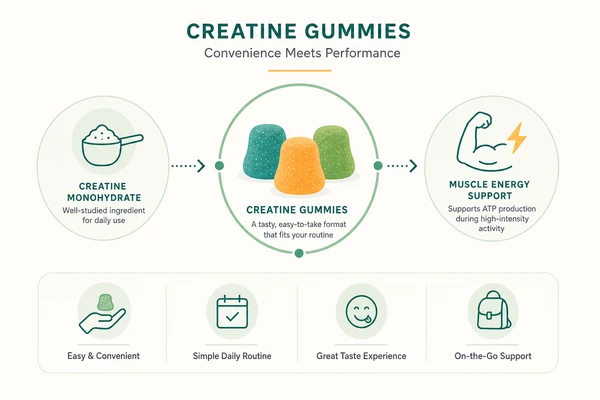
Creatine gummies are chewable supplements that usually deliver creatine monohydrate in a flavored gummy base. They are a convenience format, not a different kind of creatine. They work only when the formula delivers enough creatine over time.
What Is Creatine and How Does It Support Performance?
Creatine is not a stimulant. It supports energy use inside muscle cells during repeated high-effort work. The NIH Office of Dietary Supplements explains that studies often use loading and maintenance protocols. The International Society of Sports Nutrition treats creatine monohydrate as one of the best-supported sports nutrition ingredients when used properly.
The user still needs training, food, sleep, and consistency. A gummy does not change that rule. It mainly changes the user experience, which is why the format should also be compared against creatine gummies vs powder before launch.
For a brand, the harder question is whether the formula can carry enough creatine and survive production, packing, shipping, and shelf life before claims and packaging move too far.
| Production Check | Why It Matters | Brand Risk |
|---|---|---|
| Creatine form | Creatine monohydrate has the strongest evidence base | Weak ingredient story |
| Creatine per serving | The serving must reach a useful intake | Underdosed product |
| Gummies per serving | The routine must feel realistic | Low repeat use |
| Stability plan | The claim must survive shelf life | Trust loss |
Are Creatine Gummies Effective for Strength and Muscle Growth?
Many buyers ask about flavor first. Dosage should come first because a pleasant gummy with too little creatine is still a weak product.
Creatine gummies can be effective when the serving provides a practical creatine dose and stays stable. The format is not the main driver. Total daily intake, daily use, and finished-product quality are the real drivers.
Why Dose Matters More Than Format
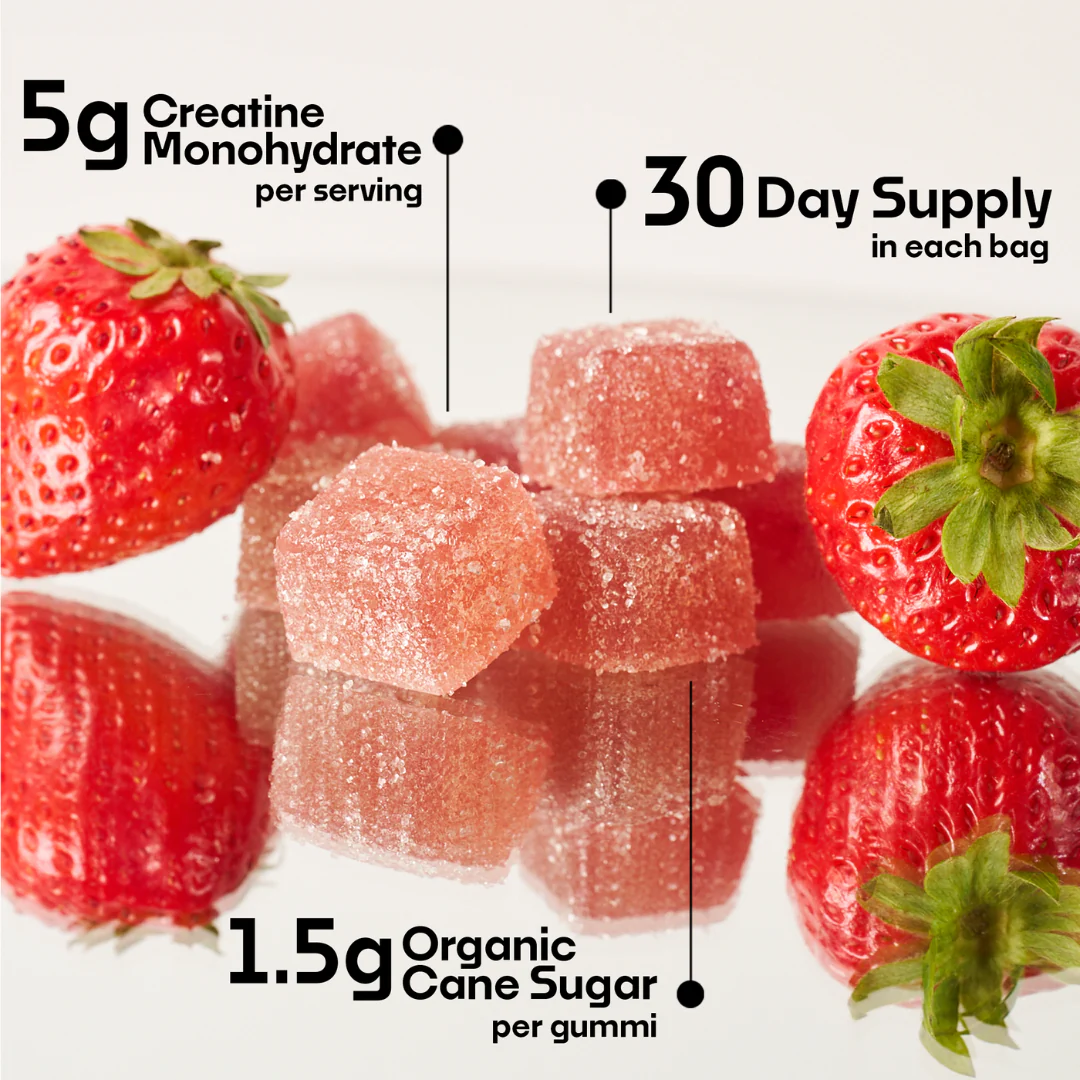
Gummies do not create a special creatine result. The active ingredient still needs time and steady intake.[^1] Many adult protocols use 3 to 5 grams per day for maintenance after an optional loading phase[^2]. The NIH notes that some studies use about 20 grams per day for 5 to 7 days, then 3 to 5 grams per day. I use those numbers as a planning reference, not as medical advice.
If a gummy serving gives 500 milligrams or 1 gram, the user may need several gummies per day. That changes cost, sugar intake, and compliance. For label math, the separate creatine gummy dosage guide is the better next check.
The better question is whether this exact formula gives enough creatine, whether the serving count is easy to follow, and whether active content remains near the end of shelf life.
| Daily Creatine Intake | My Practical View |
|---|---|
| Less than 1g | Usually too low for common performance protocols |
| 1-2g | Often below a practical maintenance target |
| 3g | Practical lower end for many adult protocols |
| 3-5g | Common adult maintenance range |
| 20g loading phase | Short-term protocol used in some studies |
Creatine Gummies vs Powder: What Is the Difference?
Powder is familiar, low-cost, and flexible. Gummies are easier to take, but they create a harder product design question.
Creatine powder usually gives lower cost and easier dose flexibility. Creatine gummies offer taste, portability, and better daily compliance when the serving delivers enough creatine and the formula stays stable.

Pros and Cons of Creatine Powder
Powder is still the practical benchmark. It is dry, simple, low-cost, and easy to dose. A user can take 3 grams, 5 grams, or a short loading protocol[^3] from the same container.
The weak point is daily behavior. Powder needs water, a scoop, and usually a shaker or cup. Some users dislike the texture when it does not dissolve well.
This is why powder can win on cost and still lose on routine. A creatine gummy does not need to beat powder in every way. It needs a clear reason to exist: convenience, taste, and compliance[^4].
Pros and Cons of Creatine Gummies
Gummies solve part of the routine problem. They are portable, flavored, and easy to understand.
That benefit is real, but it comes with manufacturing trade-offs. A gummy must carry creatine inside a soft matrix that also contains water, sweeteners, acids, flavors, and texture builders.
Dose per piece is fixed. Cost per gram is usually higher. High active loading can create gritty texture, larger serving size, or slower drying. I consider gummies a better format only when the final product keeps the label promise.
| Factor | Powder | Gummies |
|---|---|---|
| Cost per gram | Usually lower | Usually higher |
| Dose flexibility | Strong | Limited by piece size |
| Convenience | Lower | Strong |
| Taste experience | Mixed | Strong when well formulated |
| Manufacturing complexity | Lower | Higher |
| Stability control | Easier | More sensitive |
Cost, Dose Flexibility, and Daily Compliance
I would not position gummies as a full replacement for every powder user. A heavy user who wants the lowest cost and easiest high-dose plan may still prefer powder. A user who wants a simple daily routine may prefer gummies.
A brand should define three things before launch:
- who the product is for;
- how many gummies make one serving;
- whether that routine feels realistic after purchase.
If the serving count is too high, convenience weakens. If the dose is too low, the performance story weakens.
How Much Creatine Should Gummies Provide?
A big front-label claim can hide small math. I start with the front label, then check the serving facts.
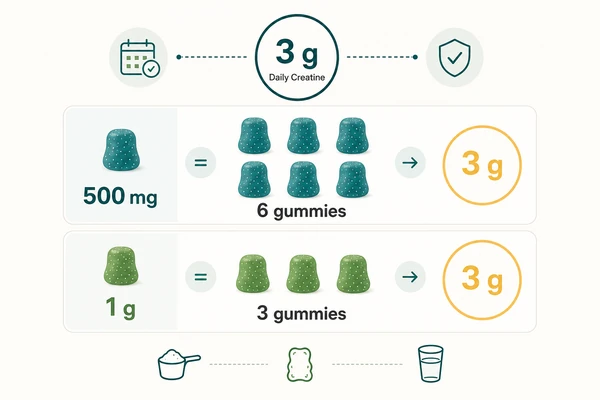
A useful label should show creatine per gummy, gummies per serving, and total creatine per serving. If one gummy contains 500 milligrams, six gummies are needed to reach 3 grams. If one gummy contains 1 gram, three gummies reach 3 grams.
Dosage Per Gummy vs Dosage Per Serving
I read a creatine gummy label in three steps:
- creatine form;
- active amount per gummy;
- total amount per serving.
A product can say "creatine gummies" and still give too little creatine for the user goal. It can also give a strong dose but require too many pieces each day, which hurts repeat use.
For a startup brand, this becomes a repeat-purchase issue. For product development, it becomes a formulation issue. For procurement, it becomes a documentation and quality-risk issue.
Clear serving math should come before packaging, claims, or sales material. It also helps the brand decide whether to stay high-dose, lower the claim, or change the serving plan.
| Label Item | Good Practice | Weak Practice |
|---|---|---|
| Creatine form | Clear form listed | Vague creatine blend |
| Per-gummy amount | Milligrams per piece shown | Only a large front-label claim |
| Serving size | Gummies per serving shown | Serving math hidden |
| Total daily amount | Grams per serving clear | User must calculate alone |
| Testing support | COA or testing statement available | No proof beyond marketing text |
Do You Need More Gummies to Match One Scoop of Powder?
Most of the time, yes. One powder scoop can carry several grams of creatine because the user mixes it with liquid. A gummy must fit creatine, sweetener, gel system, water, flavor, and coating[^5] into a chewable piece.
The serving math is simple:
| Creatine Per Gummy | Gummies Needed for 3g | Planning Impact |
|---|---|---|
| 500mg | 6 gummies | Higher serving count and bottle count |
| 1g | 3 gummies | Easier routine, but harder formulation |
That math affects cost, label directions, flavor intensity, and package size.
Why High-Dose Creatine Gummies Are Harder to Formulate
High-dose creatine gummies are a manufacturability question first. Creatine monohydrate is a dense powder. As loading rises, the gummy mass can become harder to deposit, dry, and chew[^6].
The texture can become sandy or chalky. A high claim can also create a large serving size, which reduces the convenience benefit. I prefer to plan dose, piece weight, serving count, texture target, and packaging together before locking the label claim, especially when the project depends on scalable gummy vitamin manufacturing controls.
| Creatine Load Per Piece | Texture Risk | Formulation Difficulty |
|---|---|---|
| Under 500mg | Low | Low |
| 500mg-1g | Medium | Medium |
| 1g-2g | High | High |
| Over 2g | Very high | Very high |
Why Do Creatine Gummies Work or Fail in Real Production?
A gummy can look good on day one. But production heat, moisture, acid, and poor weight control can weaken the final product.
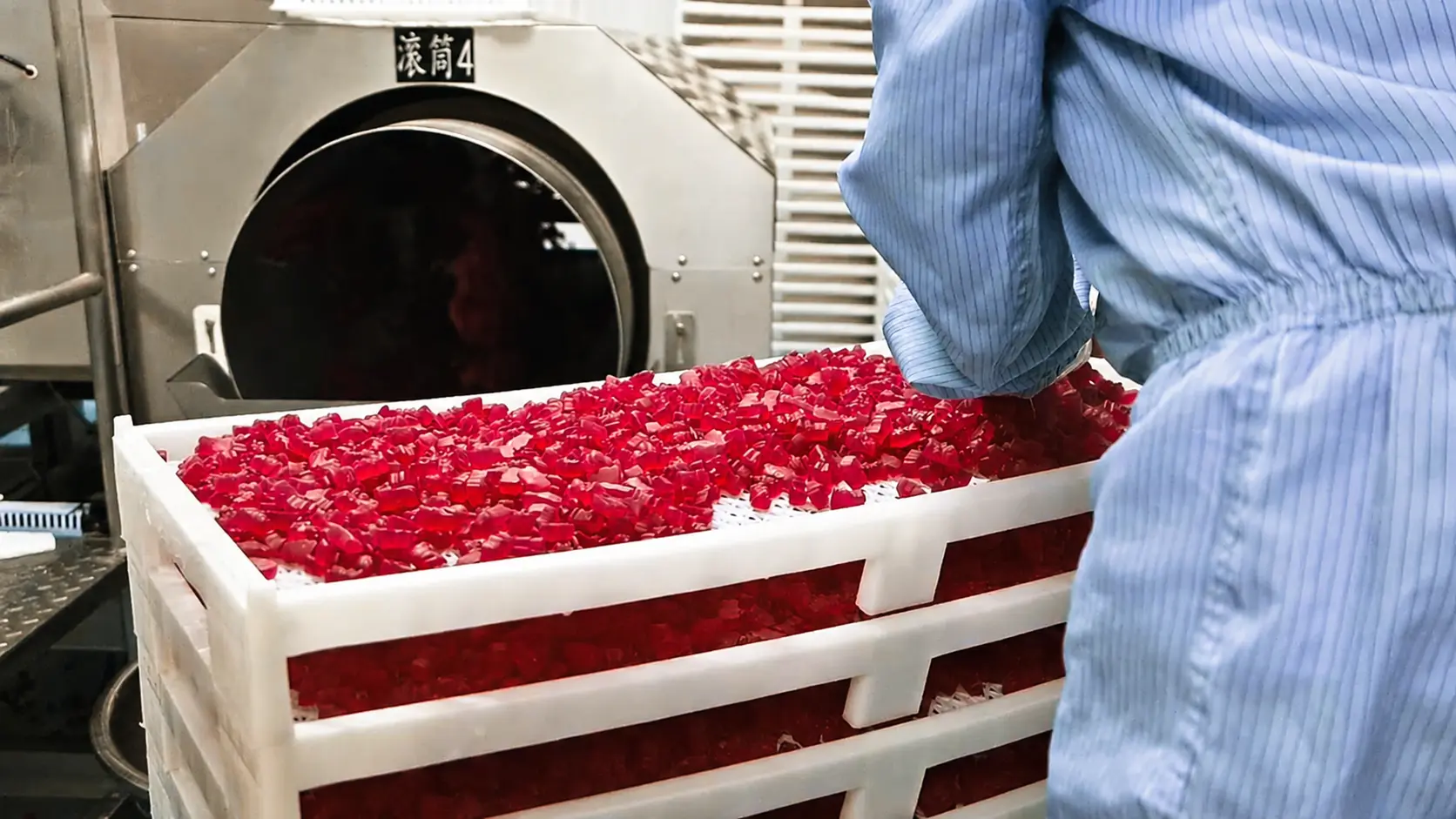
Some creatine gummies may not work as expected because they are underdosed, unstable, poorly mixed, or hard to take daily. These are product design and manufacturing problems, not proof that creatine itself fails.
Label Claims vs Actual Creatine Content
A label claim is not proof. It is a promise that needs support. In production, I would separate the risk into five checks.
- Piece weight affects dose accuracy.
- Mixing controls creatine distribution.
- Heat matters because process conditions can stress active content and texture[^7].
- Moisture matters because a gummy is not a dry powder.
- Acid balance matters because creatine can convert to creatinine under poor conditions[^8].
Packaging also matters because a weak moisture barrier can cause sticking, softening, clumping, or potency risk.
Teams often focus on the active number first, then repair texture and stability later. That order creates rework. The formula should be tested as a whole system before scale-up, with batch records, testing data, and clear release standards.
| Risk Area | What Can Go Wrong | What Should Be Checked |
|---|---|---|
| Piece weight | Dose varies between gummies | Weight control records |
| Mixing | Creatine is not evenly spread | Uniform dispersion checks |
| Heat | Active content and texture are stressed | Controlled process time and temperature |
| Moisture | Gummy sticks or changes over time | Water activity and packaging review |
| Acid balance | Higher creatinine conversion risk | pH and flavor system control |
Heat, Moisture, and Shelf-Life Stability
Creatine is more straightforward in dry powder than in a gummy. A gummy introduces water activity, process heat, drying time, coating, packaging, shipping temperature, and storage humidity[^9].
The risk is not only active loss. The gummy can also become sticky, hard, clumped, or less pleasant to chew. Packaging is part of the formula strategy because the product needs a moisture barrier that matches the shelf-life claim.
A strong first sample does not prove a stable product. Stability data, packaging review, and water activity targets[^10] should be part of the product plan.
Texture, Grittiness, and Active Ingredient Loading
Texture decides whether users keep taking the product. A creatine gummy can have a clear dose and still fail if it feels gritty, hard, sticky, or too large.
Several variables shape the final bite: particle size, dispersion, gel system, acid level, sweetener base, drying time, and coating. A lab sample may look ready, but commercial scale changes mixing, depositing, cooling, drying, and packaging behavior.
The product needs to taste good, dose accurately, and remain stable until the consumer finishes the bottle.
What Are the Main Creatine Gummies Benefits and Trade-Offs?
Convenience can help users stay consistent. But convenience can also hide sugar, serving size, and production complexity.
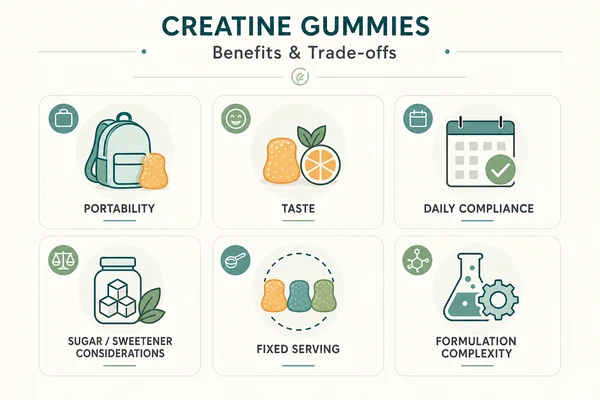
The main creatine gummies benefits are taste, portability, and daily compliance. The main trade-offs are higher cost per gram, limited dose flexibility, sugar or sweetener concerns, and harder manufacturing control.
How Consumer Appeal and Production Reality Should Balance
I understand why brands like gummies. They are easy to explain, friendly, portable, and useful in a crowded sports nutrition category. But the consumer benefit cannot be separated from production cost.
Here is the balance I look for:
| Consumer Promise | Production Check |
|---|---|
| High dose | Grittiness risk at higher loading[^11] |
| Sugar-free positioning | Texture and cost pressure |
| Sour flavor | Acid-system control |
| Larger serving | Daily-use friction |
| Strong first flavor | Stability through repeat purchase |
The product must be pleasant enough for the user, realistic enough for production, and clear enough for the label.
| Benefit or Trade-Off | Consumer Meaning | Brand Meaning |
|---|---|---|
| Taste | Easier daily use | Better repeat purchase potential |
| Portability | No shaker or scoop | Stronger lifestyle positioning |
| Fixed serving | Simple routine | Less dose flexibility |
| Sugar system | Better chew and flavor | Calories and carb concerns |
| Sugar-free system | Lower sugar option | More texture and cost pressure |
| High active load | Better dose per serving | Higher grit and scale-up risk |
Sugar, Calories, and Sweetener Fit
Sugar and sweetener choices should match the target user. Standard gummies often use sugar or syrup systems because they help taste, chew, and shape.[^12] That can fit a sports snack position, but it may not fit users who track calories, carbs, or sugar intake. Sugar-free creatine gummies can support a cleaner daily-use story, but they are not a simple ingredient swap. Polyols, fibers, stevia, allulose, and other systems can change texture, aftertaste, moisture behavior, and digestive comfort.[^13]
Added Fillers, Acids, Sweeteners, and Flavor Systems
Consumers often ask whether gummies contain fillers. I think the better question is whether every ingredient has a clear job.
Acids can help flavor and mask chalky notes, but the acid system still needs care.[^14] Gelling agents shape chew and moisture behavior. Coatings can reduce sticking, but they also affect mouthfeel and packaging.
A formula that looks clean on paper may still perform poorly if ingredients are not compatible. The active ingredient, base, flavor, sweetener, acid, coating, and package should support the same product goal.
| Ingredient Area | Consumer Concern | Manufacturing Concern |
|---|---|---|
| Sugar | Calories and carbs | Texture and moisture balance |
| Sugar alcohols | Digestive comfort | Crystallization and chew |
| Acids | Taste and sour profile | Stability pressure |
| Colors and flavors | Clean-label preference | Heat and process fit |
| Coating | Stickiness and mouthfeel | Shelf-life control |
Are Creatine Gummies Safe?
Safety language needs care. A supplement can be common and still be wrong for some people.
Creatine monohydrate is generally considered safe for healthy adults at common doses, but the full formula, serving size, sweeteners, label directions, and user group still need review. People with medical concerns should seek qualified guidance before use.
Are Creatine Supplements Generally Safe?
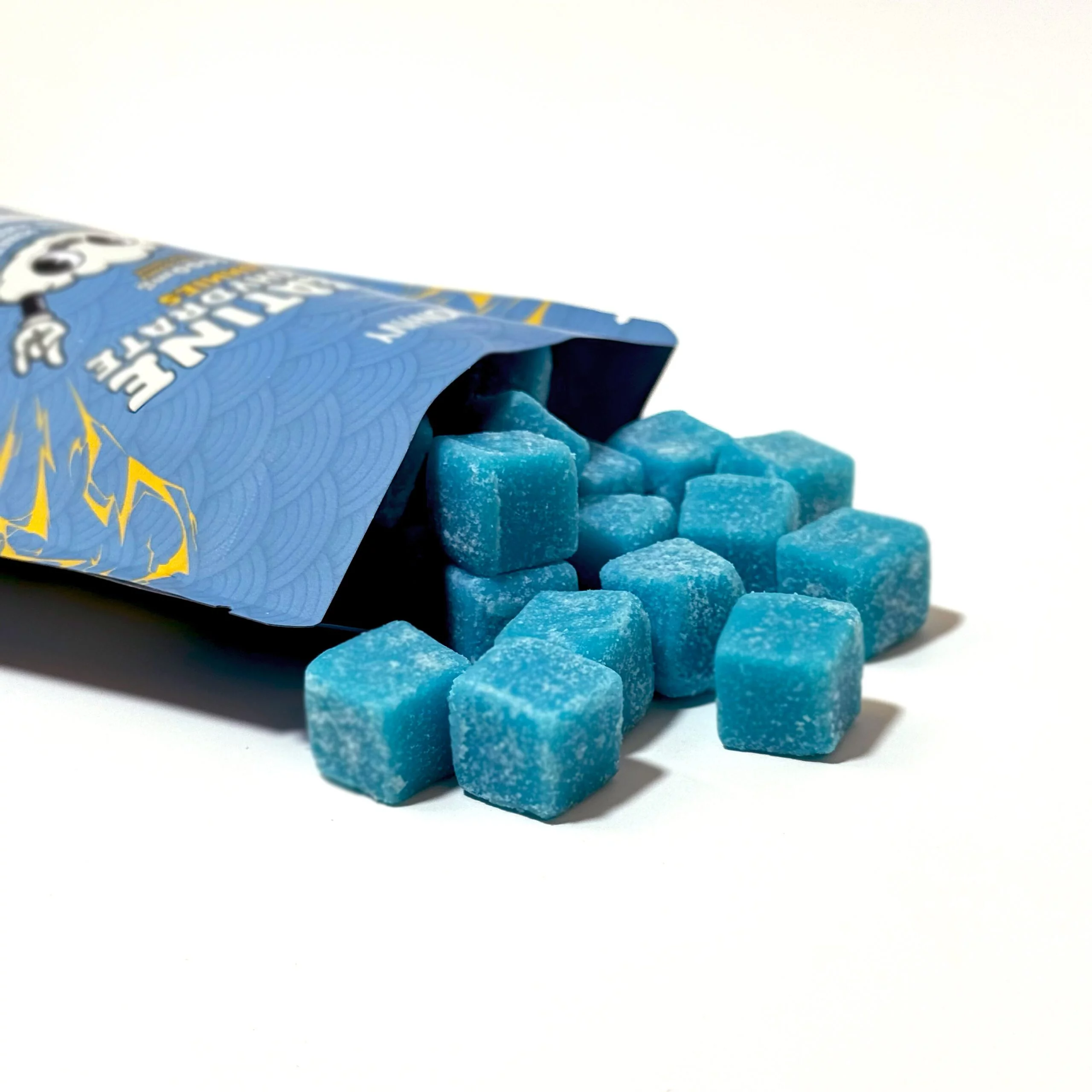
Safety content needs limits. Product design and manufacturing risk can be explained, but this content cannot replace medical advice. For healthy adults, creatine monohydrate has a strong research record at common doses.
Some users may still report water retention, bloating, or digestive discomfort. In gummy form, discomfort may come from the gummy matrix as much as creatine. Sugar alcohols, acids, fibers, and high serving count can all affect comfort.
Ingredient safety also differs from product quality. A safe ingredient can still sit inside a poorly made product. A brand should give clear serving directions, avoid disease claims, and state who should seek qualified guidance first.
| User Group | My Practical Safety Note |
|---|---|
| Healthy adults | Follow label directions and total daily intake |
| Kidney disease | Ask a healthcare professional first |
| Pregnant or nursing users | Ask a healthcare professional first |
| Adolescents | Use qualified supervision |
| Medication users | Review personal interaction risk |
| Tested athletes | Check banned-substance testing and certification |
Possible Bloating or Digestive Discomfort
Some users report water retention, bloating, or mild digestive discomfort with creatine products. In gummies, the cause may not be creatine alone.
A large serving can add sugar, fibers, polyols, acids, or other ingredients that affect comfort. If a user needs several gummies to reach a daily creatine target, the full serving has to be comfortable, not only effective on paper.
Brands should test the complete serving size, not just one piece.
How Should Brands Develop High-Quality Creatine Gummies?
A weak production plan can turn a good idea into a late launch, unstable texture, or unclear quality file. This is also where choosing the right creatine gummy manufacturer becomes part of the product risk review.
A creatine gummy project should be developed through clear cooperation between the brand team and the production team. Dose feasibility, texture stability, piece weight control, moisture strategy, packaging, COA support, and scale-up data should be confirmed before commercial production.
What Should Be Aligned Before Launch
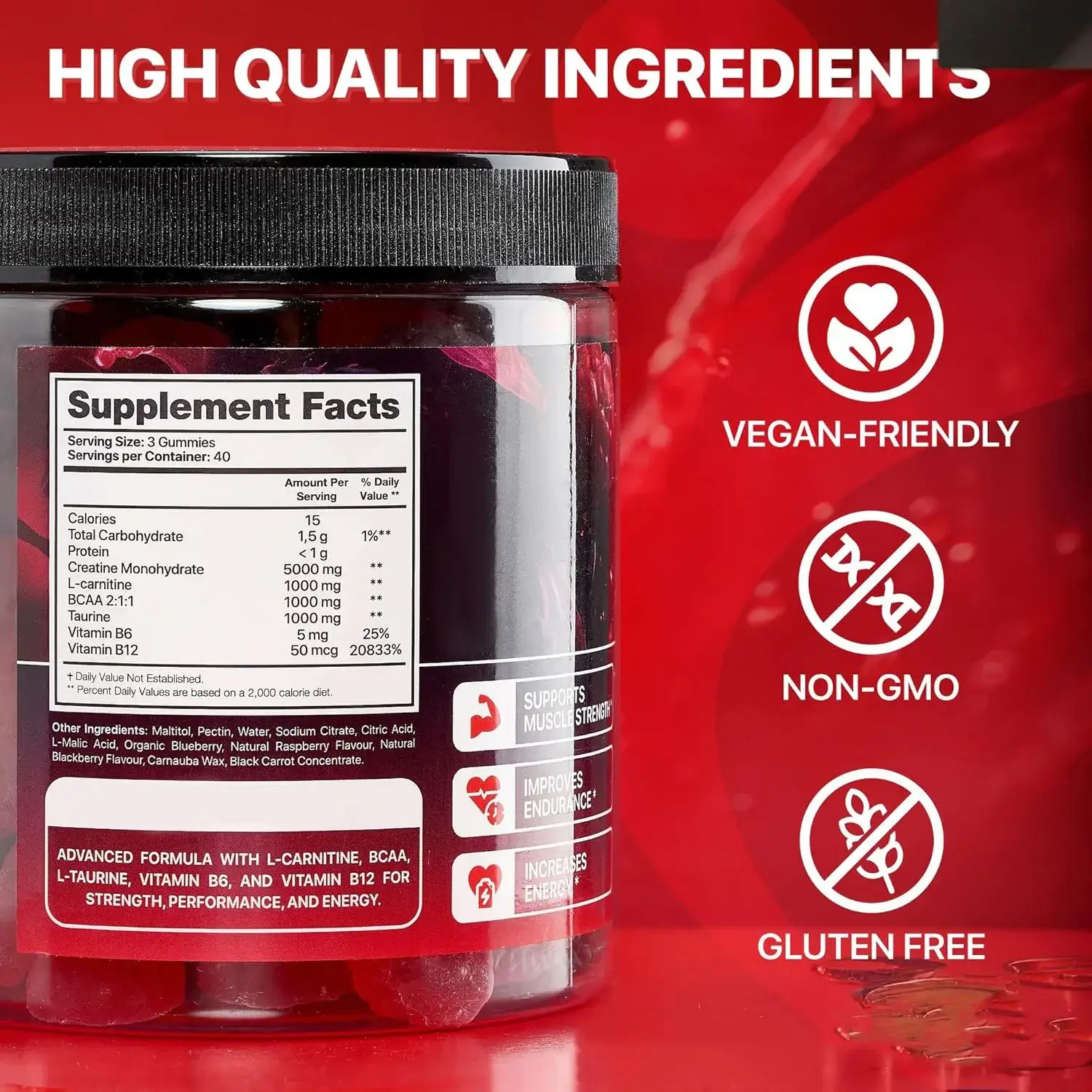
Before a creatine gummy project moves from sample work to commercial production, the brand team and production team should align on practical details.
- Can the target dose fit the piece weight?
- How many gummies make one serving?
- What happens to texture at the planned active load?
- How does the line control piece weight?
- What packaging protects the gummy from moisture?
- What stability data and testing support the finished product?
A COA can help confirm active content and selected quality data. Third-party sport-certification programs can reduce banned-substance risk for tested athletes. FDA dietary supplement CGMP rules under 21 CFR Part 111 also matter because they cover manufacturing, packaging, labeling, and holding controls.
| Launch Question | Why It Matters |
|---|---|
| Can the dose fit the gummy size? | Prevents an unrealistic serving plan |
| What is the maximum active load? | Predicts texture risk |
| How is piece weight controlled? | Protects dose accuracy |
| What packaging is recommended? | Protects moisture and shelf life |
| What stability data is available? | Supports launch confidence |
| What COA can support each batch? | Supports buyer trust |
| What happens during scale-up? | Reduces commercial production risk |
What Consumers Should Look For on the Label
A strong label should make the daily routine easy to understand. I check the creatine form first, then the amount per gummy, then the amount per serving.
The label should not hide a small dose behind a large front-panel claim. It should also show sugar, calories, sweetener type, and practical warnings for the target user.
Clear serving math helps users judge the product and helps brands protect trust.
Why Third-Party Testing and COA Matter
Testing support does not make a weak formula strong, but it can help verify that the finished product matches the claim. A COA can support active content, selected quality checks, and batch documentation. These proof signals are also what buyers look for when comparing the best creatine gummies in a crowded category.
Third-party sport certification can matter for tested athletes and sports nutrition buyers. GMP or CGMP discipline also matters because it relates to how products are manufactured, packaged, labeled, and held.
These signals support trust and repeatability, but they do not prove that every product is effective for every user.
| Quality Signal | What It Helps Verify | Why It Matters |
|---|---|---|
| Supplement Facts clarity | Dose, serving size, ingredient identity | Helps users calculate real intake |
| Batch COA | Active content and selected quality data | Supports label trust |
| Third-party sport testing | Banned-substance risk reduction | Important for tested athletes |
| GMP / CGMP controls | Manufacturing discipline | Supports repeatable production |
| Stability data | Active content and texture over time | Protects shelf-life confidence |
FAQ About Creatine Gummies
How Many Creatine Gummies Should I Take a Day?
The number should be calculated from the creatine content per gummy and per serving. If each gummy contains 1 gram, a 3 to 5 gram target means 3 to 5 gummies. If each gummy contains 500 milligrams, the same target means 6 to 10 gummies.
Should I Take Creatine Gummies on Rest Days?
Creatine is best explained as a consistency supplement. Many protocols use daily intake because creatine works through accumulation. The user should still follow the product label and personal nutrition plan.
Are Creatine Gummies as Effective as Powder?
They can be effective when the serving gives a comparable amount of creatine and the product stays stable. Powder is cheaper and easier to dose. Gummies may help compliance.
Do Creatine Gummies Actually Work?
Yes, if the product gives enough creatine, stays stable, and fits daily use. A low-dose gummy with unclear serving directions may not deliver the expected benefit.
Can Creatine Gummies Be Sugar-Free?
Sugar-free concepts can work, but sugar-free is not a simple ingredient swap. Sweeteners change texture, taste, moisture behavior, and digestive comfort.
Do Creatine Gummies Contain Enough Creatine?
Some do, and some do not. Grams per serving, gummies per serving, and testing support should be checked before the claim is trusted.
Conclusion
Do creatine gummies work? They can, when dose, stability, documentation, label clarity, and production control align. Format helps, but quality, consistency, and manufacturing discipline earn trust.
Talvenda can support that work with formula feasibility review, creatine loading checks, piece-weight control planning, moisture and packaging review, COA coordination, and scale-up production planning. If you are developing creatine gummies, send the target dose, serving count, sugar or sugar-free direction, and launch channel. That gives the formulation and production risks a chance to be reviewed before commercial production.
[^1]: "Creatine for Exercise and Sports Performance, with Recovery ... - PMC", https://pmc.ncbi.nlm.nih.gov/articles/PMC8228369/. Supports repeated intake as the main mechanism for creatine benefits. Scope note: not gummy-specific. [^2]: "Timing, optimal dose and intake duration of dietary supplements ...", https://pmc.ncbi.nlm.nih.gov/articles/PMC5545206/. Supports common loading and maintenance dose ranges used in research. Scope note: not individualized medical advice. [^3]: "Timing, optimal dose and intake duration of dietary supplements ...", https://pmc.ncbi.nlm.nih.gov/articles/PMC5545206/. Supports 3-5 g maintenance examples and short loading protocols. Scope note: exact dosing varies by user. [^4]: "Assessing the effects of solid versus liquid dosage forms of oral ...", https://pmc.ncbi.nlm.nih.gov/articles/PMC6483770/. Supports palatability and ease of use as adherence factors. Scope note: general oral-product evidence, not creatine-gummy proof. [^5]: "Current Innovations in the Development of Functional Gummy Candies", https://pmc.ncbi.nlm.nih.gov/articles/PMC10778822/. Supports gummies as water-containing gel systems with sweeteners, gelling agents, flavors, and other excipients. Scope note: not a specific creatine formula. [^6]: "Hydrocolloids as thickening and gelling agents in food - PMC - NIH", https://pmc.ncbi.nlm.nih.gov/articles/PMC3551143/. Supports the link between solids, gel systems, viscosity, drying, and texture. Scope note: general gummy/gel mechanism. [^7]: "Correlation between physical and sensorial properties of gummy ...", https://pmc.ncbi.nlm.nih.gov/articles/PMC8292526/. Supports heat and process conditions as texture and stability variables. Scope note: contextual, not a precise creatine-loss rate. [^8]: "Evaluation of the stability of creatine in solution prepared from ... - PMC", https://pmc.ncbi.nlm.nih.gov/articles/PMC2750587/. Supports creatine-to-creatinine conversion risk under poor aqueous, pH, temperature, or time conditions. Scope note: matrix-specific testing is still needed. [^9]: "[PDF] Moisture and Shelf Life in Sugar Confections - Dr. Steve Talcott Lab", https://talcottlab.tamu.edu/wp-content/uploads/sites/108/2019/01/Moistuer-and-Sugar-in-Shelf-Life.pdf. Supports water activity, humidity, drying, coatings, and packaging as confectionery shelf-life factors. Scope note: finished-product testing still matters. [^10]: "Dietary Supplements Guidance Documents & Regulatory Information", https://www.fda.gov/food/guidance-documents-regulatory-information-topic-food-and-dietary-supplements/dietary-supplements-guidance-documents-regulatory-information. Supports stability data and packaging review as part of shelf-life planning. Scope note: framework guidance, not product-specific proof. [^11]: "Evaluation of the stability of creatine in solution prepared from ... - PMC", https://pmc.ncbi.nlm.nih.gov/articles/PMC2750587/. Supports limited aqueous solubility as a reason high loads may affect texture. Scope note: not a finished-gummy sensory trial. [^12]: "[PDF] Moisture and Shelf Life in Sugar Confections - Dr. Steve Talcott Lab", https://talcottlab.tamu.edu/wp-content/uploads/sites/108/2019/01/Moistuer-and-Sugar-in-Shelf-Life.pdf. Supports sugar and syrup roles in gummy taste, chew, and structure. Scope note: general confectionery evidence. [^13]: "Beyond Sugar: A Holistic Review of Sweeteners and Their Role in ...", https://pmc.ncbi.nlm.nih.gov/articles/PMC12470175/. Supports sugar-free systems affecting texture, aftertaste, moisture behavior, and digestive comfort. Scope note: broad sugar-reduction evidence. [^14]: "[PDF] The Chemistry and Physiology of Sour Taste—A Review - USDA ARS", https://www.ars.usda.gov/ARSUserFiles/60701000/Pickle%20Pubs/p346.pdf. Supports acidulants as flavor and pH variables in gummy formulation. Scope note: not creatine-gummy specific.