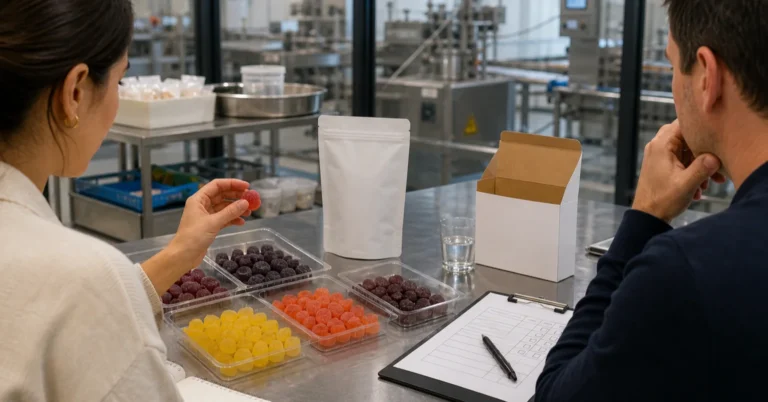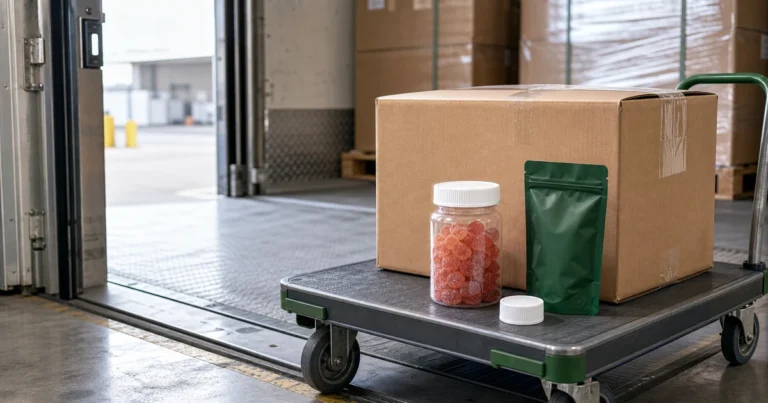
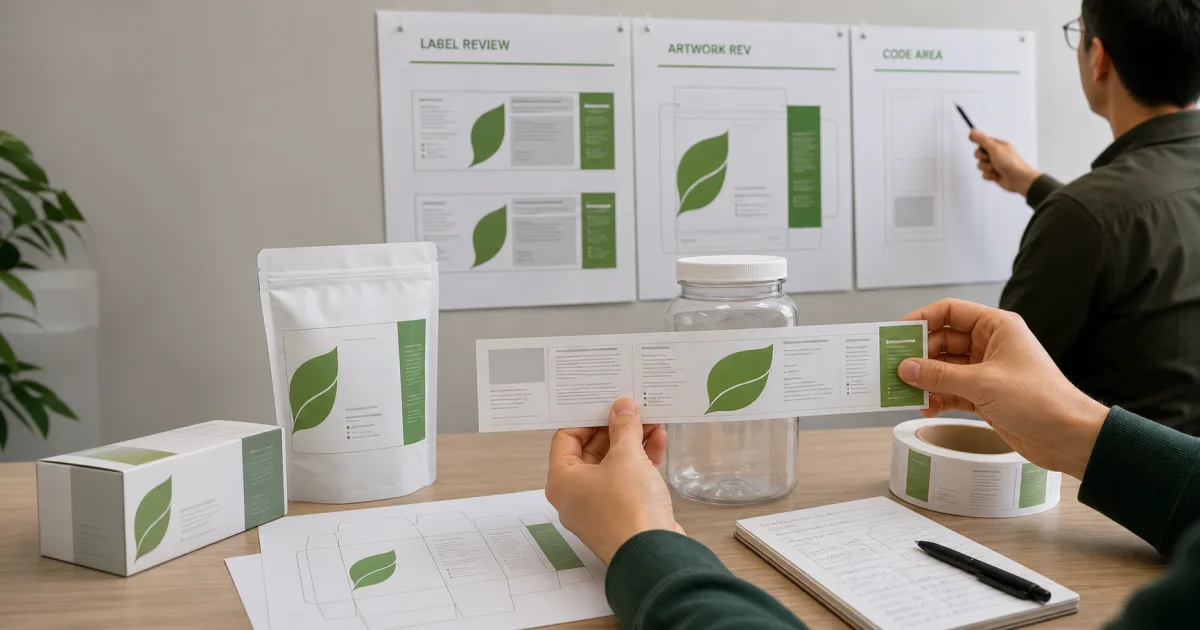

A supplement packaging checklist is the pre-production control that aligns the formula version, Supplement Facts panel, label copy, artwork, dieline, barcode, variable-code logic, package format, and release documents. Printing or commercial packing should wait until those items reconcile to one controlled product record, with clear evidence, named owners, and hold points for unresolved decisions.
This checklist supports production readiness; it does not replace current regulatory guidance or a qualified, product-specific review. The final legal and market decisions stay with the brand's appointed reviewers.
Decision Snapshot
- Approve one controlled product packet, not a folder of separately approved files.
- Reconcile label copy, artwork, packaging, and code logic to the same specification version.
- Use physical evidence to check fit, scanability, and line behavior where the project risk requires it.
- Give every approval a version owner, evidence record, and hold point.
- Release printing and packing only after dependent decisions have been reopened and closed.
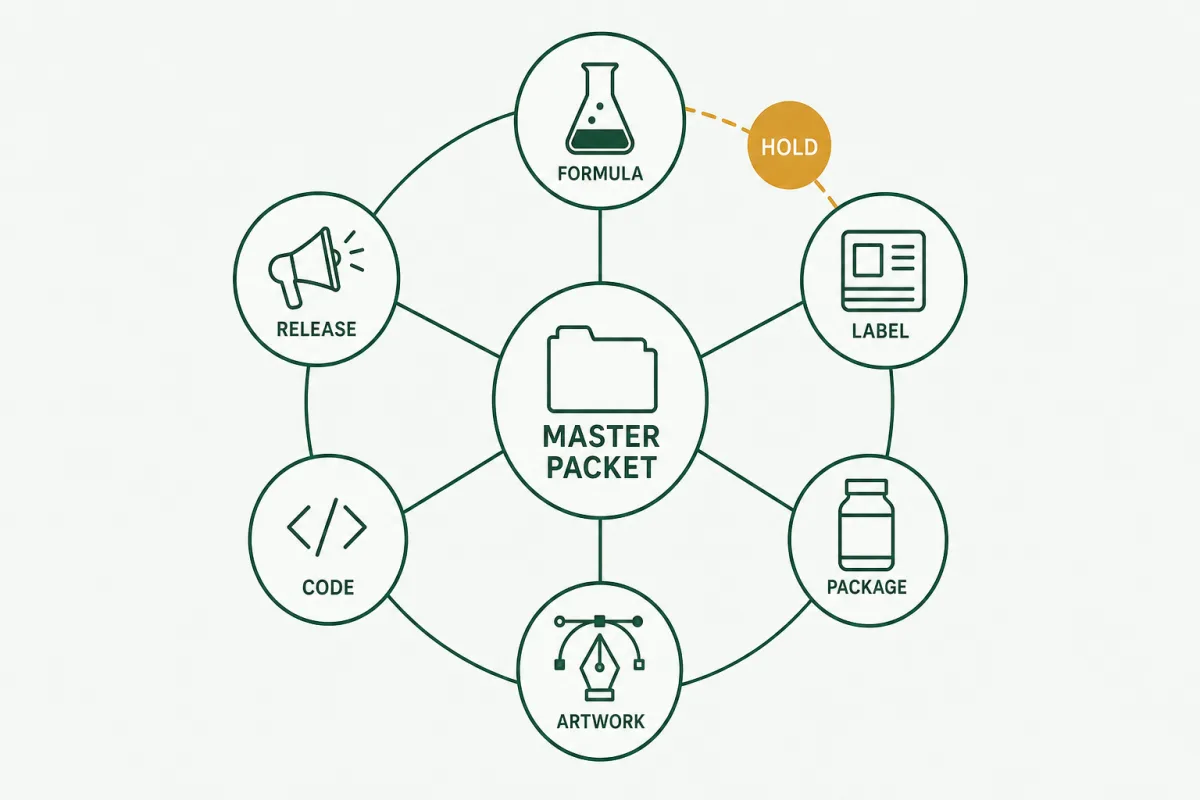
A readable package supports consumer trust and safe product use. For the brand team, the immediate task is operational: turn approved information into one handoff that design, procurement, production, and quality can execute without guessing.
Supplement Packaging Checklist: What a Production-Ready Package Includes
Separate approvals create false confidence when the formula, label, package, and code no longer share one version.
A production-ready supplement package includes one reconciled packet: product brief, formula and specification version, serving count, label copy, artwork revision, dieline, barcode, package components, code logic, and release responsibilities.
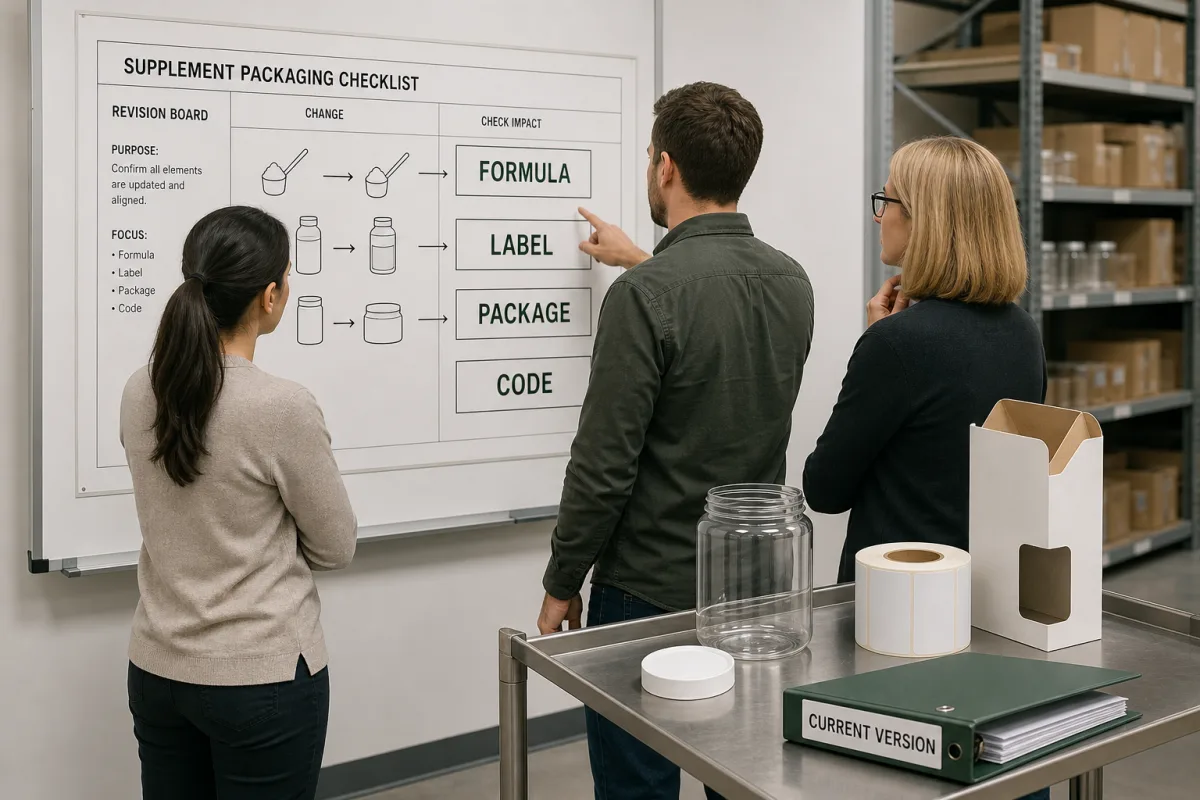
FDA's dietary-supplement CGMP guide requires specifications for dietary-supplement labels and packaging and ties packaging and labeling controls to the master manufacturing record.[^1]
I treat this packet as the real deliverable. If a serving count, bottle, claim, or code field changes, the version owner identifies every linked approval that must reopen. That dependency check is what keeps a late change from surviving in an old file.
Pre-Production Sign-off Table
I run sign-off with a named owner and a hard hold point on each line. “Approved” is not enough when the team cannot identify the evidence or the decision it controls.
| Decision / Check | Evidence | Owner | Hold Point |
|---|---|---|---|
| Formula and specification version locked | Approved current specification with revision ID | Product development / quality | No label release while versions differ |
| Supplement Facts and ingredients reconciled | Direct comparison with the current approved formula/specification | Product development / qualified reviewer | No artwork approval while copy is unresolved |
| Label copy and claims review complete | Controlled copy deck and review record | Brand / qualified reviewer | No final placement before review closes |
| Package format and components selected | Component specifications and proportionate physical-fit evidence | Packaging / procurement | No component order while fit is open |
| Artwork and dieline controlled | Supplier-confirmed dieline and exact artwork revision | Design / printer | No print release on an unconfirmed file |
| Barcode and variable-data plan checked | Physical scan evidence, field map, and acceptance criteria | Operations / quality | No release while codes are unreadable or misplaced |
| Representative packing evidence reviewed | Sample or line-proof record stating what was tested | Operations / quality | No commercial packing with unresolved line risk |
| Release packet complete | Packet index, approvals, and release authority | Quality | No shipment before release requirements close |
Product Brief
Every line in the table traces back to the product brief. The controlled brief should state the current product name, format, market, serving size, servings per container, unit count, intended claims, package route, sales channel, and coding approach in one record.
The brief also needs a revision owner. A changed serving count can affect the panel, net quantity, container, label space, and sampling plan, so those decisions must reopen.
Packaging Fit
Packaging fit means the physical component works with the representative product and the intended packing route. A digital mockup can show appearance, but it cannot establish container capacity, closure engagement, barcode scanability, label application, code readability, or line behavior.
For gummies, the review brings product condition, surface tack, piece variation, count behavior, moisture exposure, container geometry, and available label and code area together to identify which combinations need physical evidence.
Size, Count, and Closure
Size, count, and closure work as an assembly. Compare declared count with representative fill volume and available headspace, then review the container finish, cap, liner or seal when used, tamper-evident approach, and label dimensions as one package.
The practical question is simple: has the proposed set been checked together, or has each component only been approved on its own specification sheet?
Supplement Label Review Checklist
Small label discrepancies become expensive once approved artwork reaches the printer.
A supplement label review checklist reconciles the statement of identity, net quantity, Supplement Facts, ingredient list, and responsible business details, then separately reviews product-specific directions, warnings, claims, disclaimers, and code areas against the current product brief.[^2]
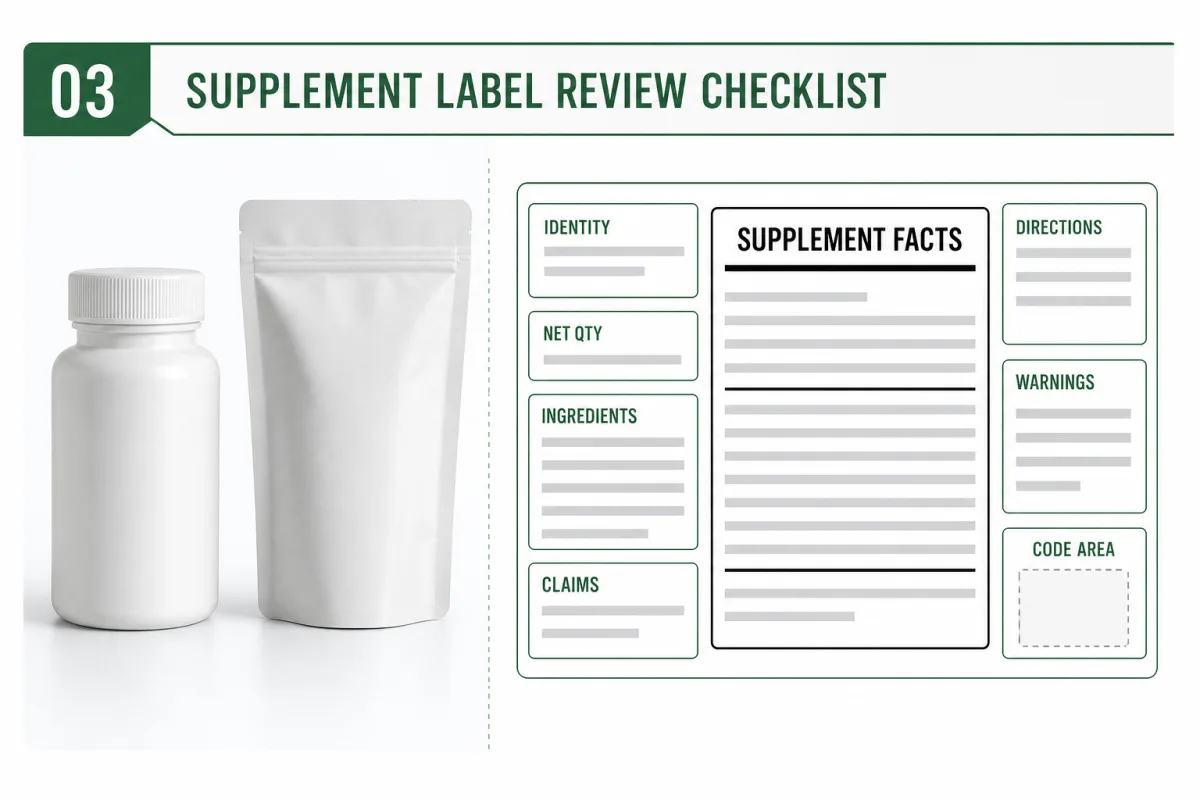
I use the checklist to prepare a complete review packet, not to make a legal determination. Product-specific wording, placement, and market requirements should be confirmed by the brand's qualified reviewer before print release.
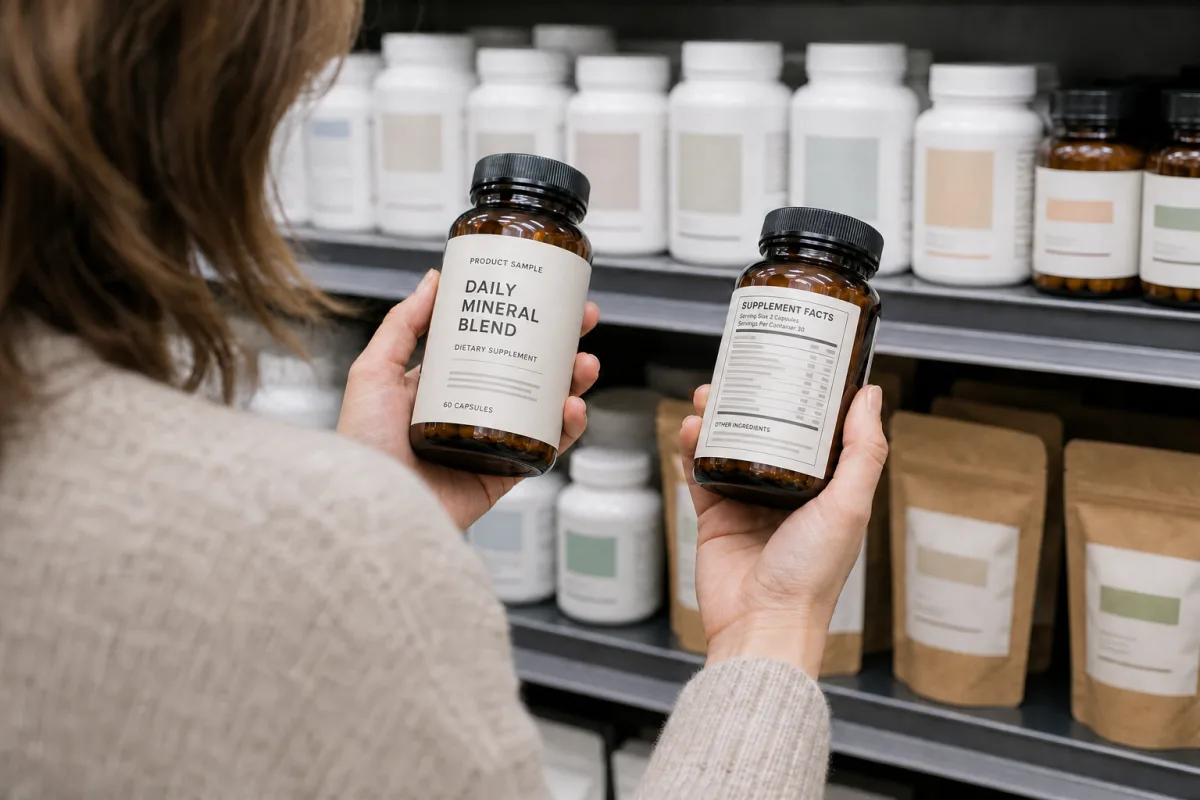
Identity and Net Quantity
For a U.S. dietary supplement, start with the product identity and net quantity on the principal display panel.[^2] Compare both with the product brief and the actual pack configuration. Product name, form, unit count, net weight or volume approach, serving count, and physical fill should not tell different stories.
Do not solve a packaging mismatch with clever wording. If the count or fill basis changes, reopen the panel copy, container decision, and dependent artwork.
Supplement Facts and Ingredients
The review compares the Supplement Facts panel and ingredient list directly with the current approved formula and specification version—not a similar SKU, a prior panel, or “the last file.” Check serving size, servings per container, declared ingredients and amounts, ingredient forms, units, other ingredients, and any review points identified for the product.
Then review the panel at final print size, not only on a large PDF proof.
Directions, Warnings, and Business Details
Directions, warning language selected for review, and business details need defined locations on the dieline and must agree with the serving basis and commercial arrangement. Confirm that responsible-party information is current for the SKU.
If origin, manufacturing, packing, or distribution statements are planned, check them against the actual supply-chain arrangement and the intended market. Treat this as a review item rather than assuming standard wording applies to every project.
Claims, Disclaimers, and Code Areas
I separate claims review into three questions: Is the wording suitable for the intended market? For an objective claim, does the maintained evidence support it? When a qualification is needed to prevent deception, can the artwork present it clearly and conspicuously?[^3] This framework organizes the review; it does not declare a claim acceptable.
Reserve code areas at the same time. Identify which lot, manufacturing-date, expiration, best-by, or other fields the project will use, then define their source, location, format, acceptance criteria, and line-verification method. The date-code approach is project-specific. If the team is still deciding it, use the guide to manufacturing dates and expiration dates on supplements as a separate planning reference rather than duplicating that decision here.
Artwork and Coding Handoff
Design approval is incomplete until the current files can print, scan, and receive the project's variable data.
The artwork and coding handoff connects controlled copy, a confirmed dieline, print specifications, barcode checks, variable-data criteria, proof approval, and revision history.
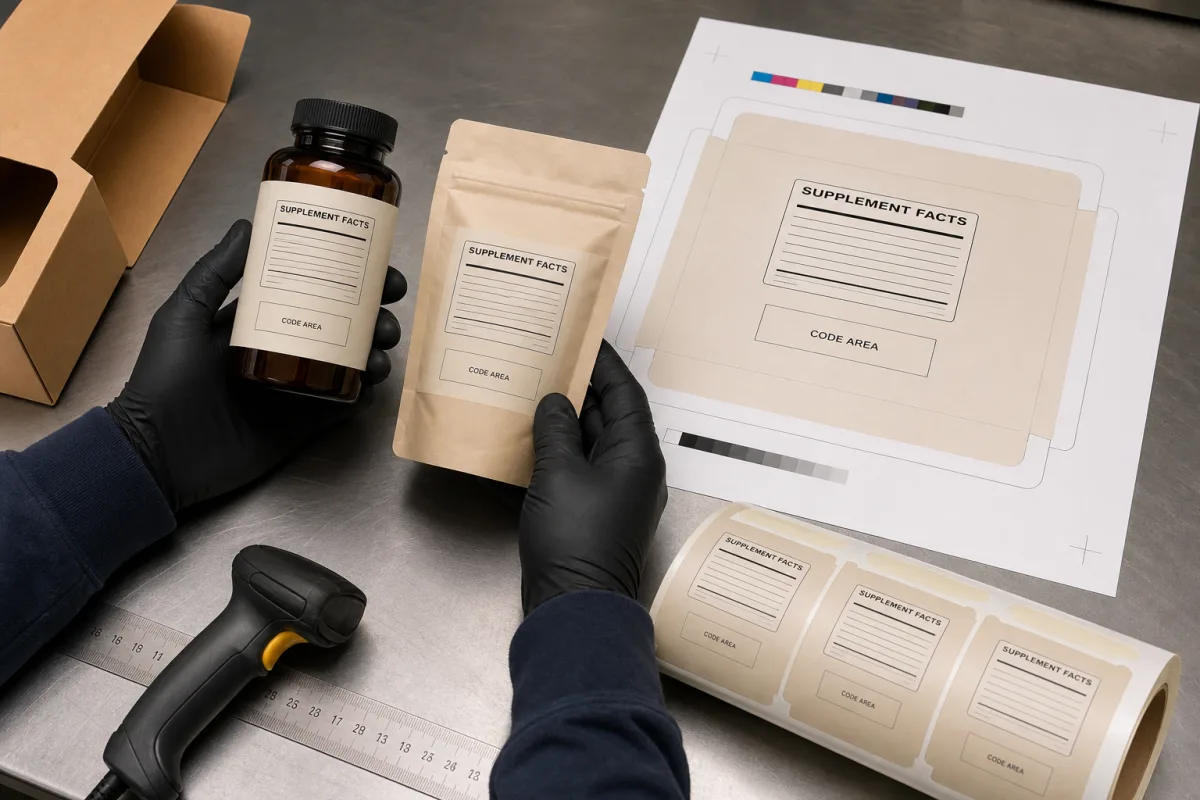
Most avoidable handoff problems are version problems. The handoff needs one file owner, one live revision, and a record that tells the printer and production team exactly what they are authorized to use.
Dielines and Print Areas
Place artwork on the supplier- or printer-confirmed dieline for the selected component and print route. Review trim, bleed, safe areas, seams, folds, curves, label gaps, pouch seal areas, and surfaces that may interfere with critical copy or coding.
A 1:1 paper mockup wrapped around the physical container is a useful early check. It does not replace a production proof, but it quickly exposes cramped panels, awkward curvature, hidden text, or a code zone that looked larger on screen.
Barcodes and Variable Data
Check the barcode using approved commercial data and the intended printed size, orientation, contrast, and clear area. A correct number is not enough if the printed mark cannot be scanned on the chosen substrate or after application.
For variable data, document each field, its source, print location, acceptance criteria, and verification step. Merge that specification with a physical scan or readability check on representative printed material. Do not prescribe one universal date format; confirm the format against the project's policy, supporting records, market review, and production method.
Proofs and Version Control
Every approval should name the product, component, exact artwork revision, date, approvers, and any exceptions. Only one revision remains live. Superseded files are withdrawn from the working handoff rather than left beside the approved file.
When any copy, formula, count, component, barcode, or code field changes, the version owner issues a new revision and reopens the linked approvals. Digital proofs may be sufficient for some checks; physical or substrate-specific proofs should be selected when color, finish, material, scanability, or application risk needs physical evidence.
Supplement Packaging Readiness Checklist Before Production
Pilot packaging can look successful while commercial output exposes fit and control problems.
Package and production readiness asks whether representative components still meet defined fit, closure, coding, inspection, changeover, and reject criteria under the intended packing conditions.
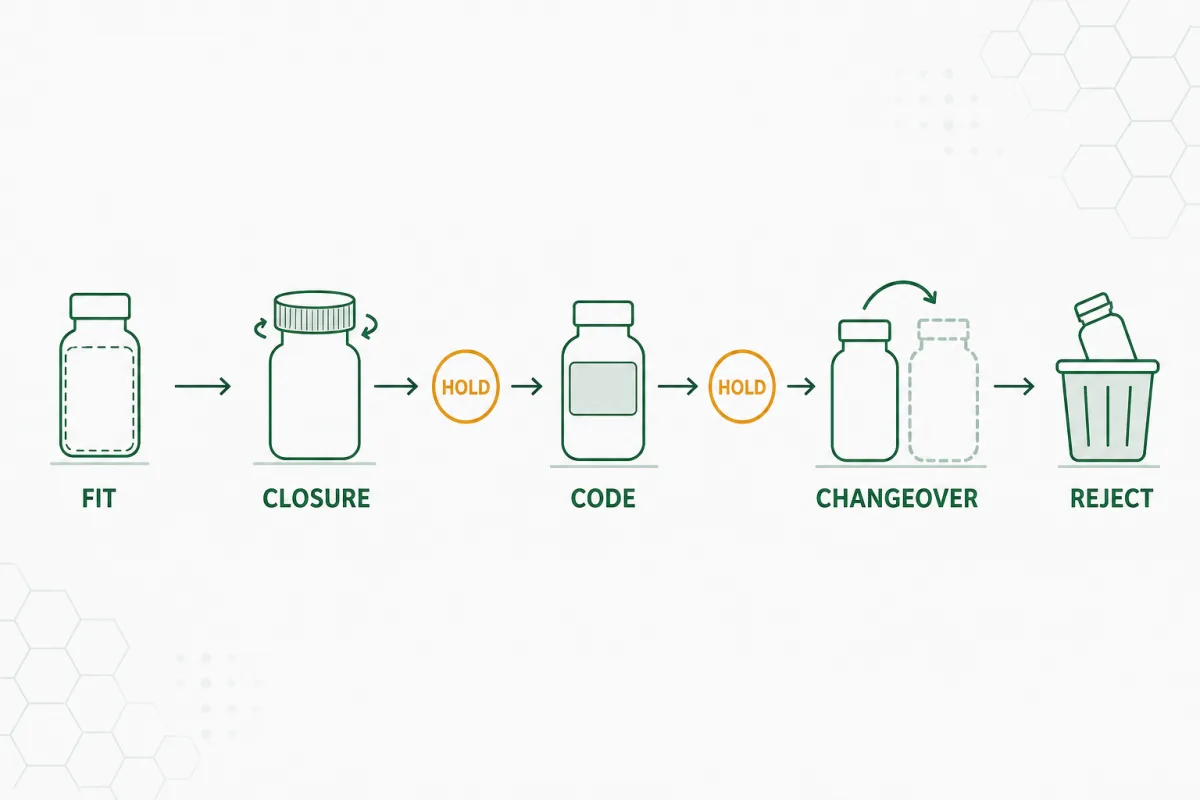
The goal is not to sell equipment or prescribe machine settings. It is to ask what the planned process must control, what evidence will show that control, and which result would hold the commercial run.
Format-Specific Material and Formula Compatibility
Different formats create different packaging pressures. Gummies may add surface tack, piece variation, deformation, moisture movement, and counting questions. Powders may raise flow and barrier questions; capsules and tablets may raise count and breakage questions; liquids may raise seal and leakage questions.
Review the representative formula condition, packaging material, closure or seal, expected distribution environment, and any stability or compatibility evidence as one project. Treat a component datasheet or prior use with another formula as an input, not as product-specific proof of shelf life or compatibility.
Tamper Evidence, Closure, and Code Verification
Define the tamper-evident and closure approach that the product, package, market review, and packing route call for. Then identify the acceptance checks for the complete assembly: container finish, cap, liner or seal when used, application result, and code presence, content, location, contrast, and readability.
The control plan should state what happens when a closure, seal, or code does not meet the agreed criteria. Inline and offline checks can both be relevant; the decision belongs in the project plan, not in a universal checklist rule.
Automation, Changeovers, and Reject Control
Automation matters to me as a risk-control question. Can the proposed process show how counting or filling, capping, sealing, label application or inspection, coding, and rejection work as a connected sequence for this package?
FDA's CGMP guide calls for packaging and label operations to be separated from other components and dietary supplements to prevent mix-ups.[^1] The operational question is how the project's line clearance and changeovers prevent a component, label, or code from one SKU entering another run. The reject path should identify nonconforming units and control any return to acceptable output. A representative packing proof should focus on the agreed risks, such as container flow, label position, closure or seal result, code readability, and handling damage.
Partner and Release Review
A closed checklist still needs both parties to share the same evidence and release authority.
The partner and release review connects samples, MOQ and lead-time assumptions, component availability, signed approvals, traceability expectations, and release responsibility to the controlled packet.
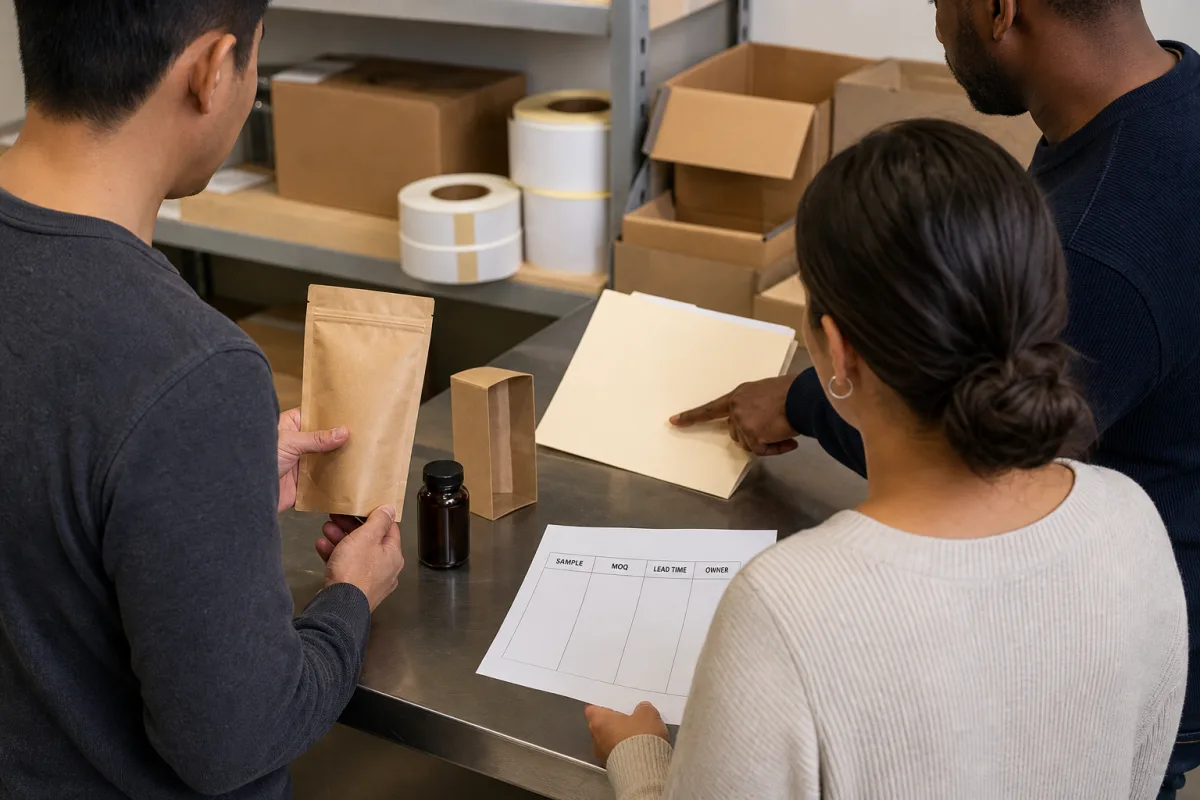
This is the procurement half of the checklist. The buyer should know what has been proved, what remains an assumption, what creates a commercial commitment, and who can stop or release the next step.
Samples, MOQ, and Lead Time
I define the question each sample is meant to answer. A hand-filled presentation sample may help with appearance, label area, closure feel, or code placement, but it may not prove commercial counting, capping, sealing, label application, or coding. Record both what the sample showed and what it did not show.
Use a representative line proof when the selected package or project risk requires line evidence. Then separate the commercial drivers:
- finished-product MOQ by SKU or label version;
- packaging-component minimums and decoration commitments;
- revision and proof cycles;
- testing or documentation expectations;
- component and material availability; and
- printed-component lead time versus the production schedule.
A finished-product minimum does not explain every packaging commitment. Ask which minimum applies to the bottle, cap, pouch, label, carton, print version, flavor, or SKU before approving the launch mix.
Sign-off Packet, Traceability, and Release
The final packet should identify the current product brief, formula/specification revision, approved label copy, controlled artwork, component records, code logic, sample or line-proof evidence, expected production and quality records, open deviations, and release authority.
Traceability and release detail belongs in the project's quality plan. Use the separate overview of supplement quality assurance to frame document and release questions, and evaluate a partner's status and evidence through the GMP-certified supplement manufacturer guide rather than relying on a website logo.
FDA's CGMP guide requires the ability to determine the complete manufacturing history and control of a packaged and labeled dietary supplement through distribution and includes packaging and label identifiers in the batch production record.[^1] The practical test is whether the team can identify the affected product version and lot without reconstructing decisions from emails. Commercial urgency should not turn a missing record, wrong revision, or unresolved deviation into an informal release.
FAQ
What Must Appear on a Supplement Label?
For a U.S.-market dietary supplement, FDA's Chapter I guide identifies five core label statements: the statement of identity, net quantity of contents, nutrition labeling, ingredient list, and the name and place of business of the manufacturer, packer, or distributor.[^2] Directions, warnings, claims, disclaimers, and other statements depend on the product and positioning. A qualified reviewer should confirm the current, product-specific requirements and presentation before printing.
Is a Label Generator Enough for Production?
No. A label generator may help organize a panel or draft copy, but it does not reconcile the formula version, serving count, package dimensions, dieline, barcode, code area, claims review, physical components, or production controls. Treat its output as a review input, not a release document.
Does a Supplement Need Expiry or Lot Information?
FDA's Chapter I guide says expiration dating is not universally required on a dietary supplement label, but a date used should be supported by valid data.[^2] FDA's CGMP guide also allows mechanisms other than a batch, lot, or control number printed on the packaged product to determine manufacturing history through distribution.[^1] Review lot identification, expiration, best-by, manufacturing-date, and related coding decisions against the market, product, company policy, supporting data, and production records. Define the project's code logic and verify it on the final package rather than assuming one field or format is universal.
Conclusion
One controlled packet is the core of this supplement packaging checklist. Formula, label, components, artwork, codes, physical evidence, traceability expectations, and release authority should agree before printing or commercial packing begins.
Before committing artwork or packaging components, a brand should decide how much development the launch really needs. As a gummy supplement OEM/ODM partner, Talvenda can outline three routes—low-MOQ market-tested in-stock gummies, stock formula modification, and custom gummy development—so your team can choose based on packaging scope and launch timing. We can align packaging and label support with documentation and testing expectations, then map scale-up support without taking over the brand’s regulatory or release decisions. Share your target market, packaging format, and launch timeline for a project brief review.
[^1]: U.S. Food and Drug Administration, Small Entity Compliance Guide: Current Good Manufacturing Practice in Manufacturing, Packaging, Labeling, or Holding Operations for Dietary Supplements, https://www.fda.gov/regulatory-information/search-fda-guidance-documents/small-entity-compliance-guide-current-good-manufacturing-practice-manufacturing-packaging-labeling. [^2]: U.S. Food and Drug Administration, Dietary Supplement Labeling Guide: Chapter I. General Dietary Supplement Labeling, https://www.fda.gov/food/dietary-supplements-guidance-documents-regulatory-information/dietary-supplement-labeling-guide-chapter-i-general-dietary-supplement-labeling. [^3]: Federal Trade Commission, Health Products Compliance Guidance, https://www.ftc.gov/business-guidance/resources/health-products-compliance-guidance.