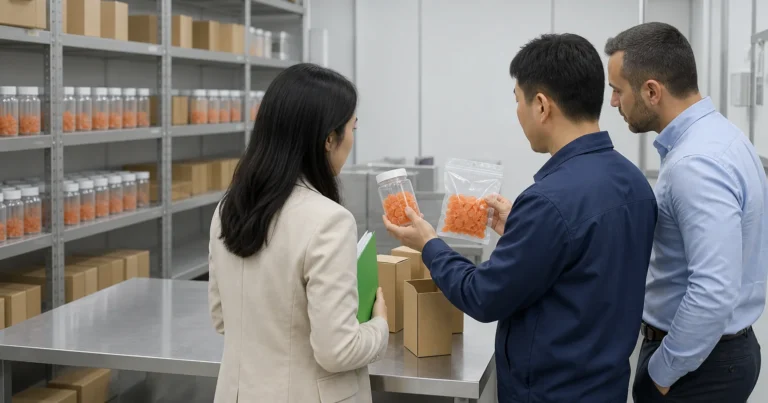


Women often search for ashwagandha gummies benefits for female wellness when they want to understand stress-support, sleep-routine, mood-balance, and daily-wellness positioning. The gummy still has to prove the promise.
Ashwagandha gummies may support everyday stress response, calm, relaxation, sleep routines, mood balance, and daily wellness for women when they use a suitable standardized extract and feasible serving size. They should not be treated as medical products or hormone, fertility, PMS, menopause, anxiety, or insomnia solutions.

I would look at this topic in two layers. First, women need a clear answer about the usual wellness positioning and where the safety boundaries are. Then brand teams need the manufacturing answer: can this gummy carry a meaningful extract, taste acceptable, remain stable, and support compliant structure/function language? Those two answers have to match.
What Are Ashwagandha Gummies?
Ashwagandha gummies look simple from the outside, but a botanical gummy is more than an ingredient added to a sweet base.
Ashwagandha gummies are chewable dietary supplements that combine ashwagandha extract with a gummy base, sweeteners, flavor systems, acids, and other ingredients. In women's wellness, they are usually positioned around stress, relaxation, sleep routines, mood support, and daily balance.
A short adaptogen background
Ashwagandha, also called Withania somnifera, is commonly discussed as an adaptogen. In supplement language, adaptogens are botanicals used to support the body's response to stress.[^1] That does not mean every claim around ashwagandha is equally strong, and it does not mean every format can support the same expectation.
The key active-marker conversation usually centers on withanolides.[^2] A standardized extract declares a target withanolide level, which gives the brand and production team a way to control batch consistency. Without that standardization, the product may still contain ashwagandha, but it becomes harder to connect the finished gummy to a supportable benefit claim.
For brands, this is where a consumer wellness idea becomes a production decision. The extract type, plant part, active marker, incoming COA, and target serving size all affect the final product. Strong education can describe ashwagandha in friendly language, but a strong product needs a specification behind that language.
Why women’s wellness brands use ashwagandha
Ashwagandha fits women's wellness positioning because it sits near several high-interest topics: stress support, relaxation routines, sleep habits, mood balance, daily resilience, and lifestyle balance. These are consumer interest areas, not automatic product claims, and they are easy to understand in a gummy format.
That broad appeal also creates the biggest risk. A brand may start with stress support, then add sleep, hormones, PMS, menopause, fertility, sexual wellness, focus, and energy until the product tries to promise everything. At that point, the formula, evidence, and label language often cannot keep up.
The more durable strategy is narrower. Start with stress, calm, and sleep routine support, because those are the most natural positions for ashwagandha gummies. Mood and daily wellness can be secondary context. Hormone, fertility, menopause, PMS, and sexual wellness language need much more caution.
Why gummies change the formulation question
Capsules and tablets mostly ask whether the active ingredient fits and whether the label claim is supportable. Gummies ask more questions. Can the extract taste acceptable? Can the active load fit into the serving? Will the pH, water activity, heat exposure, sweetener system, and packaging protect texture and potency?
Ashwagandha has a bitter, earthy botanical profile. In a capsule, taste is mostly hidden. In a gummy, the consumer chews the product, so taste masking becomes part of the product's credibility. A formula that works with a low botanical load may not work when the brand raises the extract dose to match the claim.
This is why "ashwagandha gummies benefits for female" is not only a benefits topic. It is also a product-development topic. The consumer-facing promise and the manufacturing proof chain have to support each other.
Ashwagandha Gummies Benefits for Female Wellness and Women’s Daily Support
The benefits of ashwagandha gummies sound attractive, but the strongest product does not chase every possible claim.
The main ashwagandha gummies benefits for women are usually framed as structure/function support around everyday stress response, calm, relaxation routines, sleep-routine support, mood balance, and daily wellness. Claims around hormones, PMS, menopause, fertility, sexual wellness, anxiety, insomnia, or medical conditions should not be used unless separately substantiated and reviewed.
In plain language, what do ashwagandha gummies do? They put ashwagandha extract into a chewable supplement format that can fit a daily calm or evening relaxation routine. What are ashwagandha gummies good for? The more supportable answer is general stress-response and relaxation-routine positioning, with sleep-routine and daily-balance language used carefully. What do ashwagandha gummies help with? A brand should answer with conservative structure/function wording only when the finished product uses a credible extract, realistic serving size, clear safety language, and claim wording that stays within dietary supplement boundaries.

Stress and calm support
Stress-support positioning is the most natural starting point for an ashwagandha gummy. Women may be comparing products that fit a busy daily routine and support everyday calm-language claims. A gummy can make that routine easier because it is chewable, familiar, and does not require water.[^3]
For a brand, the stress claim should still be tied to the actual extract and serving size. It is not enough to place the word "ashwagandha" on the front label. The product team should know the extract specification, withanolide target, dose per serving, and the claim language that the formula is meant to support.
I would avoid casual language like "for anxiety" or "fixes cortisol problems." A safer and more credible route is "supports the body's stress response" or "supports calm during everyday stress." That wording answers the reader's question without turning a dietary supplement into a medical promise.
Sleep and relaxation support
Sleep-routine positioning is closely connected to stress support. Many women interested in ashwagandha are not looking for a sedative-style product. They are comparing products that fit an evening routine, relaxation positioning, and careful sleep-support language.[^4]
This is a good fit for gummy positioning, but it needs careful wording. A product can support relaxation and a healthy sleep routine. It should not imply insomnia support or promise better sleep for every user. The difference may look small in copy, but it matters in compliance review and consumer trust.
The formula should also match the use case. A nighttime gummy may need a different sweetness strategy, flavor profile, packaging message, and serving experience than a daytime calm gummy. If the brand wants to combine ashwagandha with other actives, compatibility and claim stacking should be reviewed before production.
Mood, focus, and daily wellness positioning
Mood, focus, and daily wellness can be useful secondary themes. Consumers may describe the desired product experience as feeling more balanced, less reactive, or steadier during busy weeks. Those are consumer-friendly ideas, but brand copy should keep them in the wellness lane.
Ashwagandha gummies should not be positioned as support for mood disorders, cognitive impairment, or medical conditions. A brand can discuss daily wellness support, but the hierarchy should stay clear: stress and calm first, sleep routine second, mood and focus as supporting context.
This hierarchy also helps product development. A gummy that tries to carry too many claims may require too many ingredients, too much active load, and too much explanation. A focused formula is easier to test, easier to label, and easier for consumers to understand.
What current evidence can and cannot support
Ingredient evidence is not the same as finished-gummy evidence. Most research looks at specific ashwagandha preparations, doses, and populations. A gummy brand has to translate that evidence into its own extract, serving size, quality documents, and label language.
| Topic | Safer content framing | What to avoid |
|---|---|---|
| Stress and calm | Supports everyday stress response and relaxation | Treats anxiety or stress disorders |
| Sleep routine | Supports relaxation and healthy sleep habits | Implies insomnia support or promises sleep |
| Mood and focus | Supports daily balance during stressful periods | Treats mood disorders or mental health conditions |
| Hormones and PMS | Discuss consumer interest with caution | Balances hormones or relieves PMS |
| Menopause | Keep to wellness boundaries unless separately substantiated | Treats hot flashes or menopause symptoms |
| Fertility | Generally avoid as a product claim | Improves fertility or reproductive outcomes |
Dietary supplement claims should also stay out of disease-risk territory and should be supported before they appear in labels, product pages, or advertising.[^5]
For buyers, the practical point is simple: start with claims the product can actually support. If the formula cannot deliver a meaningful extract dose, the copy should not be stronger than the product.
Women’s Hormone, PMS, Menopause, and Sexual Wellness Claims
Women may search for ashwagandha in connection with hormones, PMS, menopause, fertility, or sexual wellness. Useful education can acknowledge that interest without turning it into unsupported medical-adjacent language.
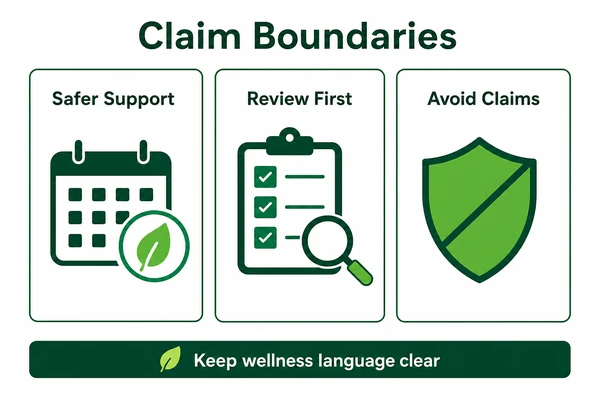
Hormone, PMS, menopause, fertility, and sexual wellness claims require caution. Brands should avoid medical-style promises and frame ashwagandha gummies around general stress, relaxation, sleep routine, and daily wellness support unless they have specific legal and scientific substantiation.[^6]
Why these claims need caution
Women's health language can attract clicks, but it can also create the fastest claim risk in this topic. Terms like hormone balance, PMS relief, menopause relief, libido support, and fertility support move close to medical or reproductive health territory.
That does not mean these questions should be ignored. It means the answer should be careful. Readers should understand that these claim areas are not the same as general stress-support or sleep-routine language. Brand teams also need to know that copying aggressive competitor language can create label, ad, retailer, and trust problems.
My practical rule is to review claims before production, not after. If a claim fails review after the first batch is made, the brand may have inventory, packaging, and product pages that need correction. That is an expensive way to learn a preventable lesson.
Menopause and sexual wellness evidence boundaries
Menopause and sexual wellness can appear in consumer interest around ashwagandha, but they should not become the main promise of a normal gummy product without stronger substantiation. A calm-and-rest routine gummy is easier to support than a gummy that claims hormone balance, menopause relief, libido improvement, and fertility benefits in the same concept.
The better structure is to name the consumer interest, explain the evidence boundary, and bring the discussion back to product design. If the brand wants to speak to women in midlife, the product can still focus on stress, relaxation, sleep routines, and daily wellness. That is different from implying support for specific menopause symptoms.
This distinction also affects retail and advertising review. Sensitive health claims invite more scrutiny. Clear wellness support language gives the product a more stable commercial path.
Why fertility claims should not be overpromised
Fertility is especially sensitive. Educational content should not tell women to use ashwagandha gummies to improve fertility, and a brand should not make fertility a core product claim without separate expert review and substantiation.
Women trying to conceive may also be taking medications, working with clinicians, or managing underlying conditions. Supplement content should not replace individual medical advice or imply that a gummy can solve a reproductive health concern.
For product strategy, fertility is usually not worth the risk for an ashwagandha gummy. The same ingredient and formula can be positioned more safely around stress, calm, sleep routine, and daily wellness.
How brands can frame support without medical-style claims
The safest brand language stays focused on support, not medical-style promises. This is not just legal caution. It also makes the product more credible.
| Avoid | Use instead |
|---|---|
| Balances female hormones | Supports a calm daily wellness routine |
| Relieves PMS symptoms | Supports wellness during busy or stressful days |
| Treats menopause symptoms | Supports relaxation and daily balance |
| Boosts fertility | Avoid fertility claims unless separately substantiated |
| Increases libido | Supports daily vitality and wellness |
| Treats anxiety or insomnia | Supports stress response and relaxation routines |
The label, website, ads, and education content should all point in the same direction. If the educational content is careful but the product page overpromises, the brand still has a trust problem.
Why Choose Ashwagandha Gummies for Female Wellness Products?
Gummies can make a supplement easier to use, but convenience cannot replace formulation proof.
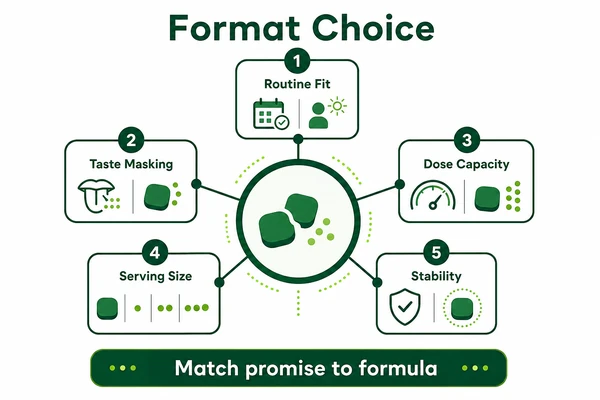
Women may choose ashwagandha gummies because they are easy to take, taste better than some capsules, and fit daily routines. Brands should still check dose, sugar or sweetener strategy, taste masking, stability, and claim support before choosing the gummy format.
Convenience and routine adherence
Gummies work well when the product depends on daily use. A consumer may be more likely to take a pleasant gummy than a capsule with an earthy smell or a large tablet. For women-focused stress and sleep products, that routine fit matters.
From a manufacturing side, I like this argument only when it is honest. Convenience is a real benefit, and routine adherence can support the product experience. But the product still has to deliver a meaningful formula. A convenient gummy with weak active loading or unclear extract information becomes a marketing product instead of a credible supplement.
This is also where brands should think about the target user. A daytime calm gummy may need a different taste and serving experience than a nighttime relaxation gummy. A women's wellness product may also need cleaner sugar positioning, softer flavor notes, and packaging that supports daily routine use.
Taste masking for a bitter botanical
Ashwagandha has a bitter, earthy, root-like flavor. A capsule can hide that. A gummy cannot hide it as easily because the consumer chews the product. This makes taste masking a serious formulation task.
Flavor selection, sweetness level, acid balance, coating, and sometimes encapsulation approaches can all affect the result. The flavor must be tested with the actual extract and dose, not only with a blank gummy base.
Late taste changes are expensive. If the brand approves a flavor at a low extract load, then raises the active amount later, the aftertaste, texture, drying behavior, and serving size may all change. The better route is to test the real formula early.
Gummies vs capsules and tablets
Gummies, capsules, and tablets each solve different problems. None is automatically best for ashwagandha.
| Format | Main advantage | Main tradeoff | Best fit |
|---|---|---|---|
| Gummies | Better taste and routine adherence | More complex formulation, lower dose density | Lifestyle wellness, daily calm, retail-friendly products |
| Capsules | Higher dose capacity and simpler production | Less enjoyable user experience | Higher-dose botanical products or cleaner active delivery |
| Tablets | Cost-efficient and compact | Swallowing experience and compression constraints | Mature formulas where dose and cost are priorities |
For ashwagandha, the choice depends on the target promise and dose. If the brand wants a premium women’s wellness gummy built around stress and calm, gummies can be a strong fit. If the target formula needs a high botanical load or many added actives, capsules may be more practical.
When gummies may not be the best format
Gummies may not be the best route when the active dose is too high, the taste masking becomes too heavy, the sugar or sweetener system conflicts with the brand promise, or the launch timeline cannot handle a longer formulation cycle.
They may also be weaker when the product needs a very clean ingredient deck or a large multi-ingredient botanical formula. More ingredients mean more mass, more flavor complexity, and more stability questions.
This is not an anti-gummy point. It is a production planning point. A strong gummy program starts with honest format selection. Claim first, dose second, format third, production planning fourth.
What Makes Ashwagandha Gummies Benefits for Female Wellness Credible?
The label may say ashwagandha, but credibility comes from the proof behind the finished gummy.
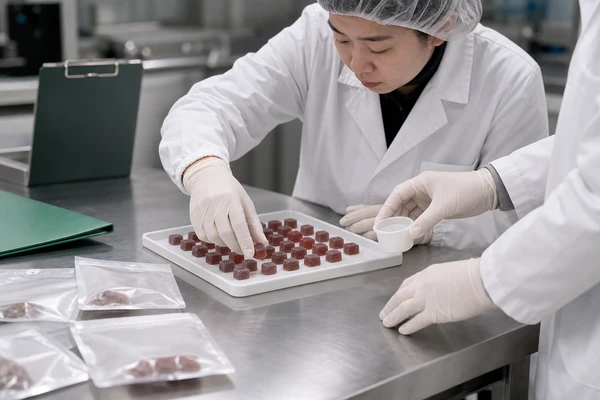
A credible ashwagandha gummy connects standardized extract, withanolide documentation, feasible dose, sourcing, traceability, stability, and finished-batch testing. Without that proof chain, the women’s wellness claim becomes hard to trust.
Standardized extract and withanolides
A general botanical name is not enough. Brands should know the extract type, plant part, standardization target, and active-marker logic. Withanolides are often part of that conversation.
This does not mean every consumer guide needs to become a chemistry lesson. It means the reader should learn to look beyond the front label. A gummy that only says "ashwagandha" may not tell the full story.
For brands, the ingredient specification, supplier documentation, and finished-product target should line up. If the brand cannot explain its extract clearly, it should not build a strong claim around it.
Dose feasibility in a gummy serving
Dose feasibility is one of the most practical questions in ashwagandha gummies. A gummy has limited room. The formula also needs sweeteners, acids, flavors, gelling agents, water-control logic, and sometimes other actives.
If the target extract dose is too high for a pleasant serving, the brand has only a few choices. It can increase the number of gummies per serving, lower the active amount and adjust the claim, choose a more concentrated extract, or move to another format.
I would rather solve that question before the sample round. Late dose changes can affect taste, texture, drying, packaging, cost, label copy, and claim support. A simple feasibility calculation at concept stage can save multiple reformulation rounds later.
Ingredient sourcing and traceability
Women’s wellness products need trust. That trust is not built only by soft packaging or clean design. It is built through ingredient sourcing, traceability, documentation, and consistent production records.
For ashwagandha, the brand should know where the extract comes from, what documentation supports it, and how consistency will be checked between batches. Botanical ingredients can vary in taste, color, odor, active level, and contaminant risk. Those changes matter in a gummy because the ingredient is part of both the active system and the sensory system.
Traceability also helps the production team. If a raw material changes, the gummy may change. Strong documentation helps the team manage those changes before they reach the market.
Finished-batch testing and stability
A raw material COA confirms what went into the formula. A finished-batch COA helps confirm what is in the gummy that will be sold. They are not the same document.
Finished-batch testing for an ashwagandha gummy should usually consider potency, microbiological limits, heavy metals, moisture or water activity, weight consistency, and stability. Stability is especially important because gummies are sensitive to heat, humidity, packaging, and storage conditions.[^7]
For related equipment-side context, GummyGeniX has a guide on gummy manufacturing process factors that can help teams translate temperature, pH, water activity, humidity, and packaging into line-planning questions.
For this topic, I would keep the proof chain simple: extract identity, active marker, feasible dose, finished-batch testing, stability logic, packaging review, and claim review. If those pieces are missing, the benefit claim is not ready for scale-up.
Safety, Side Effects, and Precautions for Women
Safety language can feel like a slowdown, but it is one of the strongest trust signals in women’s wellness content.
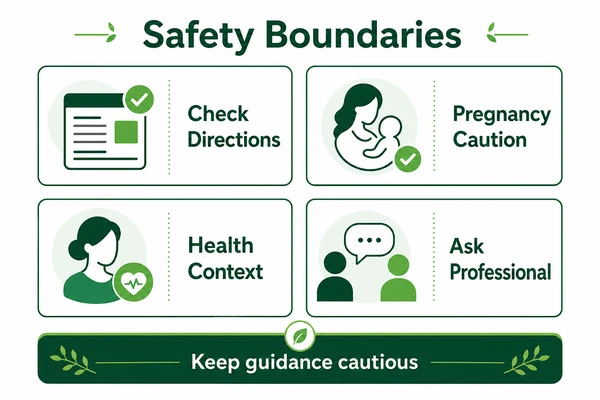
Women should view ashwagandha gummies as dietary supplements, not medical products. Side effects, pregnancy and breastfeeding cautions, thyroid concerns, medication interactions, autoimmune conditions, and individual health context should be considered before use.
Common side effects
Ashwagandha may not be right for everyone. Some people report digestive discomfort, drowsiness, headache, or other unwanted effects. Sensitivity can vary by preparation, dose, user health status, and other supplements or medications.[^8]
The safety message should avoid dramatic language. It should also avoid making ashwagandha sound harmless for everyone. The better tone is practical: ashwagandha is commonly used in supplements, but women should check the label, follow product directions, and consider their personal health context.
For brands, safety wording should be planned early. It should appear in label review, product pages, customer support scripts, and blog content. A blog that sounds careful while the product page sounds aggressive creates a mismatch.
Pregnancy and breastfeeding cautions
Pregnancy and breastfeeding require clear caution. Ashwagandha is not recommended during pregnancy, and breastfeeding safety data is not sufficient for a casual recommendation.[^9]
Women who are pregnant, breastfeeding, trying to conceive, or managing a reproductive health concern should not rely on general wellness content for personal use guidance. They should speak with a qualified healthcare professional.
This boundary matters because women’s health content often attracts sensitive searches. A brand may want to answer those searches, but it should not turn educational content into personal medical advice. A clear boundary protects the reader and protects brand trust.
Thyroid, blood pressure, medication, and autoimmune considerations
Ashwagandha may raise questions around thyroid function, blood pressure, immune conditions, liver concerns, sedatives, and other medications. The exact risk depends on the person, the product, and the use context.[^10]
General wellness content should not try to diagnose or personalize advice. Women with thyroid conditions, blood pressure concerns, autoimmune conditions, liver concerns, medication use, or specific health questions should consult a qualified professional before using ashwagandha.
For a brand team, this is also a copy review issue. Strong benefit language may attract attention, but weak safety language can damage trust. I prefer product pages that clearly state the intended audience and the users who should seek advice first.
When to talk with a healthcare professional
Women should talk with a healthcare professional when they are pregnant, breastfeeding, trying to conceive, taking medication, managing thyroid issues, managing autoimmune conditions, managing blood pressure, or considering ashwagandha for a specific health problem.
This does not make the guidance less useful. It makes it more trustworthy. Supplement education should help the reader understand the product category. It should not pretend to replace individual care.
In manufacturing and commercialization, the same principle applies. A product should be designed for a clear wellness use case. It should not rely on vague or sensitive claims to create demand.
How Brands Should Develop Women-Focused Ashwagandha Gummies
The best women’s wellness gummy starts with a narrow promise, not with a long list of benefits.
Brands should develop women-focused ashwagandha gummies by choosing one supportable wellness promise, matching the extract and dose to that promise, reviewing label claims, and building the proof chain before production.

Choose the wellness promise before the format
Before deciding on a gummy, the brand should decide what the product is really meant to support. Is it a calm routine? A nighttime relaxation product? A broader women’s daily wellness gummy? A multi-ingredient adaptogen blend?
This choice affects everything. It affects the extract, serving size, flavor, sweetness, packaging, warning language, label copy, and marketing copy. It also affects the kind of evidence and documentation the brand should collect before making claims.
I would not start with "we need an ashwagandha gummy for women." I would start with "what supportable promise are we making, and what product form can carry it without compromise?" That question usually saves time.
Match extract, dose, flavor, and serving size
The formula should be built as one system. Extract choice, dose, flavor, sweetness, gummy base, acid balance, serving size, and packaging all affect one another. If one piece changes, the rest may need adjustment.
Ashwagandha's taste makes this more important. A higher active load may need stronger flavor work. Stronger flavor work may affect sugar or acid balance. A larger serving may affect consumer experience. A different gelling system may affect texture and stability.
For a women’s product, the experience should feel gentle and routine-friendly, but the formula still needs enough structure behind it. A pleasant gummy with unclear extract logic is not enough.
Review label claims before production
Label claim review should happen before the formula is locked. If the brand wants to say stress support, relaxation, sleep routine, women’s wellness, or daily balance, the product team should check whether the formula and evidence can support that wording.
This is especially true for hormone, fertility, menopause, sexual wellness, and medical-adjacent topics. Those phrases can be tempting because they match search demand. They can also create problems if they are not reviewed carefully.
The education content, label, website, ads, and sales material should all point in the same direction. If one channel says "claim boundaries matter" but the product page makes stronger promises, the brand loses consistency.
Build the proof chain before launch
A practical proof chain starts with the raw material and ends with the finished product.
| Document or checkpoint | What it confirms |
|---|---|
| Raw material specification | Extract type, plant part, active-marker target, and supplier requirements |
| Supplier COA | Incoming lot identity and key quality markers |
| Formula documentation | Exact composition and active amount per serving |
| Pilot sample review | Taste, texture, active load, and serving-size feasibility |
| Batch manufacturing record | The production run followed the approved process |
| Finished-batch COA | Potency, microbiology, heavy metals, and other finished-product specs |
| Stability plan | Texture, potency, packaging, and shelf-life logic are being checked |
| Claim rationale | Each label and marketing claim has a documented support basis |
For Talvenda, this is where the manufacturing side becomes useful. A brand may come in with a strong market idea, but the production plan has to turn that idea into a repeatable gummy. That means sample approval, texture targets, active compatibility, packaging review, documentation, and scale-up planning should be aligned before launch.
The final product should make the consumer promise easier to trust. If the brand cannot prove the formula, the benefit language should be softer. If the brand can prove the formula, the product story can explain the logic without drifting into medical claims.
For a deeper format discussion, brands can also compare how gummy delivery affects real-world use in Do Ashwagandha Gummies Work?. If the team is still choosing the dosage form, the broader gummies vs capsules for supplements comparison can help pressure-test active load, consumer routine, and claim fit. If the project is moving toward commercial production, the same formulation, texture, and stability questions belong in the early gummy vitamin manufacturing discussion, and supplier review should follow a practical gummy supplement manufacturer checklist.
FAQ
What are the benefits of ashwagandha gummies for women?
Ashwagandha gummies for women are usually positioned around everyday stress-response support, calm, relaxation routines, sleep-routine support, mood balance, and daily wellness. These are the safer structure/function areas to discuss when the product uses a suitable standardized extract and a feasible serving size. Claims around hormones, fertility, menopause, sexual wellness, anxiety, insomnia, or medical conditions need much more caution.
What do ashwagandha gummies do?
Ashwagandha gummies deliver ashwagandha extract in a chewable dietary supplement format. Depending on the extract, dose, serving size, and claim support, they may be positioned around everyday stress response, calm, relaxation routines, sleep-routine support, mood balance, and daily wellness. They should not be described as treating anxiety, insomnia, hormone problems, PMS, menopause symptoms, fertility concerns, or other medical conditions.
What are ashwagandha gummies good for?
Ashwagandha gummies are usually a better fit for a routine-friendly wellness concept than for a medical-use promise. For women-focused products, the clearest lane is stress-response and calm positioning, sometimes with relaxation, sleep-routine, mood-balance, or daily-wellness context. For brands, the product is only credible when the extract specification, dose feasibility, taste masking, safety wording, finished-batch testing, and claim review all support that positioning.
What do ashwagandha gummies help with for women?
Ashwagandha gummies may be positioned around general stress-response support, calm routines, relaxation, sleep-routine support, and daily balance. Individual results can vary, and women who are pregnant, breastfeeding, trying to conceive, taking medication, or managing health conditions should seek professional guidance before use. Brand teams should answer this question with cautious structure/function language, not disease or reproductive-health promises.
Can women take ashwagandha gummies?
Many healthy adult women can use ashwagandha gummies as dietary supplements, but individual health context matters. Women who are pregnant, breastfeeding, trying to conceive, taking medication, or managing thyroid, blood pressure, autoimmune, liver, or other health conditions should speak with a healthcare professional first.
Are ashwagandha gummies safe for women?
Ashwagandha gummies are not automatically right for every woman. Safety depends on the person, extract, dose, other ingredients, medication use, and health conditions. Brands should use clear warnings, avoid medical-style claims, and keep safety language consistent across the label, product page, ads, and blog.
Do ashwagandha gummies help with stress or sleep?
Ashwagandha is commonly used in stress and sleep support products. Gummies may fit daily routines well, but the finished product still needs a credible extract, feasible dose, stability plan, and careful claim wording. Safer product language says "supports stress response" or "supports relaxation routines," not "for anxiety" or "for insomnia."
Are gummies or capsules better for ashwagandha?
Gummies may be better for taste, routine adherence, and consumer experience. Capsules may be better for higher dose density, simpler excipients, and botanical load. The better format depends on the claim, dose, taste target, stability needs, and brand positioning.
Conclusion
Ashwagandha gummies benefits for female wellness are strongest when safety, dose, format, and proof align with a clear wellness promise.
For a women's wellness ashwagandha gummy, the launch risk is trying to make the first SKU carry too many benefit angles at once. Talvenda, as a private label gummy manufacturing partner, can help brands review low-MOQ market-tested in-stock gummies, stock formula modification, and custom gummy development before committing to a heavier formula path. That support turns positioning and active direction into a clearer sample path, with sample development, packaging and label support, documentation and testing expectations, and production through GMP-certified and FDA-registered manufacturing facilities aligned around a realistic route. Start with the project inquiry form.
[^1]: NIH Office of Dietary Supplements, "Ashwagandha: Is it helpful for stress, anxiety, or sleep?" Health Professional Fact Sheet. https://ods.od.nih.gov/factsheets/Ashwagandha-HealthProfessional/
[^2]: NIH Office of Dietary Supplements, "Ashwagandha: Is it helpful for stress, anxiety, or sleep?" The fact sheet summarizes Withania somnifera, extract types, and withanolide-related standardization context. https://ods.od.nih.gov/factsheets/Ashwagandha-HealthProfessional/
[^3]: NIH Office of Dietary Supplements, "Ashwagandha: Is it helpful for stress, anxiety, or sleep?" The evidence summary supports cautious stress, anxiety, and sleep wording rather than medical-style claims. https://ods.od.nih.gov/factsheets/Ashwagandha-HealthProfessional/
[^4]: Cheah KL, Norhayati MN, Husniati Yaacob L, Abdul Rahman R. "Effect of Ashwagandha (Withania somnifera) extract on sleep: A systematic review and meta-analysis." PLOS ONE. 2021. https://doi.org/10.1371/journal.pone.0257843
[^5]: U.S. Food and Drug Administration, "Structure/Function Claims." This supports the distinction between general support language and disease-risk claims. https://www.fda.gov/food/food-labeling-nutrition/structurefunction-claims
[^6]: Federal Trade Commission, "Health Products Compliance Guidance." This supports the need for competent and reliable substantiation before supplement advertising claims are used. https://www.ftc.gov/business-guidance/resources/health-products-compliance-guidance
[^7]: U.S. Food and Drug Administration, "Current Good Manufacturing Practice in Manufacturing, Packaging, Labeling, or Holding Operations for Dietary Supplements." This supports specification, quality-control, and finished-product proof-chain context. https://www.ecfr.gov/current/title-21/chapter-I/subchapter-B/part-111
[^8]: National Center for Complementary and Integrative Health, "Ashwagandha: Usefulness and Safety." This supports cautious side-effect and interaction language. https://www.nccih.nih.gov/health/ashwagandha
[^9]: NIH Office of Dietary Supplements, "Ashwagandha: Is it helpful for stress, anxiety, or sleep?" The safety section includes pregnancy and breastfeeding cautions. https://ods.od.nih.gov/factsheets/Ashwagandha-HealthProfessional/
[^10]: NIH LiverTox, "Ashwagandha." This supports caution around liver concerns in safety-sensitive copy. https://www.ncbi.nlm.nih.gov/books/NBK548536/