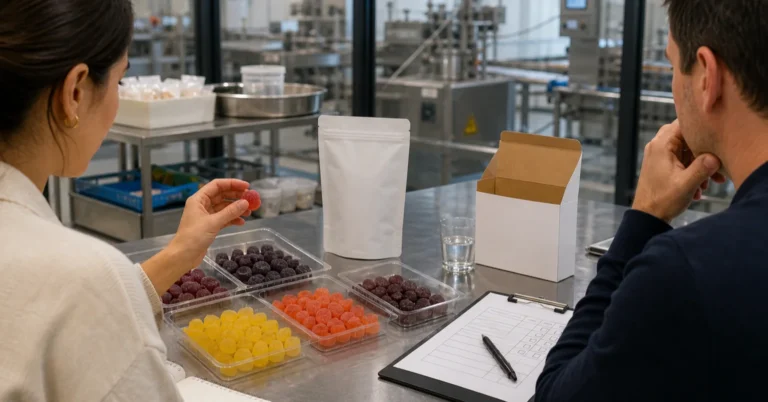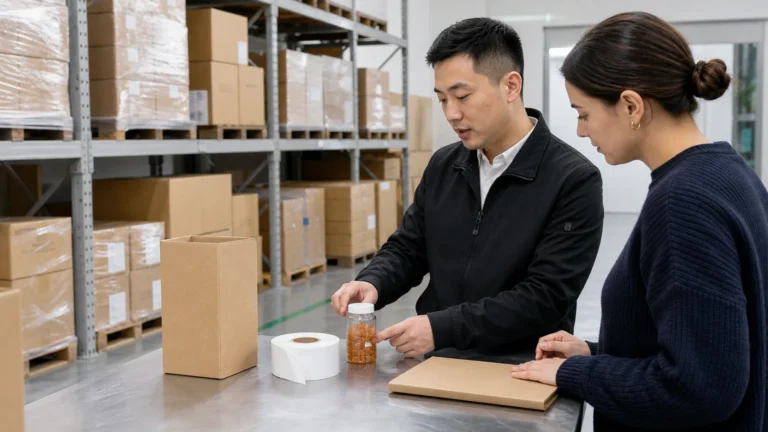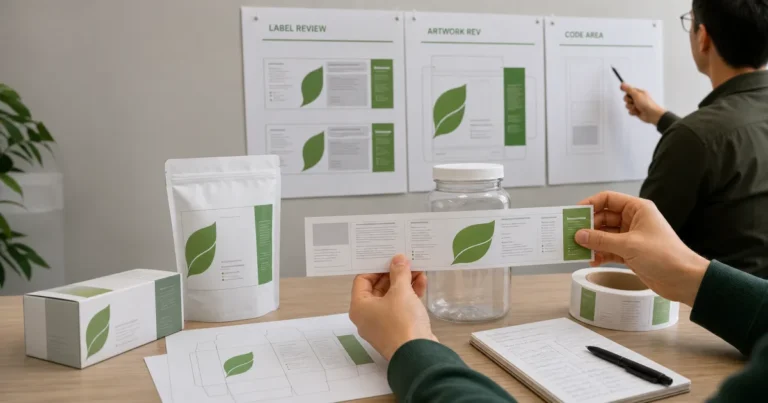


Starting your own supplement brand, vitamin company, or vitamin line looks easy from the outside. The hard part begins when the idea must become a stable, compliant, manufacturable product.
To start your own supplement or vitamin brand in 2026, define the market, product promise, formula route, budget, MOQ, label needs, packaging plan, and manufacturing partner before you request samples or quotes.
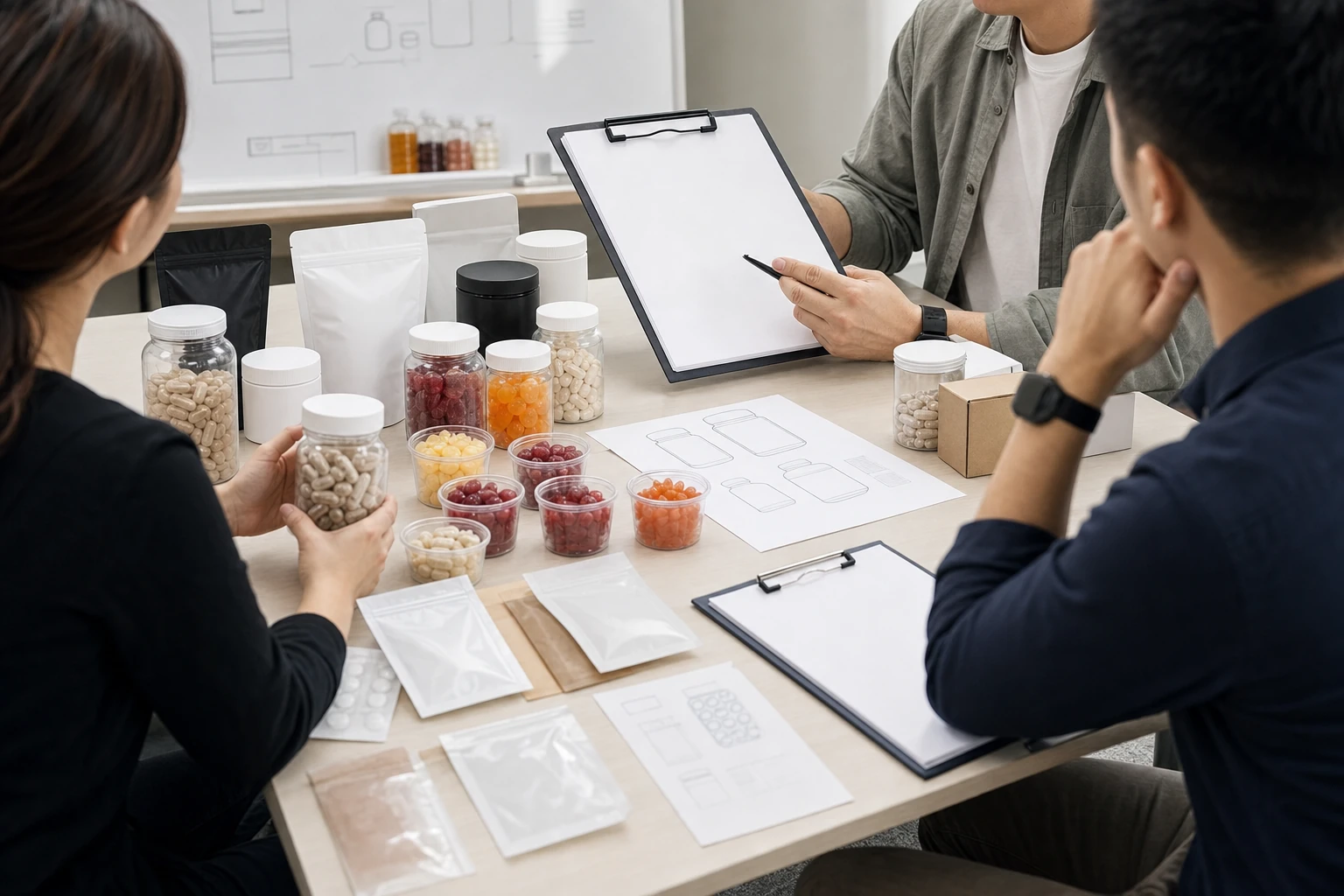
I usually tell new brands to slow down before they ask for a price. A manufacturer cannot quote a real product from a product name alone. The better first step is a clear product brief that connects the brand promise to formula feasibility, testing, packaging, order quantity, lead time, and launch market.
Key takeaways:
- A supplement or vitamin brand needs a product concept before it needs a finished label design.
- Private label, stock formula, semi-custom, and custom formulation create different MOQ, timing, and risk profiles.
- Gummy supplements need early feasibility review because active load, flavor, texture, drying, coating, and packaging all affect production.
- FDA-related planning should be handled as a compliance and labeling boundary, not as a simple approval question.
- Most new brands should validate demand and manufacturing fit before buying equipment or building their own production line.
How to Start a Supplement Brand in 2026: What Changed?
The supplement market still attracts new brands. But in 2026, buyers also expect clearer proof, cleaner labels, and more reliable execution.
The main change is trust. A new supplement brand must show a credible product promise, a realistic formula route, and a manufacturing plan that can support quality, labeling, and repeat supply.
Why the market is attractive but harder to enter
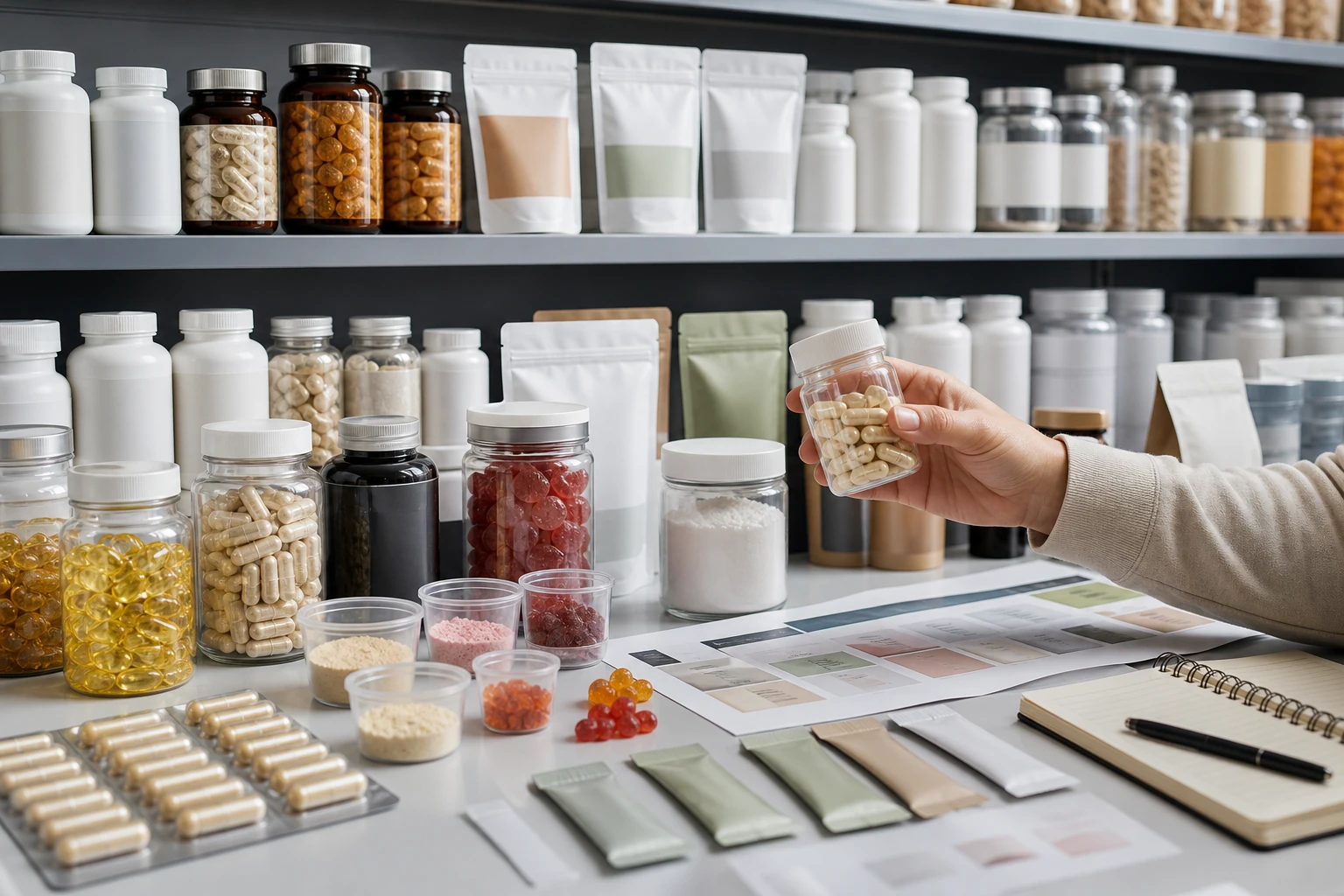
The opportunity is real because supplements fit daily routines. Consumers already understand capsules, powders, gummies, liquids, sticks, and pouches. Retailers and online channels also make niche launches possible.
The difficult part is that easy entry creates crowded shelves. A brand cannot rely only on a trendy ingredient or a nice package. The product needs a reason to exist. It may target sleep routines, beauty support, active nutrition, digestive wellness, immunity, kids, women, men, or senior users. But the niche has to connect to a clear serving format and a realistic product claim.
For a gummy supplement brand, I look at the product promise very early. If the promise needs a high active dose, a bitter botanical, a mineral with strong flavor, or a sensitive ingredient, the gummy format may need careful review. A product that sounds simple in a marketing plan can become difficult in a kettle, mold, drying room, or package.
This is where many new brands lose time. They start with a logo, a bottle count, or a competitor example. Then they discover later that the serving size is too small, the flavor is hard to mask, or the product needs more testing than expected.
Why trust, testing, and manufacturing readiness matter earlier now
Trust is no longer a late-stage issue. It begins when the product concept is written. A brand should know what it wants to claim, what ingredients support that claim, what the finished product can actually deliver, and what documents may be needed for the target channel.
For U.S.-facing products, dietary supplements are regulated differently from drugs. Brands should not frame this as a simple "FDA approval" step. The practical question is whether the product, label, claims, ingredients, manufacturing controls, and documentation can stand up to review. If a new dietary ingredient, structure/function claim, or special channel requirement is involved, the brand should get qualified compliance guidance.[^1][^2][^3]
Manufacturing readiness also matters because trust depends on repeatability. A sample can look good once. Commercial production has to repeat piece weight, active distribution, texture, drying, packaging, and documentation across batches. That is why I prefer to discuss quality, label, and testing before the first sample round, not after the brand has already approved a flavor.
Step 1: Define the Market, Niche, and Product Promise
A niche is useful only when it leads to a product people understand and a formula a manufacturer can make.
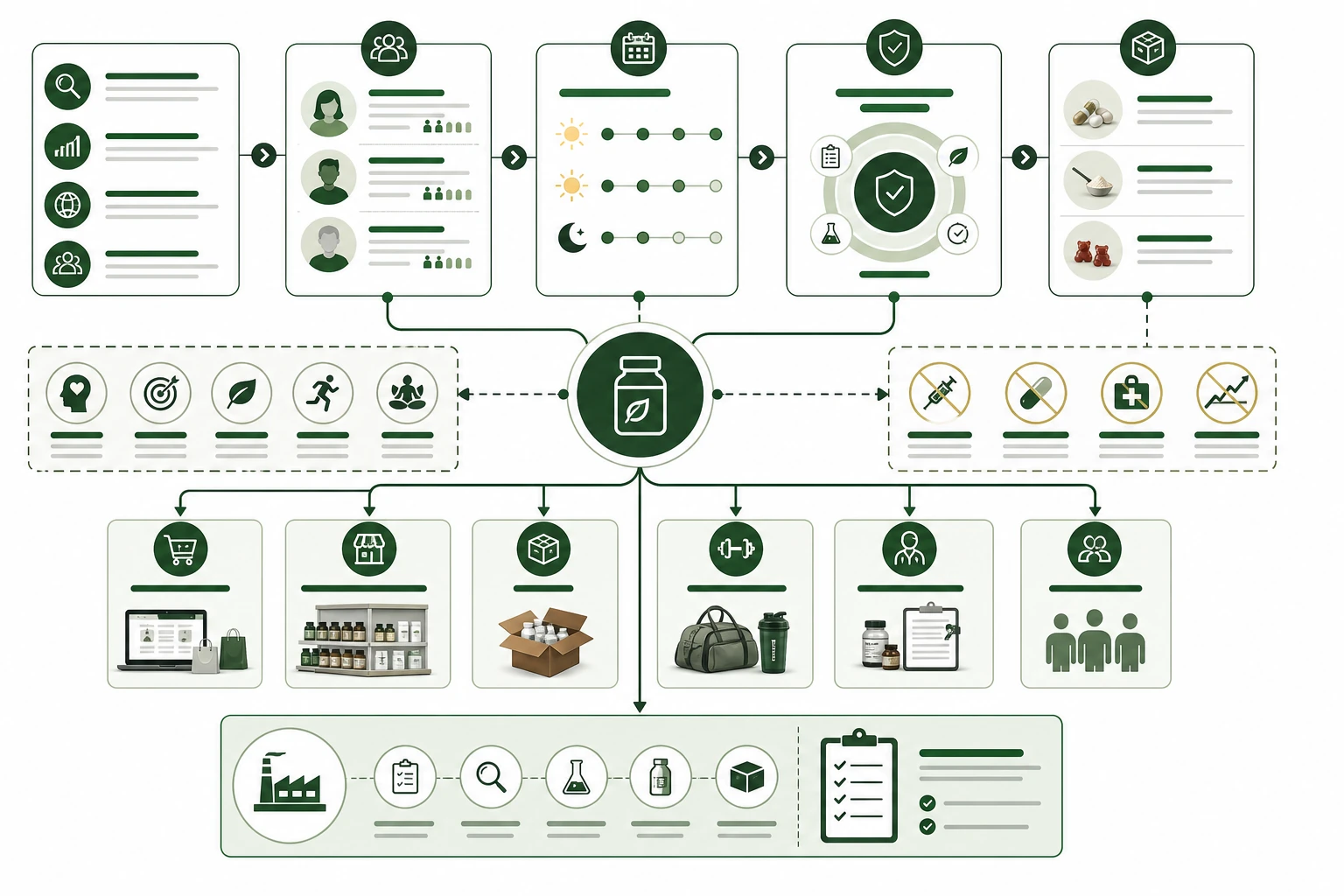
Start with the customer, routine, and product promise. Then check whether the supplement type and dosage format can support that promise in the real market.
Identify the target customer and routine
A supplement brand should not start with "everyone who wants wellness." That is too wide for product development, label language, packaging, and sales channels.
A better starting point is the routine. Is the product taken in the morning, before training, after meals, before sleep, during travel, or as a daily family supplement? The routine affects format, flavor, serving count, packaging size, and reorder pattern.
For example, a sports nutrition gummy may need a different serving logic than a beauty gummy. A kids gummy needs different flavor and packaging thinking than an adult sleep support gummy. A travel-friendly pouch needs different moisture and handling review than a standard bottle.
When I review a new brand idea, I want to know who will use the product, what problem the product is trying to fit into, and how the serving will feel in daily use. That does not mean making medical claims. It means understanding the product situation before formulation begins.
Evaluate competitors and your differentiator
Competitor research should not only ask, "What are they selling?" It should ask, "What promise are they making, and how hard is that promise to manufacture?"
Look at their format, serving size, active ingredients, flavor direction, bottle count, package type, and claim style. Then decide whether your brand will compete on formula focus, delivery format, taste, cleaner label, audience fit, packaging, price position, or launch speed.
The mistake is copying a competitor's front label without understanding the back end. A competitor may have a formula, supply chain, test plan, and packaging setup that are not visible from the product page. If you copy the label promise but cannot support the active load or documentation, the product becomes weak before launch.
Choose the supplement category and format
The format is not only a marketing choice. Capsules, powders, gummies, tablets, liquids, sachets, and soft chews all create different development rules.
Gummies are attractive because they are easy to understand, enjoyable, and retail-friendly. But they also have limits. A gummy has to carry the active ingredients, taste acceptable, hold texture, release from molds, dry properly, resist moisture, and fit the serving size.
If the product needs a very high dose, a strong-tasting active, or a heat-sensitive ingredient, the brand should check feasibility early. Sometimes capsules or powders are better. Sometimes a gummy can work if the brand adjusts serving size, ingredient form, flavor system, or positioning.
Step 2: Turn the Brand Idea Into a Product Concept
A brand idea is not enough for manufacturing. The production team needs a product concept that can become a brief.
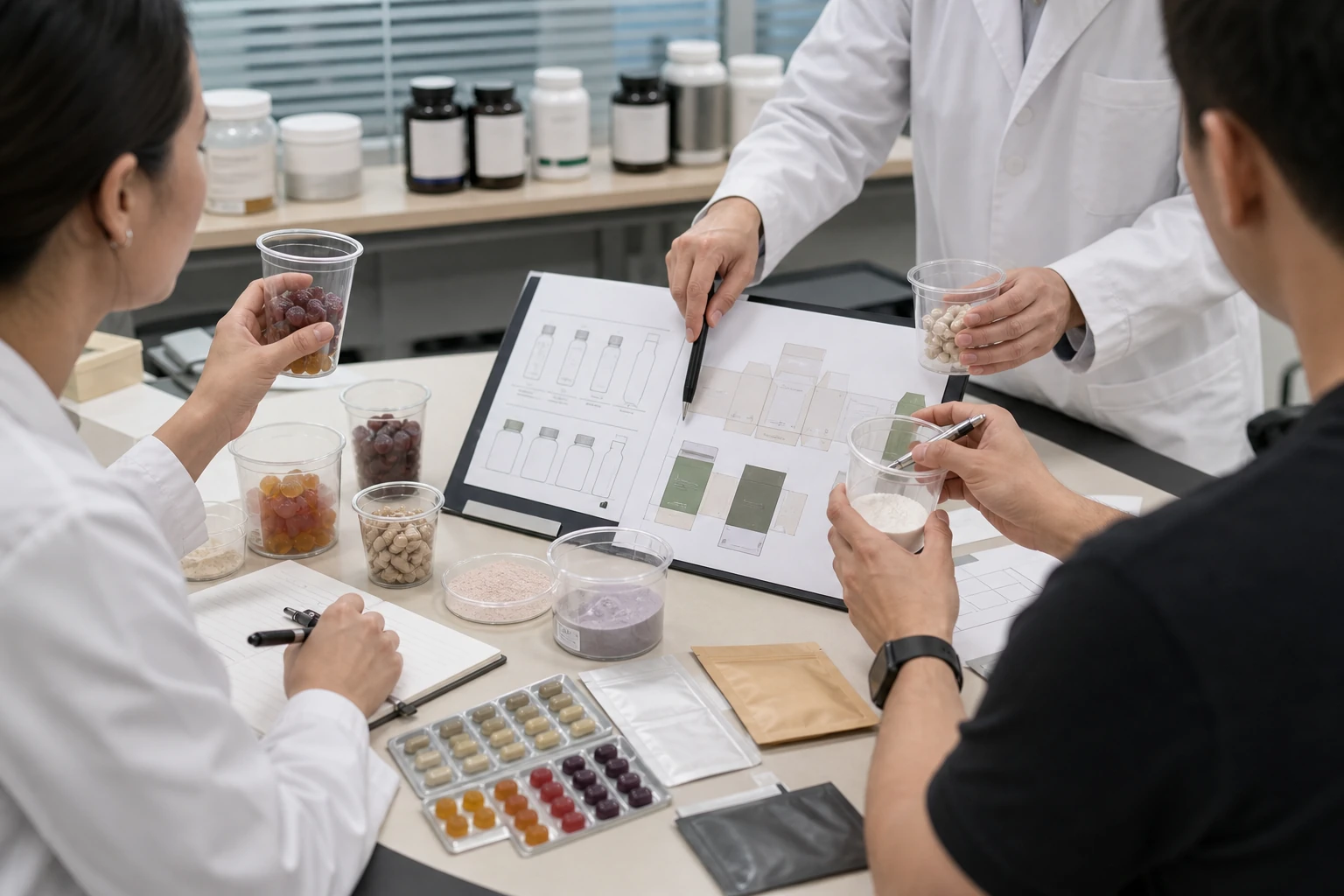
Turn the idea into a product concept by defining ingredients, serving size, gummy count, flavor, claim direction, formula route, packaging, launch market, and expected order quantity.
Define active ingredients, serving size, flavor, and claim direction
The product concept should answer basic questions before sample work starts:
| Product concept item | Why it matters in manufacturing |
|---|---|
| Active ingredients | Affects dose, taste, stability, compatibility, and claim support |
| Target dose per serving | Drives gummy size, serving count, and feasibility |
| Gummies per serving | Affects user experience, bottle count, and label design |
| Flavor direction | Helps mask actives and align with the audience |
| Sugar or sugar-free route | Changes texture, process behavior, cost, and taste |
| Packaging format | Affects moisture control, shelf presentation, and shipping |
| Launch market | Affects label review, claims, and compliance planning |
| MOQ target | Affects formula route, cost, and production planning |
I do not expect a new brand to know every technical answer. But I do expect the brand to know what it wants the product to do in the market. The manufacturer can then check what is feasible.
Build a quote-ready formula brief
If you want to start your own vitamin company or supplement line, the first manufacturer conversation should not be a loose idea. It should be a formula brief that a production team can review.
The brief does not need to be a finished formula. It should give enough direction for feasibility, MOQ, sample, testing, packaging, and lead-time review:
| Formula brief field | What to include | Manufacturing question it answers |
|---|---|---|
| Product type | Gummy, capsule, powder, liquid, tablet, or other format | Which production route and equipment family apply? |
| Target user and routine | Adult daily wellness, kids, sleep, sports, beauty, digestive, or another use case | Does the format fit the customer and serving behavior? |
| Active direction | Main actives, desired dose range, ingredient forms, and must-avoid ingredients | Can the active load, taste, stability, and label target work? |
| Claim boundary | Support language the brand wants to explore, without disease claims | What label and substantiation review is needed before launch? |
| Formula route | Stock, private label, semi-custom, or custom | How much development time, MOQ pressure, and sampling risk should be expected? |
| Packaging route | Bottle, pouch, stick pack, carton, desiccant, or retail display needs | What packaging minimums, moisture controls, and lead times may apply? |
| Testing expectation | Finished-product checks, COA needs, channel documentation, or market-specific review | What proof chain should be planned before production? |
| First-order target | Budget range, MOQ tolerance, launch market, and reorder plan | Can the first batch support both market testing and scale-up? |
This is where Talvenda's role is different from generic startup advice. The goal is not to tell a founder to "build a brand." The goal is to turn a supplement or vitamin line idea into a production-ready brief that can survive formula feasibility, sample iteration, packaging review, testing expectations, claim-boundary review, and repeat-batch planning.
Check gummy format and formula feasibility before requesting samples
For gummy supplements, feasibility should come before sample enthusiasm. A good-looking gummy sample can still fail later if the active load is too high, the taste is too bitter, the water activity is unstable, or the packaging cannot protect the texture.
The practical review should include active load, gelling system, pH, sweetener system, flavor masking, color, drying behavior, coating, and packaging barrier. These points sound technical, but they decide whether the product can move from a small sample to commercial production.
The worst route is to approve a sample without understanding why it worked. A better route is to ask what formula assumptions the sample uses, what could change in scale-up, and what testing or packaging decisions still need confirmation.
Step 3: Choose Private Label, Stock Formula, Semi-Custom, or Custom Formulation
Every launch route has a tradeoff. The fastest route is not necessarily the best route for the brand promise.
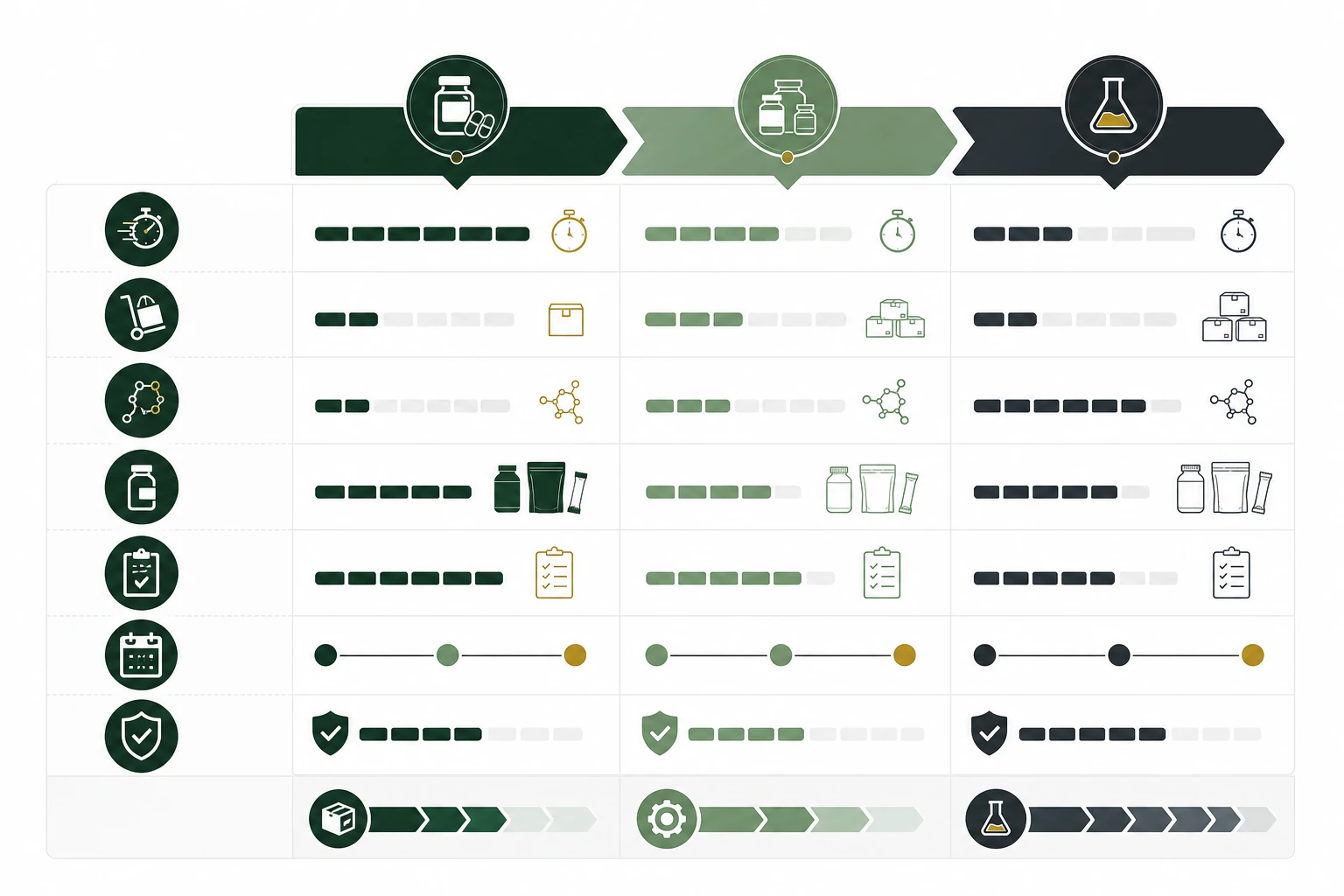
Choose the product route based on speed, differentiation, budget, MOQ, formula risk, and how much control the brand needs over ingredients, taste, packaging, and claims.
When private label or stock formulas make sense
Private label or stock formulas can be useful when a brand needs speed, lower development risk, and a faster market test. The base formula, process, texture, and active range are already more familiar to the production team. For a deeper route comparison, see stock formula vs custom formulation.
This route can work well for a first launch, a test product, a seasonal SKU, or a brand that wants to validate demand before funding a custom formula. It can also reduce early decision pressure because the brand starts from a known product base.
The risk is sameness. If the brand uses a stock formula, it should still define its audience, packaging, flavor, label language, sales channel, and trust story. Stock does not mean careless. The brand still needs to confirm finished-product testing expectations, label support, and whether the formula can support the product promise.
When custom formulation is worth the time and budget
Custom formulation makes sense when the product needs a specific active blend, unique positioning, special sugar system, different texture, uncommon flavor, or a claim direction that stock options cannot support.
The benefit is differentiation. The cost is more uncertainty. A full custom gummy formula needs feasibility work, sample rounds, active compatibility review, taste masking, process adjustment, drying checks, and packaging review. The brand should expect more time and more technical discussion.
I usually separate custom work into questions:
- Can the active dose fit into the gummy?
- Can the taste be managed without damaging the brand experience?
- Can the texture survive drying, coating, packing, and shipping?
- Can the formula support the label promise?
- Can the MOQ and budget support development and production?
If the answer is unclear, the brand may need a feasibility review before a firm quote.
How the route affects MOQ, timeline, testing, and differentiation
MOQ is not one fixed number. It changes with formula route, ingredient sourcing, mold choice, packaging, test scope, and production setup.
| Route | Speed | MOQ pressure | Differentiation | Testing / documentation pressure | Best fit |
|---|---|---|---|---|---|
| Stock formula | Faster | Lower to medium | Lower | Routine finished-product and label checks | Market test or first SKU |
| Private label | Faster | Lower | Low to medium | Depends on existing formula and channel | Fast brand launch with clear positioning |
| Semi-custom | Medium | Medium | Medium | Ingredient, flavor, package, and label adjustments | Brands needing some difference without full custom risk |
| Custom formulation | Slower | Higher | Higher | Higher feasibility, stability, packaging, and test review | Brands with a clear product promise |
The route also affects testing. A simple stock product may need routine finished-product checks and label confirmation. A custom formula may need more review around active content, stability, packaging, and claims. This is why brands should not compare quotes without comparing scope.
Step 4: Understand the Supplement Product Development Process
Product development is where the brand promise meets production reality. Skipping this step usually creates cost changes later.
The supplement product development process should move from feasibility review to sample rounds, stability and packaging checks, label review, testing expectations, and production planning.
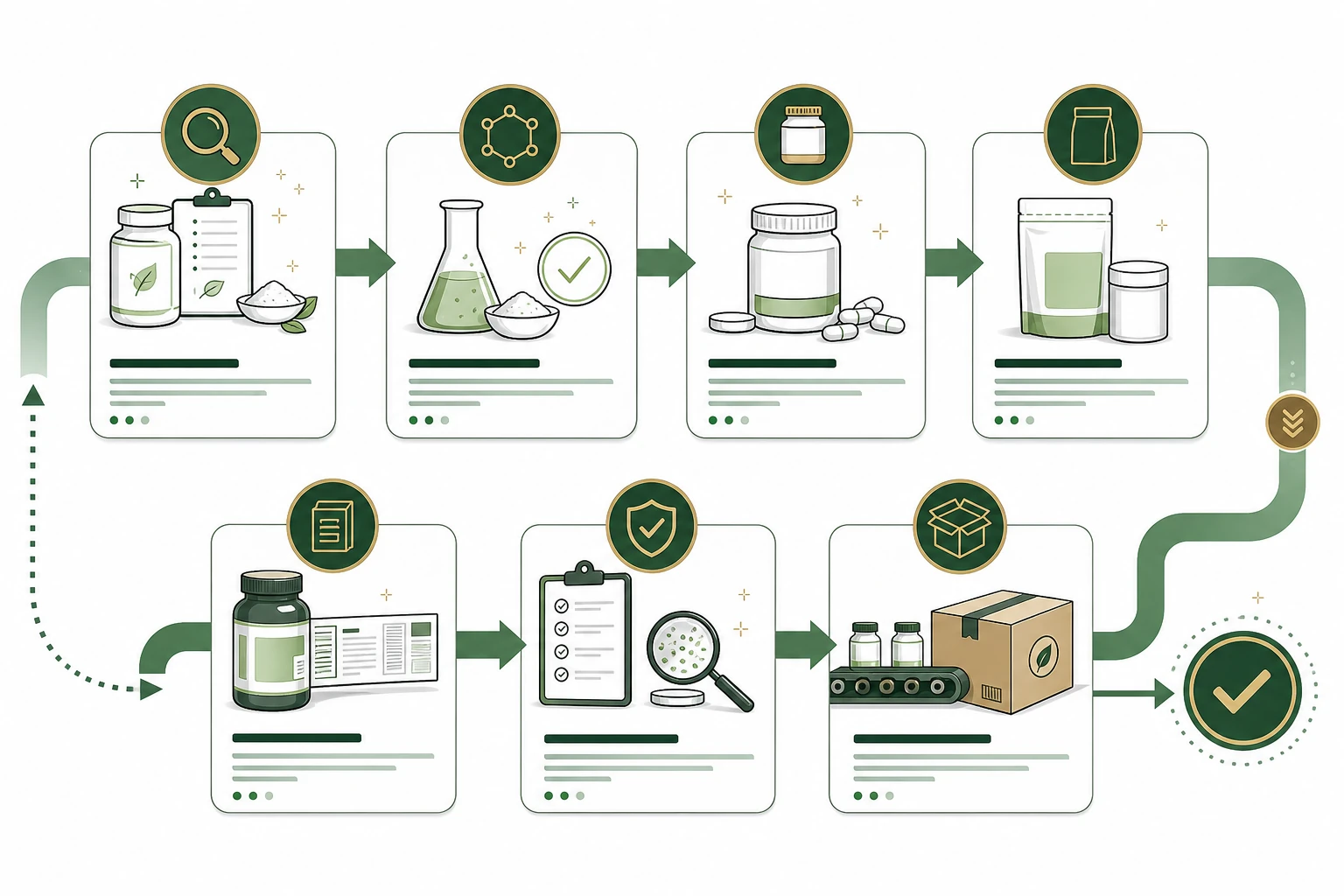
Formula feasibility review
A feasibility review checks whether the product idea can be made in the chosen format. For gummies, the review should cover active load, ingredient compatibility, flavor masking, texture, pH, sweetness, gelling system, color, drying, coating, and packaging needs.
This review is not meant to make the project complicated. It is meant to avoid false confidence. A brand can spend money on a sample that tastes good but does not fit the final dose, label, or production process.
Before commercial production, the brand and production team should agree on what is fixed and what is still flexible. Active target, serving size, package count, flavor, and claims should not keep changing after sampling begins.
Sample development and revision rounds
Sample rounds should have a purpose. Round one may test general direction. Round two may refine flavor, sweetness, texture, color, or serving size. Later rounds should narrow the product, not restart the project.
The brand should give clear feedback. "Make it better" is not useful. Better feedback is: less bitter aftertaste, softer chew, smaller piece size, brighter fruit flavor, less coating, lower sweetness, or cleaner color.
In gummy work, every change can affect something else. A flavor change may affect color. A sweetener change may affect texture. A higher active load may affect taste and drying. This is why sample feedback should be written and connected to the final product brief.
Before approving a sample, ask what it proves and what it does not prove yet. A bench sample may show taste direction, color, and chew. It may not prove commercial drying behavior, packaging performance, active consistency, shelf-life behavior, or full lead time. For a first supplement line, this distinction matters because founders often treat the best-tasting sample as if production risk is already closed.
Lead time and scale-up planning
Lead time should be discussed as a sequence, not a single calendar promise. A realistic launch plan may include feasibility review, ingredient and packaging sourcing, sample rounds, label review, test planning, production scheduling, finished-product checks, packaging, freight, and channel setup.
For stock or private label projects, some steps may move faster because the base formula is already known. For semi-custom or custom projects, the lead time can expand when the active load, flavor masking, packaging material, mold, or test plan needs extra review.
Scale-up is the bridge between a good sample and a repeatable product. Before commercial production, confirm what changes between the sample and the first batch: batch size, ingredient lots, drying time, coating, packaging line, test timing, and finished-product documentation. This is especially important for gummy vitamin and supplement lines because small texture or moisture differences can affect the product after packing and shipping.
Stability, packaging, label, and finished-product testing checks
Packaging is part of product development, not a final decoration step. Gummies can be sensitive to moisture, heat, sticking, and texture change. Bottles, pouches, packets, desiccants, seals, and carton choices should match the formula and sales channel.
Labels also need early review. The Supplement Facts panel, serving size, ingredient list, claims, warnings, net quantity, and distributor details should match the actual formula and target market.[^4] This is not legal advice, but it is a practical warning: do not design a front label that the finished product cannot support.
Finished-product testing should match the risk level. Brands should discuss what needs to be checked, when samples are tested, what documents are expected, and how batch records or analysis-document expectations fit the launch plan.
Step 5: Estimate the Budget and MOQ to Start a Supplement Brand
The cheapest quote can become expensive if it ignores development, testing, packaging, and rework.
A realistic supplement startup budget includes formulation route, sample work, ingredients, production MOQ, packaging, labels, testing, freight, compliance review, and launch-channel preparation.
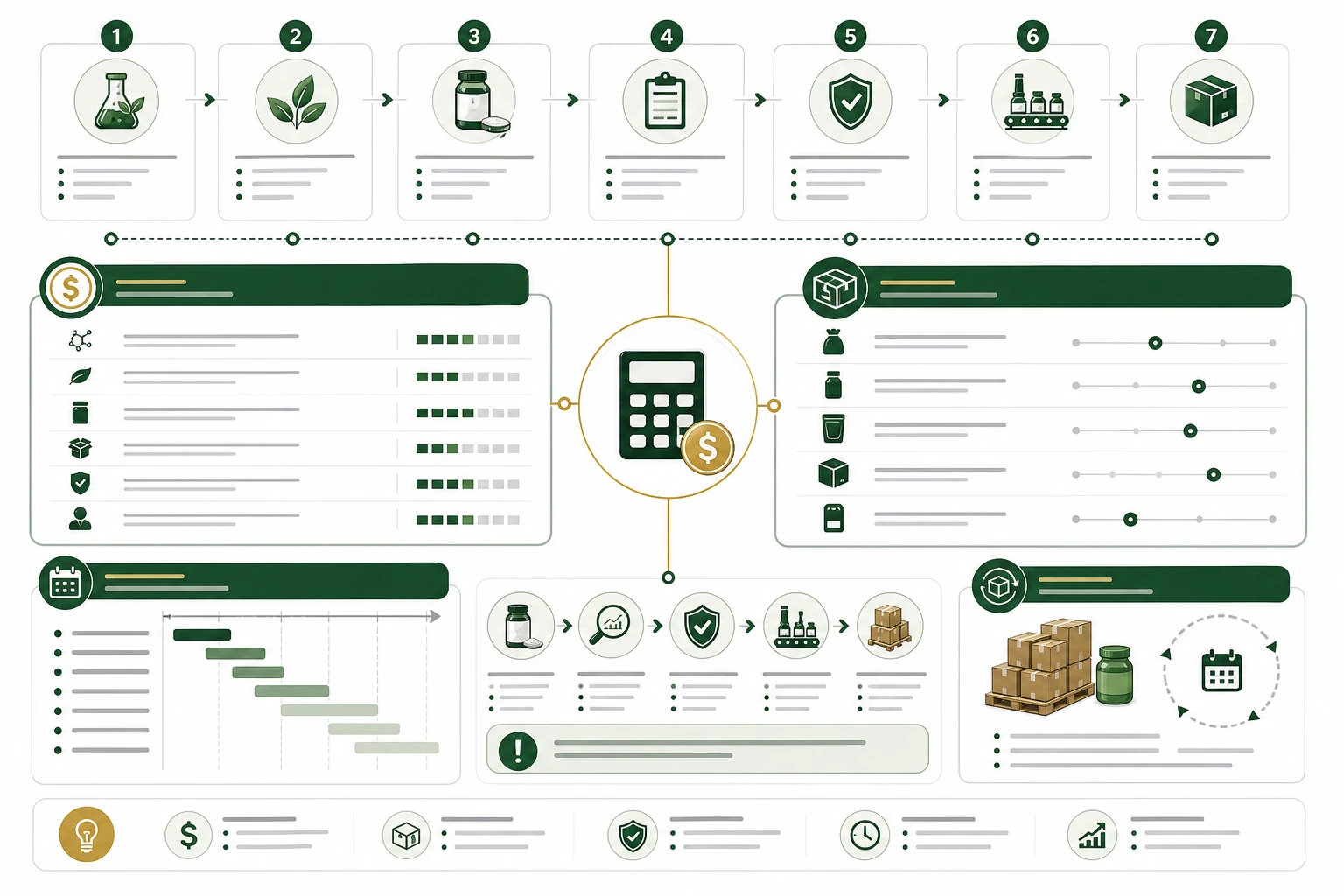
Startup costs brands often underestimate
New brands often budget for finished bottles but forget the work around them. The product may need formula review, samples, flavor revisions, label design, compliance review, packaging materials, finished-product testing, cartons, shipping, and inventory holding.
Marketing costs also matter, but the product should not be underbuilt to fund advertising. If the label promise is weak, the formula is unstable, or the packaging is poor, paid traffic will not fix the product.
For gummy supplements, I would also budget for iteration. Taste and texture are not small details. They affect reviews, repeat purchase, and brand trust. If the formula uses difficult actives, the brand should expect more sample work.
| Budget area | Why it can change the real launch cost |
|---|---|
| Formula route | Stock, semi-custom, and custom projects need different development time and setup work |
| Sample rounds | Flavor, texture, active load, and sugar-system changes can require more iterations |
| Packaging | Bottles, pouches, packets, desiccants, cartons, and labels may each carry separate minimums |
| Testing | Finished-product checks and documentation needs depend on formula, market, and channel |
| First order MOQ | The first production quantity should match route complexity, budget, and launch plan |
How minimum order quantities change by product route
MOQ depends on more than the manufacturer's preference. It can be affected by ingredient minimums, packaging minimums, mold setup, batch size, process changeover, test scope, and whether the product uses a stock or custom formula.
Stock and private label routes may allow a lower-risk first order because the formula base is already known. Semi-custom routes can increase MOQ if they require special ingredients, colors, flavors, molds, or packaging. Custom routes may need higher commitment because development and production setup are more specific.
The better question is not "What is your MOQ?" The better question is "What product route supports my budget and launch plan?" A serious quote should explain what the MOQ includes. It should also explain what may change if the formula, packaging, or testing scope changes.
Why packaging and testing affect the real budget
Packaging and testing are easy to underestimate because they are not necessarily visible in a simple unit price. But they can affect both cost and launch timing.
A bottle may need a cap, liner, desiccant, label, carton, case pack, and shipping carton. A pouch may need barrier material, zipper, seal quality, carton display, or sachet handling. Testing may involve identity, assay, microbiology, heavy metals, or other checks depending on product and market expectations.
Brands should not wait until the end to ask about these items. Packaging and testing decisions can change the real cost per unit, the project timeline, and the product's ability to support trust in the sales channel.
Step 6: Select a GMP Supplement Manufacturer
A manufacturer should not only accept your idea. The team should help you find the risks before production starts.[^5]
Select a GMP supplement manufacturer by checking formula feasibility, documentation, sample process, MOQ logic, packaging support, testing expectations, communication quality, and scale-up experience.

What to ask before sharing your product brief
Before sending a full brief, a brand can ask basic qualification questions:
- What supplement formats do you support?
- Do you support gummies, capsules, powders, or only one format?
- Can you handle stock, semi-custom, and custom routes?
- What information do you need for a serious quote?
- How do you handle sample rounds and formula changes?
- What testing and documentation can be discussed before production?
- What packaging formats are practical for this product type?
For a gummy project, the brand should ask how the manufacturer reviews active load, texture, drying, coating, packaging, and scale-up. If the answer is only "send us your formula," the brand may not get enough production guidance.
How to evaluate manufacturing capabilities and documentation
Capability is not only machinery. It includes process control, quality systems, documentation, production planning, and communication.
For gummies, a production partner should understand cooking, depositing, molding, drying, demolding, coating, packing, and storage. The team should also understand how formulation decisions affect repeatability.
Documentation should match the product and channel. Brands may need batch records, ingredient documents, analysis-document expectations, label review support, packaging specifications, and finished-product test plans. The exact needs vary, so the manufacturer should not promise everything casually. A careful answer is usually better than a fast answer. For a fuller evaluation framework, see the gummy supplement manufacturer checklist.
Red flags in fast quotes or vague sample promises
A fast quote is not automatically bad. A fast vague quote is the problem.
Red flags include:
- Quoting without asking for active target, serving size, or format details.
- Promising a fixed MOQ without knowing the formula route.
- Treating stock and custom formulation as the same timeline.
- Ignoring packaging, testing, and label questions.
- Making compliance, shelf-life, or efficacy claims without support.
- Offering samples without explaining what assumptions the sample uses.
When a quote is too simple, the missing details usually return later as delays, cost changes, or sample confusion. I prefer a manufacturer to ask more questions at the beginning than to repair assumptions at the end.
Should a new brand buy equipment or work with a contract manufacturer?
For most new supplement brands, buying equipment should not be the first step. A production line needs formula knowledge, operators, quality systems, batch control, cleaning, packaging, storage, and repeat demand.
Equipment can make sense when a brand has stable volume, technical staff, a quality system, space, utilities, and enough repeat orders to justify internal production. But a first brand launch usually needs market validation before production ownership.
Contract manufacturing is often the lower-risk way to test whether the product deserves its own capacity later. It lets the brand learn about formula feasibility, packaging behavior, testing, and market response before taking on the full burden of production. If the brand is focused on gummy products, the gummy vitamin manufacturing process also shows why formulation, drying, coating, packaging, and scale-up should be planned together.
Step 7: Prepare Label, Packaging, and Sales Channel Requirements
The product does not launch from the formula alone. The label, package, and channel rules shape what the product can say and sell.
Prepare the Supplement Facts panel, claim boundaries, packaging format, sales-channel requirements, and documentation plan before commercial production begins.
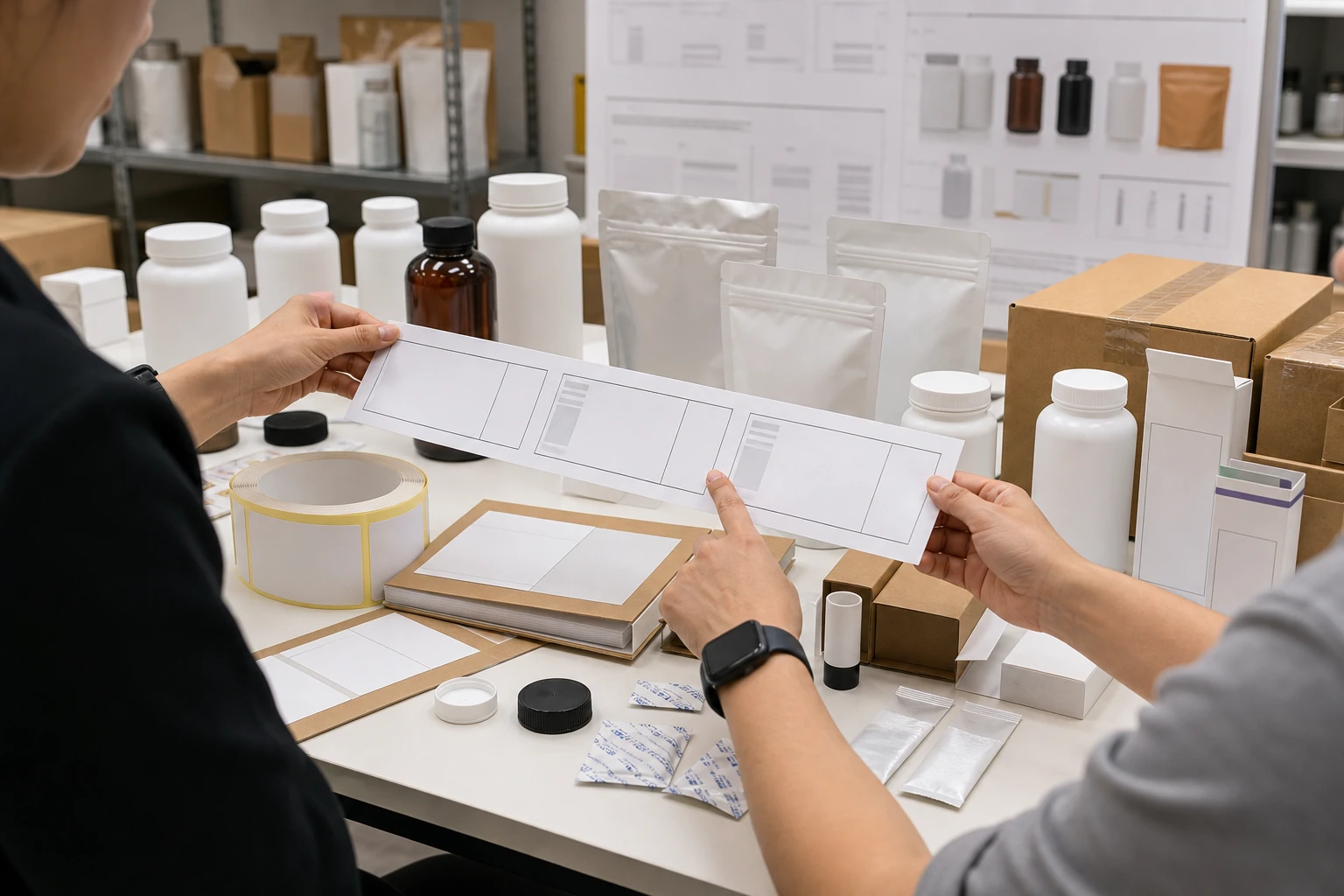
Supplement Facts, claims, and compliance review
The Supplement Facts panel should match the serving size, active amounts, ingredients, and product route. The front label should not promise more than the formula, documentation, and compliance review can support.
In the U.S., dietary supplement firms are responsible for safety and labeling before marketing, and FDA can act against adulterated or misbranded products after they reach the market.[^1] Brands should use this as a reason to review the product carefully before launch, not as a reason to make casual claims.
Claims should be cautious. A supplement brand can discuss support, routine, and product positioning where appropriate, but it should not make disease-related claims.[^3][^6] If the product uses a new ingredient, sensitive claim, or complex market route, qualified regulatory review is worth the time.
Bottles, pouches, packets, and moisture-control planning
Packaging is a product decision. Bottles are familiar and work well for many gummy supplements. Pouches can be light, modern, and useful for some sales channels. Stick packs or packets can support sampling or travel, but they create different packing and cost considerations.
For gummies, moisture control is one of the biggest packaging concerns. The product may need barrier materials, desiccants, seal checks, and carton protection. Shipping temperature and storage conditions can also matter. Early-stage brands can also review low MOQ private label gummy supplements when they need a lower-risk market test before custom packaging or full custom development.
A beautiful package that does not protect the gummy is not a good package. I would rather see a simple package that protects texture than a premium-looking package that creates sticking, sweating, or deformation.
Amazon, DTC, retail, and distributor readiness
Different channels create different pressures. DTC gives more control over education and brand story. Amazon needs clear listings, review management, packaging durability, and claim caution. Retail may need stronger shelf presence, case packing, barcodes, distributor details, and more predictable inventory.
The brand should decide the first channel before locking the packaging. A bottle count, carton size, label layout, and shipping plan may work for DTC but not retail. A pouch may look modern online but may need extra review for shelf display and moisture protection.
The sales channel also affects launch timing. Retail and distributors can require more samples, documents, barcodes, product data, and packaging coordination than a direct online launch. The earlier the brand knows the channel, the cleaner the manufacturing brief becomes.
Common Mistakes to Avoid When Starting a Supplement Brand
Most early mistakes do not come from a lack of ambition. They come from unclear decisions before sampling.
Avoid choosing a formula too early, ignoring compliance and testing, expecting custom work to move like stock products, and asking manufacturers to quote an incomplete idea.
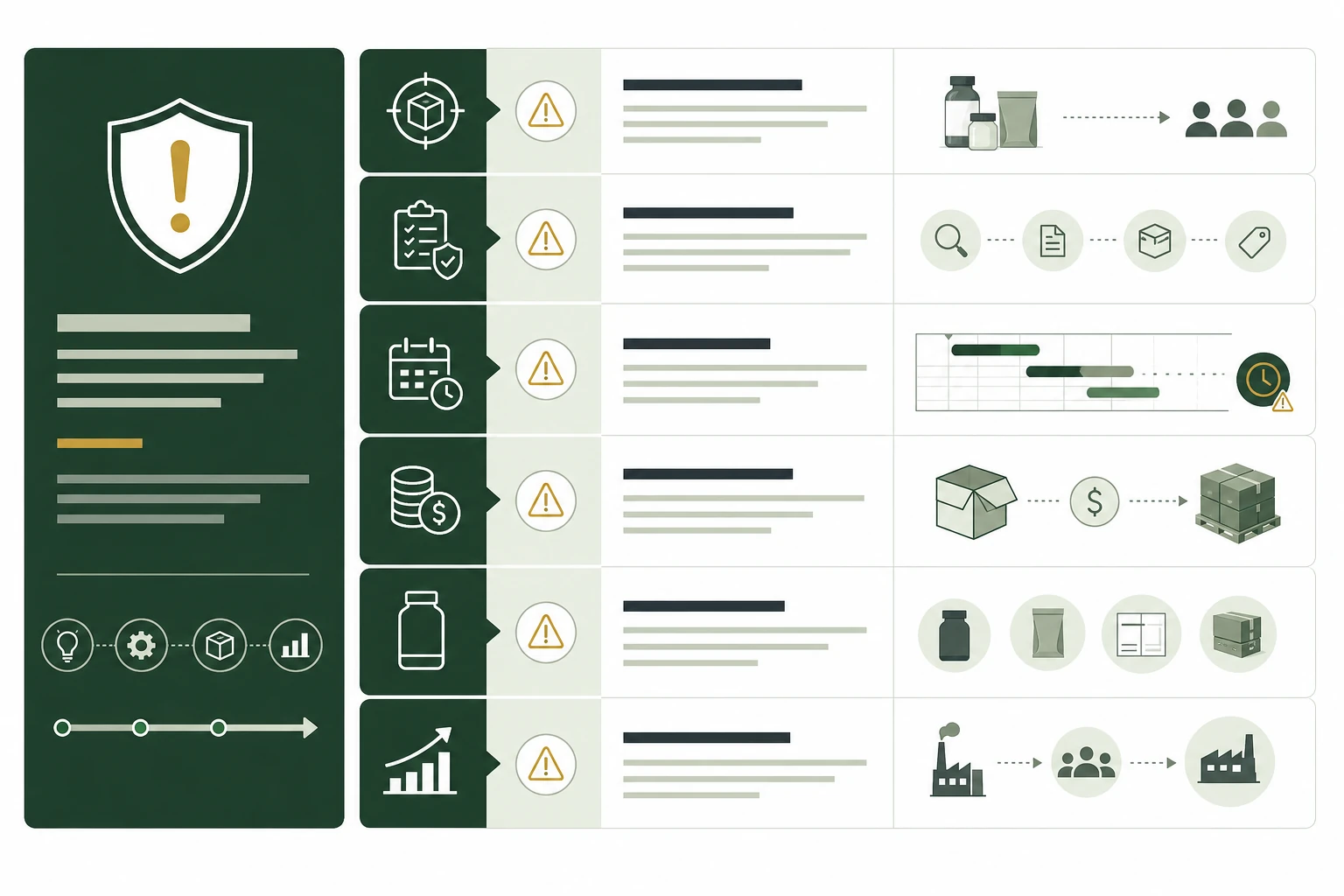
Choosing a formula before validating the product concept
A formula is not the same as a product concept. The formula tells what goes inside. The product concept explains who the product is for, how it will be used, what it should promise, and how it will be sold.
If the concept is weak, the formula may become a list of popular ingredients. That creates problems. The dose may not fit. The taste may suffer. The claim may be unclear. The final product may look like every other SKU on the shelf.
Validate the concept first. Then choose the formula route that supports it.
Underestimating compliance, testing, and documentation
Compliance, testing, and documentation are not only big-company concerns. They affect startup brands too.
A new brand should know what information is needed for the label, what claims require review, what finished-product checks are expected, and what documents may be needed by the sales channel. The brand should also understand what the manufacturer can provide and what needs outside review.
The mistake is waiting until the first order is almost ready. At that point, label changes, packaging changes, or testing delays can slow the launch.
Expecting custom formulation to launch like a stock product
Custom formulation takes longer because the product is being built around a specific idea. The work may include ingredient sourcing, active compatibility review, flavor masking, texture trials, sample revisions, packaging review, and test planning.
If a brand needs fast launch, stock or semi-custom may be smarter. If the brand needs differentiation, custom may be worth the time. The key is to choose the route honestly.
I do not see custom formulation as better in every case. I see it as useful when the brand has a clear reason to own a different formula.
Launch Readiness Checklist Before You Start a Supplement Brand
A strong brief does not need to answer everything. It needs to answer enough for a manufacturer to stop guessing.
Before contacting a supplement manufacturer, prepare the target customer, product promise, format, active ingredients, serving size, formula route, package type, MOQ range, test expectations, and launch channel.

Use this checklist before you request a quote or sample:
| Readiness item | What to prepare |
|---|---|
| Target customer | Who will use the product and in what routine |
| Product promise | The support area or product position, without medical claims |
| Format | Gummy, capsule, powder, liquid, pouch, bottle, or packet |
| Active ingredients | Main actives and any must-have ingredient forms |
| Serving size | Target dose and gummies per serving if using gummies |
| Formula route | Stock, private label, semi-custom, or custom |
| Flavor direction | Fruit, herbal, sour, sweet, sugar-free, or other direction |
| Packaging | Bottle count, pouch, sachet, carton, or retail plan |
| Testing expectations | Finished-product checks, analysis-document needs, or channel requirements |
| MOQ and budget range | A realistic range, not only the lowest possible order |
| Launch market | Country, channel, and compliance review needs |
| Timeline | Desired launch window and flexibility |
If you are not ready for every item, that is normal. The point is to make the missing items visible. A good first discussion should turn uncertainty into a clear development path.
Quick answers before that first manufacturing discussion:
- How much does it cost to start a supplement brand? It depends on formula route, sample work, testing, packaging, MOQ, label review, freight, and launch channel. A stock or private label route usually needs less early development budget than full custom formulation.
- Do I need FDA approval to sell supplements? Do not frame this as a simple approval question. For U.S.-facing dietary supplements, the practical issue is whether the product, ingredient, label, claims, manufacturing controls, and documentation meet the relevant requirements before and after launch.
- Are supplement brands profitable? They can be, but profit depends on product-market fit, repeat purchase, cost control, channel fees, testing, packaging, inventory, and whether the first product can scale without constant rework.
- What are the big 3 supplements? Many lists point to broad categories such as protein, vitamins/minerals, and omega-3 or performance products. A brand should still choose the category where it can make a clear, manufacturable, supportable product promise.
FAQ: Starting Your Own Supplement or Vitamin Line
How do I start my own supplement brand?
Start with the product brief, not the logo. Define the target customer, product promise, dosage format, active direction, formula route, packaging route, launch market, MOQ tolerance, testing expectations, and claim boundaries. Then ask a manufacturer to review feasibility before you approve samples or commit to packaging.
How do I start my own vitamin company?
A vitamin company needs the same early manufacturing discipline as any supplement brand: a clear formula brief, a compliant label path, ingredient and dosage feasibility, finished-product testing expectations, packaging protection, and a first-order plan. If the product is a gummy vitamin, review active load, flavor, texture, drying, coating, and moisture-control risk before treating the concept as production-ready.
What is the difference between starting a supplement brand and starting a supplement line?
A supplement brand is the broader business position: audience, trust story, channel, and product portfolio. A supplement line is the product series inside that brand, such as gummy vitamins, beauty gummies, sleep gummies, or sports nutrition products. For manufacturing, the line matters because each SKU needs its own formula route, MOQ, sample path, testing expectation, package plan, and scale-up review.
Should a new brand choose private label or custom formulation first?
Private label or stock formulas are usually better for speed, market testing, and lower early development risk. Custom formulation is better when the brand has a specific product promise, active blend, texture target, sugar system, claim direction, or packaging requirement that stock options cannot support. The decision should come from the product brief, not from price alone.
What should I send a supplement manufacturer before asking for a quote?
Send a quote-ready brief with product type, target user, active direction, serving size, flavor direction, formula route, packaging route, launch market, MOQ range, testing expectations, and desired lead time. If you do not know every answer, label the uncertain items. A good first manufacturing discussion should clarify those gaps.
Can I make my own supplements to sell?
You can build a supplement brand, but making the product yourself requires manufacturing controls, quality systems, documentation, labeling review, packaging capability, and repeatable production. Most new brands reduce early risk by working with a contract manufacturer while they validate demand, formula feasibility, packaging, testing, and reorder potential.
How long does it take to launch a supplement or vitamin product?
Lead time depends on formula route, sample rounds, ingredient sourcing, packaging materials, label review, test scope, production scheduling, and freight. Stock and private label routes can move faster. Semi-custom and custom projects usually need more time because feasibility, sampling, testing, packaging, and scale-up questions have to be resolved.
For Talvenda projects, I would rather begin with a practical product brief than a rushed sample request. The brief lets the production side review gummy feasibility, formula route, MOQ logic, sample path, testing expectations, packaging risk, lead time, claim boundaries, and scale-up planning before the brand spends money in the wrong direction.
Conclusion
Starting a supplement brand well means proving market promise without ignoring formula feasibility, packaging, testing, MOQ, lead time, and manufacturing readiness.
For a new supplement brand, a practical first gummy launch should prove demand without hiding MOQ, packaging, testing, or scale-up risk. As an OEM/ODM gummy manufacturer, Talvenda can help your team choose between low-MOQ market-tested in-stock gummies, stock formula modification, and custom gummy development based on launch stage and product ambition. The discussion can include sample development, packaging and label support, documentation and testing expectations, and scale-up support before commercial production decisions become harder to reverse. Start the manufacturing discussion through the project inquiry form.
[^1]: FDA, Dietary Supplements. Used for the U.S. dietary supplement responsibility and FDA approval-boundary discussion; it does not approve any specific Talvenda product. [^2]: FDA, New Dietary Ingredient (NDI) Notification Process. Used for the NDI planning boundary; it does not decide whether a specific ingredient requires notification. [^3]: FDA, Dietary Supplement Labeling Guide: Chapter VI. Claims. Used for dietary supplement claim-boundary context; it does not approve claim language. [^4]: FDA, Dietary Supplement Labeling Guide: Chapter IV. Nutrition Labeling. Used for Supplement Facts and serving-size label planning; it does not replace legal label review. [^5]: eCFR, 21 CFR Part 111: Current Good Manufacturing Practice in Manufacturing, Packaging, Labeling, or Holding Operations for Dietary Supplements. Used for dietary supplement cGMP context; it does not claim a specific facility certification. [^6]: Federal Trade Commission, Health Products Compliance Guidance. Used for health-product advertising and substantiation boundaries; it does not validate any product performance claim.