
The best immune support gummies are not defined by the longest ingredient list or loudest front label. A stronger comparison starts with audience, serving, gummy format, and checkable proof.
A stronger choice aligns labeled amounts, a practical serving, an understandable format, and product-specific proof signals with the intended audience. “Best” is a fit decision, not a universal winner.
This is a label-first market comparison, not medical advice or a ranking of health outcomes. Product formulas, counts, and claims can change, so the current package and Supplement Facts panel remain the final reference.[^1]
Decision Snapshot
- Compare the active system and labeled amounts, not ingredient names alone.
- Calculate the real serving and bottle duration before comparing price or convenience.
- Separate pectin, gelatin, sugar, flavor, and packaging signals from efficacy assumptions.
- Evaluate adult and children’s products as different label and product-development briefs.
- Look past badges to the product-specific specification, testing, and documentation story.
How to Compare the Best Immune Support Gummies
Shelf claims can make unlike products look interchangeable. Without a fixed comparison method, a longer label or brighter badge can appear stronger than it is.
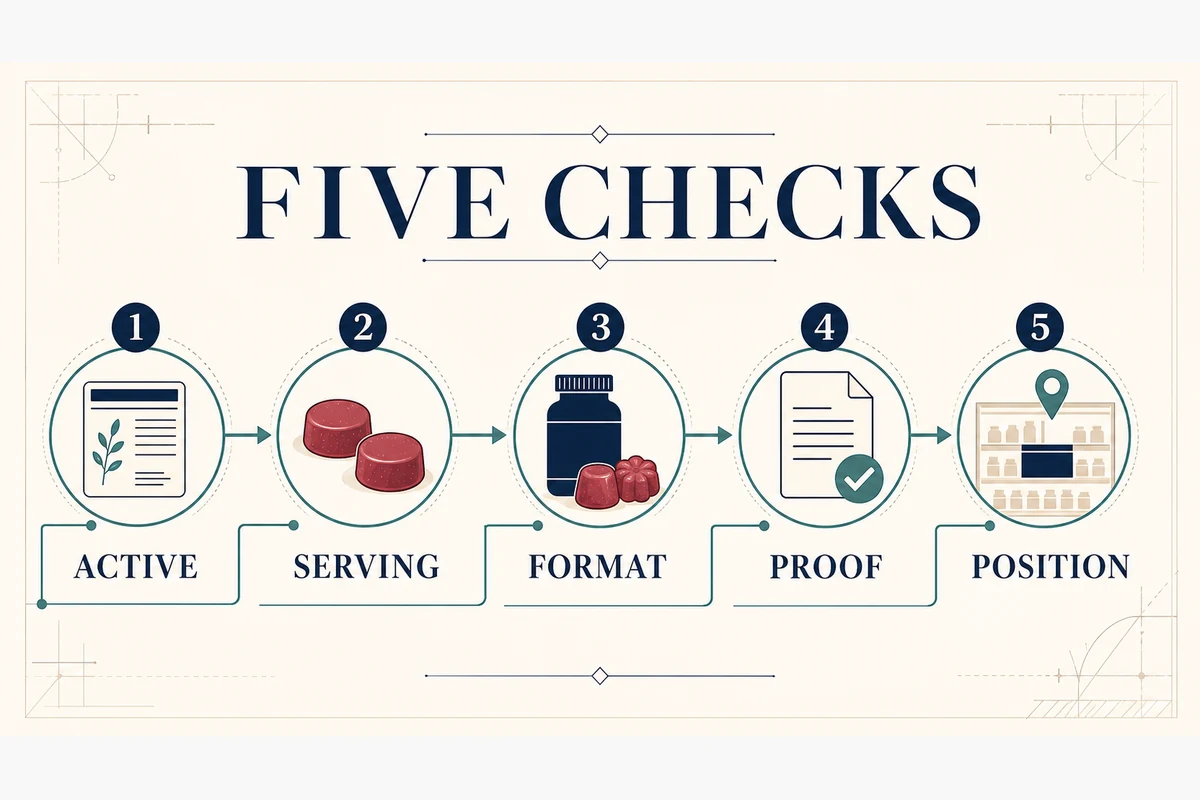
The best immune support gummies should be compared through five linked checks: active system, serving, format, proof, and positioning. The method does not declare one universal winner. It shows whether the product’s label, use format, and visible support signals form a coherent offer for its intended audience.
What “Best” Can and Cannot Mean in a Label-First Comparison
“Best” can mean best aligned with a defined need. One shopper may prefer a focused vitamin C, vitamin D, and zinc formula. Another may value an elderberry-led botanical story, a gelatin-free pectin base, a lower gummy count, or an age-specific children’s label. A brand team may define “best” as the cleanest market position that can still be formulated, documented, packaged, and scaled.
“Best” cannot be proven by a front-label superlative, review count, marketplace badge, or long ingredient list. Those signals may describe popularity or positioning, but they do not establish product-specific efficacy, stability, label accuracy, or manufacturing quality. The same boundary applies to public certifications: a badge may be relevant, yet its scope must be checked before it is treated as evidence for the finished gummy.
I use a simpler rule: define the audience and the decision first, then compare only fields that can be rechecked. This prevents a children’s elderberry gummy, a high-load adult nutrient gummy, and a broad botanical blend from being forced into one misleading score.
The Five Checks: Active System, Serving, Format, Proof, and Positioning
The five checks work together. If one is ignored, the comparison can produce the wrong conclusion.
- Active system: Identify every vitamin, mineral, botanical, or blend and the labeled amount per serving. Note whether a botanical is listed individually or hidden inside a blend.
- Serving: Record gummies per serving, servings per container, age directions, and the resulting bottle duration. Compare per serving, not per gummy, unless the panel is written per gummy.
- Format: Check pectin or gelatin, total and added sugars, flavors, coatings, allergens, gummy size clues, and packaging count. These features shape use experience and production constraints.
- Proof: Separate mandatory label information, disclaimers, and warnings from voluntary badges or general marketing statements. Ask what is product-specific and what is only a broad brand signal.
- Positioning: Identify whether the offer is focused, broad-spectrum, adult, kids, family, retail-value, marketplace-led, or subscription-led.
The output should be a comparison profile, not a single score. A focused formula can be strong because it is simple and legible. A broader formula can be strong because it creates a distinctive story. Each also carries different serving, taste, documentation, and scale-up pressure.
What the Current Immune Support Gummies Market Actually Sells
Immune gummy shelves contain several product architectures, not one standard formula. Treating them as a single category hides important differences in load, audience, and format.
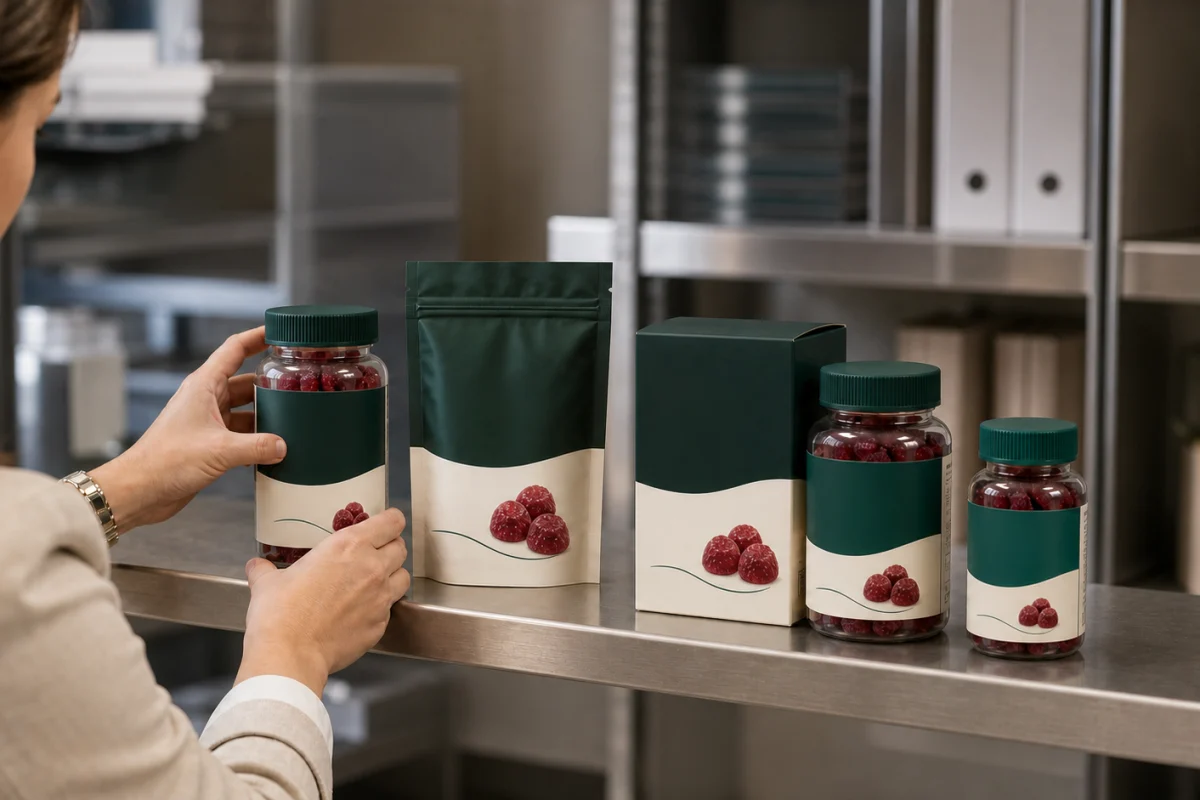
The current immune gummy market sells focused nutrient products, elderberry-led systems, broader vitamin-and-botanical blends, and age-specific children’s formulas. Public labels also show one-, two-, and three-gummy servings, different bottle durations, pectin or gelatin bases, and very different channel messages.
Public Label Samples: Serving, Format, and Positioning Signals
The matrix below uses public product information as a market snapshot. It is not a ranking, endorsement, or judgment about health outcomes. Amounts are shown per labeled serving where the public page makes them clear. A blank or qualified field is a reason to inspect the current physical label, not permission to guess.
| Public market sample | Audience and labeled serving | Active system per labeled serving | Count and duration signal | Format and channel signals | What the sample illustrates |
|---|---|---|---|---|---|
| Goli Triple Action Immune Gummies[^3] | Adult-positioned; 2 gummies once daily | Vitamin C 120 mg, vitamin D 20 mcg, zinc 7.5 mg, black elderberry extract 70 mg, botanical blend 30 mg | Common 60-count presentation; about 30 labeled servings | Pectin; 5 g total sugar per serving; blackberry-strawberry-lemonade flavor; vegan, gelatin-free, subscription messaging | A broad adult blend that combines a familiar nutrient trio with elderberry and supporting botanicals |
| Nature’s Way Sambucus Immune Gummies[^4] | Adults and children 4+ on the public page; 2 gummies | Vitamin C 90 mg, vitamin D3 30 mcg, zinc 7.5 mg, black elderberry extract 50 mg | 60-count presentation; 30 servings | Pectin; 3 g added sugar; gelatin-free; elderberry heritage is central to the story | An elderberry-led formula supported by three familiar nutrients |
| GNC Vitamin C Gummies[^5] | Adult; 3 gummies | Vitamin C 282 mg | 120 gummies; 40 servings | Gelatin; 6 g added sugar; orange flavor; value and single-nutrient simplicity | A focused formula where serving size and sugar exposure matter as much as the short active list |
| Zarbee’s Children’s Elderberry Immune Support Gummies[^6] | Ages 2–3: 1 gummy; ages 4+: 2 gummies | Vitamins A, C, D and E, zinc, and black elderberry; current amounts should be read from the Supplement Facts panel | Current professional page lists 21-, 42-, 70-, and 80-count presentations; duration changes by age-specific serving | Pectin; gelatin-free; natural berry flavor; children’s retail positioning | An age-specific product in which serving directions and bottle duration cannot be separated from the comparison |
The table also exposes a practical data problem. Public product pages may present comparison fields in different places. One may show amounts per gummy, another per serving, and another may keep the detailed panel inside an image. Transparent comparison requires normalization before interpretation.
Focused Vitamin C, Vitamin D, Zinc, and Elderberry Formulas
Focused products keep the active story easy to read. A single-nutrient vitamin C gummy is the clearest example. A three-nutrient vitamin C, vitamin D, and zinc system adds breadth without becoming a full multivitamin. Elderberry-led products add a botanical identity while retaining familiar nutrient anchors.
That market familiarity should not be confused with a universal outcome claim. NIH describes adequate vitamin C, vitamin D, and zinc as important to normal immune function while noting that routine supplementation does not support a universal infection-outcome promise, particularly when no deficiency is present.[^2]
This simplicity can improve market legibility. The consumer can understand the front-label promise quickly, while a brand can build flavor, sugar, dietary-format, or packaging differentiation around a smaller active system. It may also make the serving story easier to explain.
However, “focused” does not automatically mean a low-load or easy formula. A high vitamin C target can still create acidity, taste pressure, and a larger serving. Zinc can add a difficult sensory note. Elderberry can affect color and flavor direction. The practical comparison therefore asks how much of each active is delivered, in how many gummies, and with what base—not merely how many ingredient names appear.
Broader Multi-Nutrient and Botanical Blends
Broader blends often use vitamin C, vitamin D, and zinc as the recognizable core, then add elderberry, echinacea, ginger, turmeric, selenium, or other ingredients. This creates more storytelling space and can support a premium or “complete” market position.
The same evidence boundary applies to elderberry. NCCIH describes the human evidence as limited and preliminary, so an elderberry-led market position should not be converted into a sickness-prevention promise.[^7]
The tradeoff is transparency. If a formula uses a proprietary or combined botanical blend, the total blend amount may be visible while individual amounts are not. That may be a valid label structure, but it is not equivalent to separately declared actives. A comparison should record the distinction instead of awarding points for every botanical name.
Broader blends also increase formulation interactions. More powders and extracts can affect color, acidity, bitterness, astringency, gummy size, and texture. Some additions may be present mainly for market narrative, while others drive serving size. When I review a broad label, I look for a clear architecture: core actives, supporting actives, delivery format, and the evidence boundary for each visible statement.
Adult, Kids, Retail, Marketplace, and Subscription Positioning
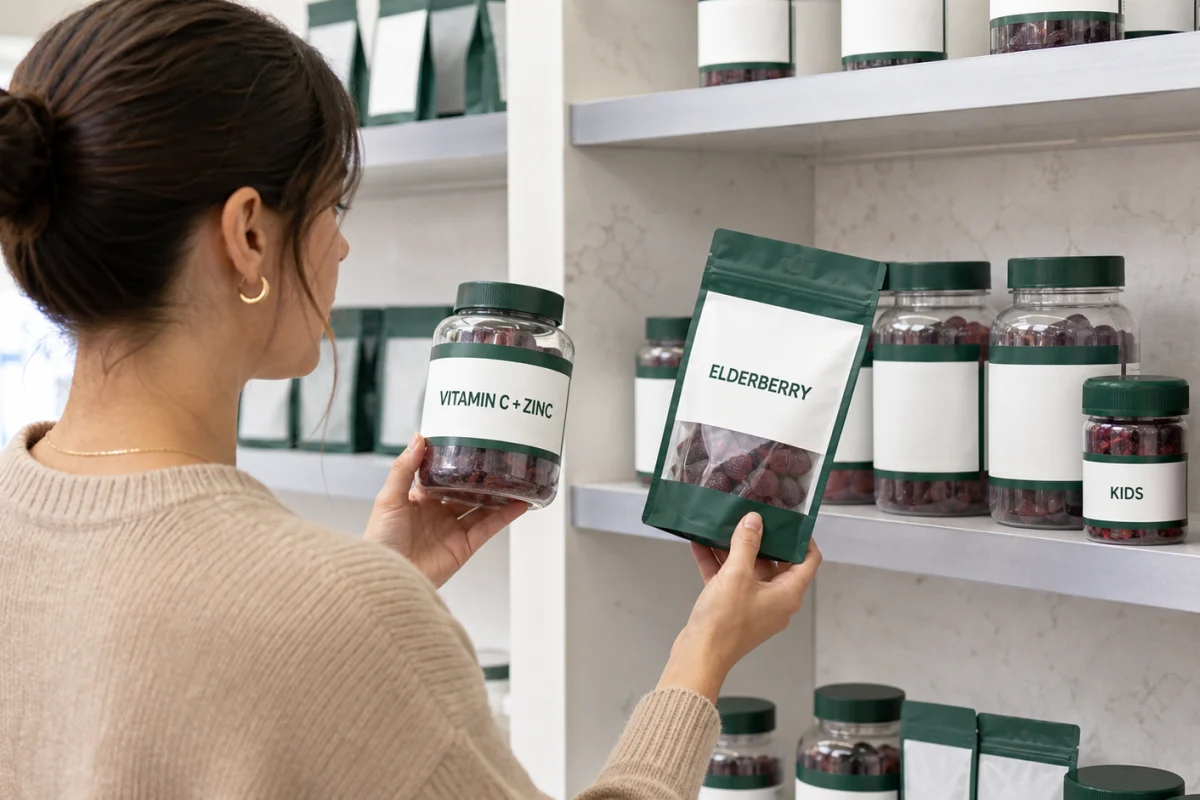
Channel changes how the same formula is presented. Retail shelves reward quick recognition: a short active trio, a clear flavor, and a familiar count. Marketplace listings allow more badges, benefit bullets, and comparison images. Subscription pages emphasize routine, bottle duration, and repeat delivery. Children’s retail products emphasize age ranges, flavor, chewability, and parent-readable warnings.
These are positioning signals, not proof of superiority. A subscription option does not make a formula more stable. A pharmacist-ranked brand message does not establish the quality of every finished batch. A “clean” label badge does not explain active recovery across shelf life. Each signal has a commercial job, but it must stay in its proper evidence category.
Bottle duration is especially important across channels. Sixty gummies can mean 60 days at one gummy daily, 30 days at two gummies, or 20 days at three gummies. For an age-tiered children’s product, the same count may represent different durations. That affects price comparison, subscription cadence, package size, and the consumer’s understanding of value.
Transparent Evaluation Framework for Public Market Samples
Public labels become useful only after their information is normalized. Otherwise, per-gummy amounts, per-serving amounts, badge language, and package counts are easily mixed together.
A transparent immune gummy evaluation records ingredient architecture, labeled amounts, serving size, bottle duration, gummy base, sugar, packaging, claims, disclaimers, and product-specific proof separately. The framework rewards clarity and coherence; it does not turn incomplete public information into invented precision or a false performance score.
Ingredient Architecture and Labeled Amounts
Start with a transcription, not an opinion. List nutrients, botanicals, and blends exactly as the current panel presents them. Record units carefully. Milligrams, micrograms, international units, extract weights, and blend totals are not interchangeable.
Then classify the architecture:
- Focused nutrient: one or two main nutrients with a simple support story.
- Core trio: vitamin C, vitamin D, and zinc as the main system.
- Elderberry-led: elderberry is the identity anchor, with nutrients supporting the position.
- Broad blend: core nutrients plus several botanicals or additional micronutrients.
- Age-specific system: the formula and serving are explicitly built around a defined age group.
The classification prevents a long formula from winning by ingredient count. It also makes omissions visible. If a blend amount is shown but its components are not individually quantified, record that limit. If a product page summarizes ingredients without showing the current panel, mark the amount as needing label verification.
I do not read a label amount as a promise of outcome. It is first a statement that must fit the serving, format, claims, and documentation. That distinction keeps market comparison separate from medical or efficacy judgment.
Serving Size, Gummy Count, and Bottle Duration
Normalize every product to the labeled serving. If a page gives amounts per gummy and recommends two gummies, calculate the serving total and label the calculation clearly. Do not compare a per-gummy value with a competitor’s per-serving value.
Next, calculate bottle duration:
Bottle duration = total gummy count ÷ gummies per labeled daily serving
This is a comparison tool, not personal-use guidance. Age tiers, conditional directions, and product warnings can change the correct interpretation. The current label controls.
Serving count affects more than convenience. A move from two gummies to three increases the number of chewing units, taste exposure, sugar or sweetener exposure, bottle volume, and packaging fill. It may also change how many servings fit into a standard bottle and how often a subscription is expected to renew.
For brands, this is where a market position begins to meet manufacturing reality. A strong labeled amount can look attractive until the active load requires a larger gummy or a higher gummy count. The right question is whether the serving story remains clear and commercially workable after those constraints are included.
Flavor, Texture, Sugar, Pectin or Gelatin, and Packaging Signals
Gummy format is not a footnote. It is part of the product proposition. Pectin supports vegetarian or gelatin-free positioning, while gelatin creates a different texture system. Neither is automatically better; each carries formulation, sensory, and stability considerations.
Sugar data should be read per serving. A three-gummy serving may contain more sugar than a two-gummy serving even when the individual gummies look similar. Sugar-free positioning also deserves a full ingredient review because alternative sweetener systems can affect taste, aftertaste, moisture behavior, and consumer expectations.
Flavor must be judged against the active system. Citrus or berry profiles may align naturally with the market story, yet the flavor still has to manage acidity, mineral notes, and botanical character. Color is similar: elderberry can support a dark berry identity, but color stability and batch consistency remain separate questions.
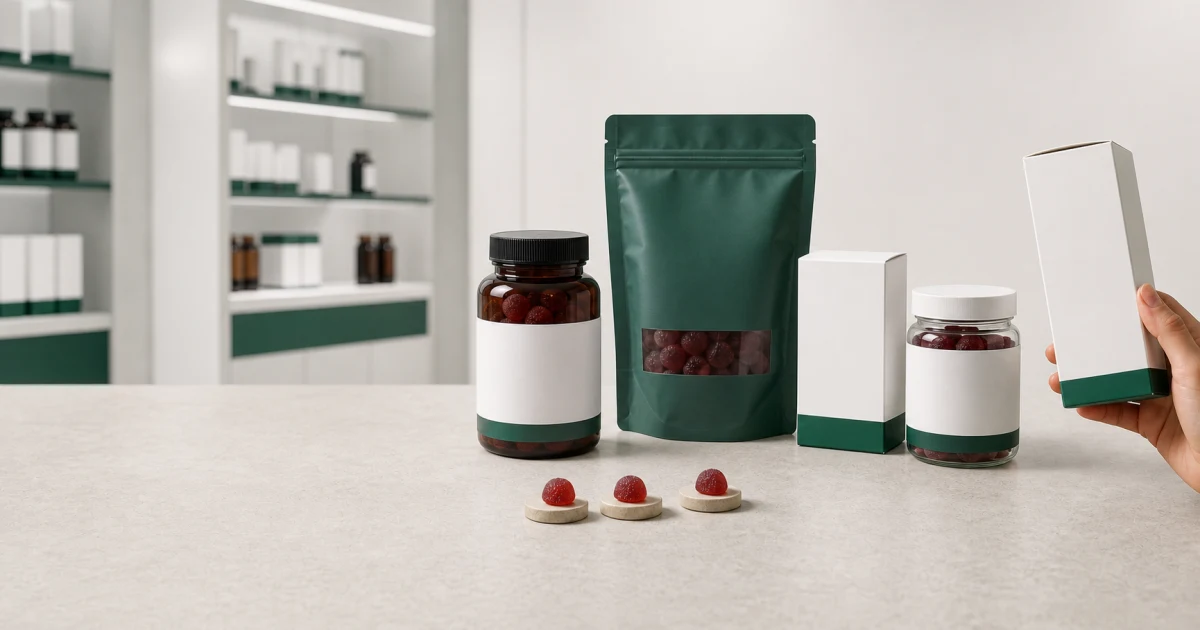
Packaging supplies additional clues. Count, bottle size, closure, seal, light exposure, and moisture protection influence product presentation and shelf behavior. Public packaging cannot prove stability, but it tells a reviewer what the product expects the package to do.
Claims, Disclaimers, Certifications, and Testing Evidence
Separate visible statements into four evidence levels:
| Signal type | What it can show | What it cannot prove by itself |
|---|---|---|
| Supplement Facts and ingredient list | Labeled identity, amounts, serving, and declared ingredients | Actual finished-batch conformance or shelf-life performance |
| Directions, warnings, and disclaimers | Intended audience boundaries and label conditions | Personal suitability for every consumer |
| Voluntary badges and certifications | A claim that a defined standard or attribute applies within a stated scope | Unrelated efficacy, stability, or finished-batch test results |
| Product-specific records | Specification, COA, test scope, lot connection, and stability documentation when supplied | Claims outside the record’s method, lot, date, or scope |
A badge should trigger a scope check, not automatic trust or automatic suspicion. Ask who issued it, what product or facility it covers, whether it is current, and whether the statement applies to the finished gummy.
Marketing claims need the same discipline. “Immune support” is not a disease-prevention promise. FDA distinguishes permissible structure/function language from claims that a supplement diagnoses, treats, cures, or prevents disease, and qualifying structure/function claims require the statutory disclaimer.[^8] Testimonials, star ratings, and retailer rankings describe market response, not nutrient content or batch quality. A strong comparison keeps these categories separate, so neither positive nor negative assumptions are smuggled into the score.
Best Immune Support Gummies for Adults vs. Kids: Where Product Development Diverges
Adult and children’s immune gummies may share ingredients, but shared names do not make the products interchangeable. Audience changes the serving, label, flavor, format, and risk review.
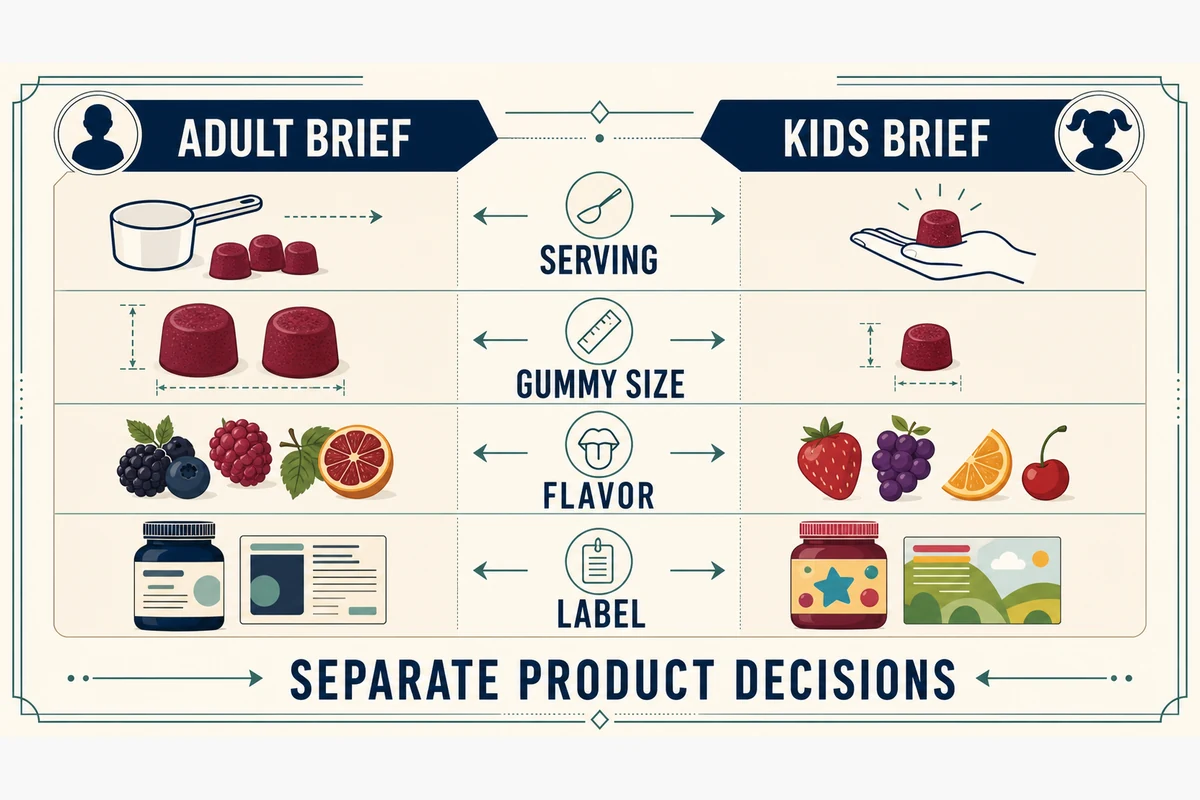
Adult and kids’ immune gummy development should begin as two different briefs. Age-specific serving directions, labeled amounts, warnings, gummy size, texture, flavor, packaging, and duplicate-nutrient risk all require separate review. A children’s version is not simply an adult formula with brighter flavor or fewer gummies.
Age-Specific Serving and Label Constraints
Children’s products often divide directions by age, as the Zarbee’s public example shows.[^6] That changes both the intended serving and the duration of the same bottle. It also places more importance on warning language, duplicate nutrients from other supplements, and clear storage instructions.
An adult product may use a higher active load, a larger gummy, or more gummies per serving. A children’s product has less room for assumptions. The label must define the age group and serving clearly, and the physical format must make sense for that audience. None of this establishes individual suitability; it defines the product’s intended use boundary.
The comparison should therefore keep adult and kids products in separate groups. If they appear in one table, include a strong audience column and do not assign a shared “potency” score. Higher amounts are not automatically better, and lower amounts are not automatically weaker. They reflect different briefs and label contexts.
Kid-Friendly Flavor and Format Tradeoffs
Kid-friendly positioning often emphasizes berry flavors, soft texture, no sugar coating, gelatin-free pectin, and approachable shapes. These features can improve the product’s retail story, yet each creates a development choice.
A softer gummy must still hold its shape through handling and the intended shelf period. A pectin system may support vegetarian positioning, but it needs the right balance of texture and moisture control. A no-sugar-coating option changes surface behavior and appearance. A smaller piece may be easier to position for children, but it provides less physical room for active load.
Flavor also carries more pressure. Strong mineral or botanical notes cannot simply be hidden behind a child-friendly name. The formula, flavor system, gummy size, and serving count have to work together. Packaging must reinforce careful adult control rather than resemble ordinary candy. These are product-development and label questions, not a promise that a flavor or shape makes the product safe for every child.
Why One Formula Should Not Be Assumed to Fit Both Audiences
The shared use of vitamin C, vitamin D, zinc, or elderberry can create a false impression that one formula can serve everyone. In practice, audience changes the labeled amount, serving count, warnings, package communication, and product experience.
An “all-family” position can also complicate bottle duration and directions. If different ages use different gummy counts, the brand must communicate that without creating confusion. The same package may need more label space for age tiers, warnings, and other mandatory information. This competes with front-label marketing copy.
I frame adult and children’s concepts as separate development problems even when they share a flavor family or active theme. The brand can retain a recognizable product line, but the formula brief, label review, sample acceptance criteria, packaging, and documentation should be evaluated for each intended audience. That approach is clearer than shrinking an adult formula and calling the result kid-friendly.
What Brands Should Validate Before Sampling or Scaling an Immune Gummy
A marketable label is only the start. If the brief, serving, flavor, package, and testing plan disagree, sample approval can hide problems that appear later.
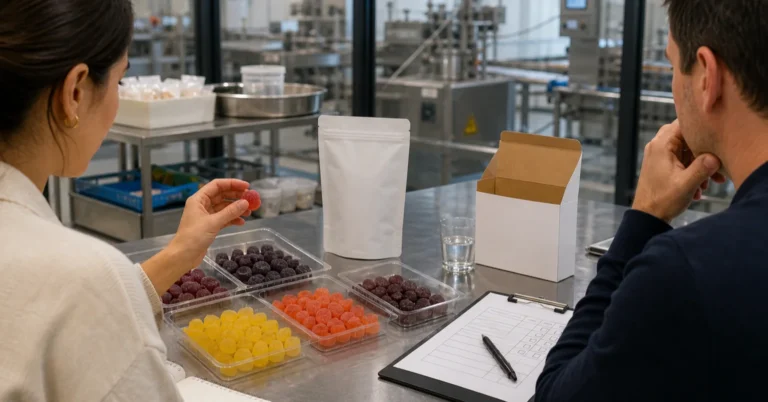
Brands should validate an immune gummy as one connected system before sampling or scaling: active load, serving count, taste, texture, moisture behavior, package fit, label space, finished-product specifications, testing records, MOQ, and pilot-to-production expectations. A good-looking sample alone cannot answer all of those questions.

Active-Load and Taste or Texture Feasibility
The first manufacturing question is not how many actives can fit on the front label. It is whether the proposed system can be delivered in the planned gummy size and serving without undermining taste, texture, color, or label clarity.
Vitamin C can add acidity and solids. Zinc can introduce a difficult mineral note. Botanical extracts may add bitterness, astringency, odor, or dark color. Combining them may push the product toward a larger gummy, more gummies per serving, or a different flavor direction.
I first check the target active load per serving, then work backward through gummy count, piece size, base, flavor, and package count. If a two-gummy concept becomes a three-gummy serving, the change affects more than the Supplement Facts panel. It can change taste exposure, bottle duration, bottle fill, subscription cadence, label layout, and MOQ assumptions.
Sample acceptance should therefore include more than “tastes good.” The brand should define the intended flavor profile, texture range, appearance, serving experience, and what variation is acceptable. Exact recipes and process settings remain manufacturer-controlled development details; the commercial brief should focus on measurable product expectations.
Moisture, Stability, Packaging, and Finished-Batch Checks
Gummies are sensitive physical systems. Moisture movement can affect stickiness, firmness, surface appearance, and package performance. Active and color behavior may also change over time. A snapshot sample cannot represent the full intended shelf period.
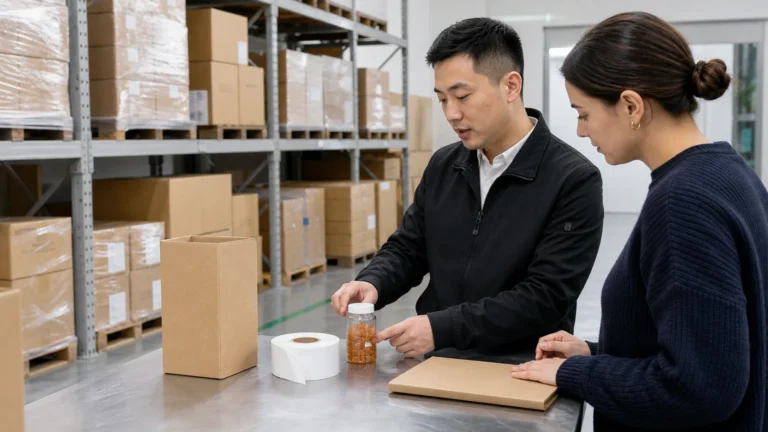
The stability plan should connect the formula to the final package. Bottle, pouch, closure, seal, count, headspace, and storage statement all matter. The relevant question is not whether a package looks premium. It is whether the package supports the product’s intended handling, market, and shelf-life study.
Finished-batch checks should be defined through a product specification and testing plan. U.S. dietary-supplement cGMP rules require specifications across relevant components, in-process controls, labels and packaging, and the finished batch, plus verification that applicable specifications are met.[^9][^10] Depending on the product and market, the file may address identity, labeled quality, physical attributes, microbiological quality, moisture-related measures, packaging checks, and other agreed requirements. The method and acceptance criteria must match the claim being supported.
A public certification badge cannot replace that product-specific chain. The useful handoff is formula brief to approved sample, approved sample to specification, specification to finished-batch records, and finished-batch records to the intended package and stability file.[^9][^10]
Documentation, MOQ, Pilot Runs, and Scale-Up Questions
Before approving a sample, I want the commercial and technical briefs to agree. The following decision table keeps each handoff tied to the risk it is meant to resolve:
| Decision area | What the brand should define | What the production handoff should clarify |
|---|---|---|
| Audience and market | Adult or age-specific children’s concept, sales channel, and label jurisdiction | Which serving, warning, and packaging assumptions belong to that audience |
| Active architecture | Target actives per serving, declared amounts, blend transparency, and claim boundaries | Whether the active load fits the intended gummy count and format |
| Serving and bottle | Gummies per serving, piece-size direction, bottle count, and expected duration | How a serving change affects fill quantity, label space, packaging, and MOQ basis |
| Sensory direction | Flavor family, sweetness direction, texture, color, coating, and dietary-format assumptions | Which sample attributes will be reviewed and what variation is acceptable |
| Packaging and quality file | Bottle or pouch direction, closure, seal, approved label, specification, COA format, testing scope, and stability responsibility | Which package and records must stay connected to the approved formula and finished batch |
| Commercial route and scale-up | Stock, modified stock, or custom route; sample rounds; pilot purpose; forecast; and first-order expectations | Which approved sample attributes are protected, which may shift at production scale, and how deviations are reviewed |
MOQ should not be treated as a standalone number. It can depend on formula route, active purchasing, packaging components, print quantities, production scheduling, and the number of gummies per bottle. A higher serving count can increase the total gummies required for the same number of retail units.
Pilot work is valuable when it answers defined risks. It should connect sample approval to production expectations, not become an endless sequence of taste changes. The better brief identifies which decisions must be locked before scale-up and which can remain adjustable.
The critical handoff is not simply “sample approved.” It is a record of which sensory, serving, appearance, packaging, specification, and documentation expectations the sample represents. Without that handoff, a technically acceptable production batch can still miss the commercial product the brand thought it approved.
FAQ: Comparing Immune Support Gummies Without Overclaiming
Brand teams can compare products without inventing an efficacy score. The answers below keep public label data, market position, and manufacturing evidence in separate lanes.
Normalize the labeled serving first, then compare the audience, format, bottle duration, claims, proof scope, and development tradeoffs.
How Should a Brand Compare Two Immune Gummy Labels?
Normalize both products to the labeled serving, then compare audience, active architecture, amounts, gummy count, bottle duration, base, sugar, flavor, packaging, warnings, claims, and visible proof signals. Keep marketplace ratings and badges in separate columns. Do not convert missing label data into assumed amounts or a health-outcome score.
Do More Ingredients Create a Stronger Product Position?
No. More ingredients can create a broader story, but they can also increase taste, texture, serving, label-space, documentation, and scale-up pressure. A focused formula may be easier to understand and execute. A broad blend can still be strong when every addition has a clear positioning role and the combined system remains feasible.
What Evidence Should a Manufacturer Provide Before Launch?
The appropriate file depends on the product and market, but brands should expect an approved label, finished-product specification, lot-linked COA, defined testing scope, packaging records, and stability documentation or a clear stability plan.[^9][^10] Any certification, testing, or facility statement should be checked for its exact scope rather than inferred from marketing copy.
Conclusion
The best comparison does not reward the longest immune gummy label. It identifies the audience, normalizes the serving, separates format from proof, and tests whether the visible market position can survive real formulation, packaging, documentation, and scale-up constraints.
For brands translating a “best immune support gummies” position into a real product, Talvenda works as a gummy supplement development and manufacturing partner across three routes: low-MOQ market-tested in-stock gummies, stock formula modification, and custom gummy development. A defined audience, active direction, and serving goal let our team connect sample development with packaging and label support, documentation and testing expectations, and scale-up support, so the brand can see which route fits before overbuilding the project. Send that focused brief through the Talvenda contact page for a practical route review.
[^1]: U.S. Food and Drug Administration, FDA 101: Dietary Supplements and Dietary Supplement Labeling Guide, Chapter IV. [^2]: National Institutes of Health Office of Dietary Supplements, Dietary Supplements for Immune Function and Infectious Diseases: Health Professional Fact Sheet. [^3]: Goli, Triple Action Immune Gummies, accessed as a public label and format snapshot; no efficacy inference made. [^4]: Nature’s Way, Sambucus Immune Gummies, accessed as a public label and format snapshot; no efficacy inference made. [^5]: GNC, Vitamin C Gummies, accessed as a public label and format snapshot; no efficacy inference made. [^6]: Kenvue Professional / Zarbee’s, Mighty Bee Gummy Immune Support, accessed as a public label, serving, and packaging snapshot; no efficacy inference made. [^7]: National Center for Complementary and Integrative Health, Elderberry. [^8]: U.S. Food and Drug Administration, Questions and Answers on Dietary Supplements. [^9]: Electronic Code of Federal Regulations, 21 CFR 111.70 — Specifications. [^10]: Electronic Code of Federal Regulations, 21 CFR 111.75 — Determining whether specifications are met.